Your new blog post is awesome. But will it rank? Will it keep bringing you leads in a couple of months, and will it still be relevant for search systems and AI next year? Without ongoing content optimization, your strategy might be losing your valuable assets right now, without you noticing.
We have compiled a list of the top 15 content optimization solutions the COAX team can’t go without in 2026 and probably beyond and want to share it with you, too. They are divided into SEO-oriented, AI-writing-specializing, and technically focused tools for your convenience. Here’s the snippet of what we found:
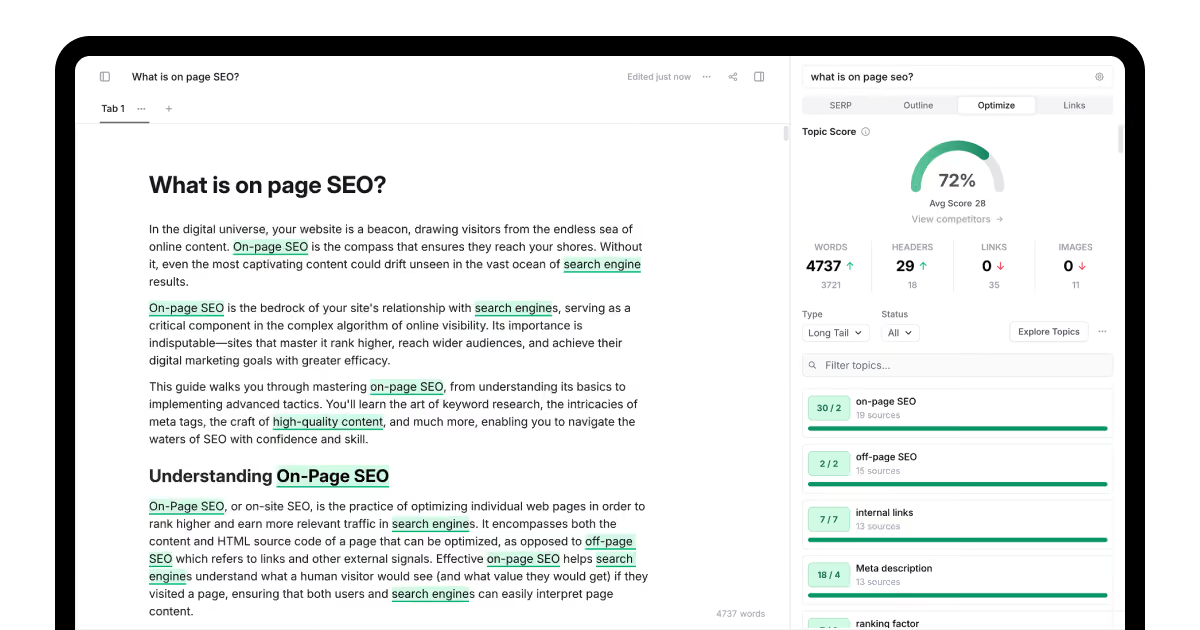
Surfer SEO scores your article against every competitor in real time.
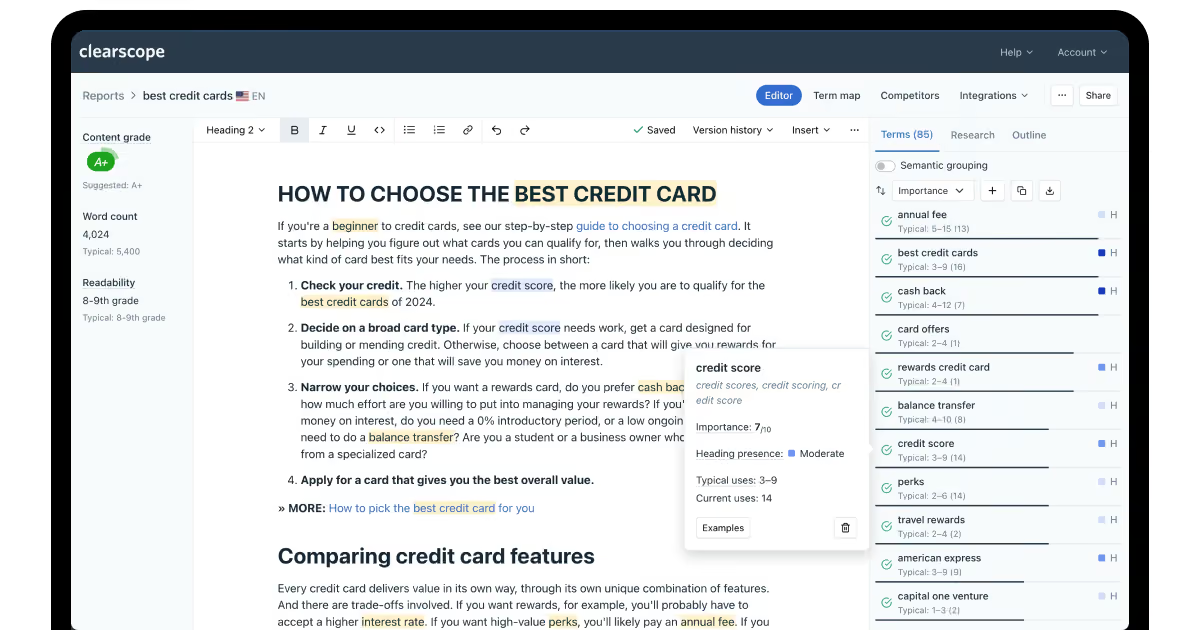
Clearscope grades your topic coverage from A to F.
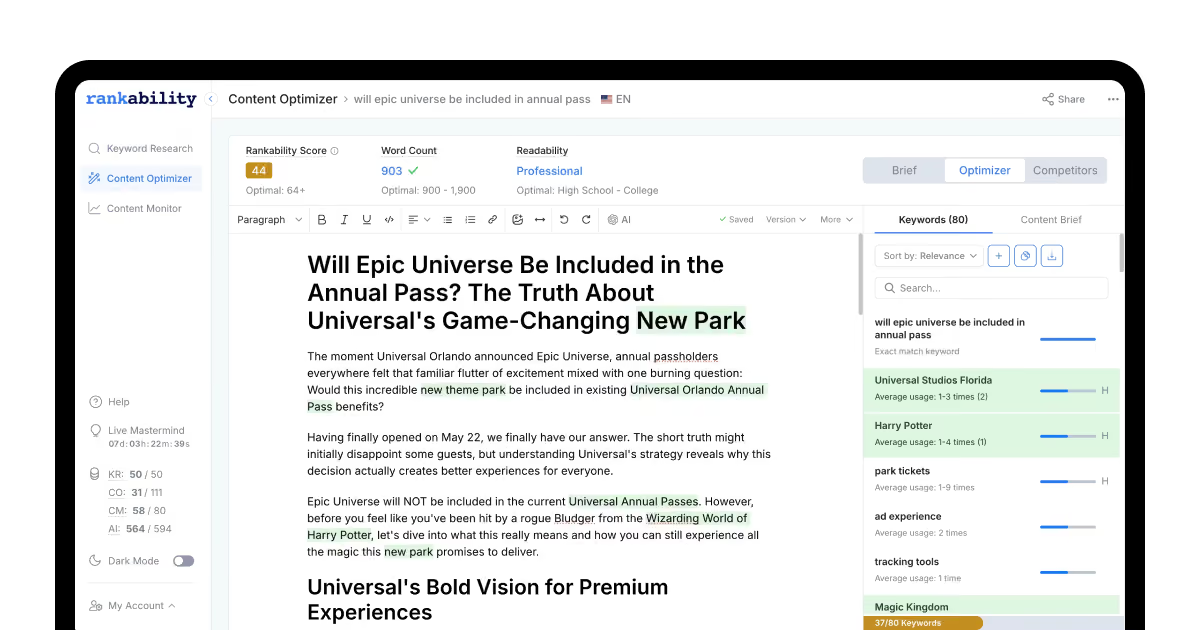
Rankability runs two AI engines at once and throws in a coaching call.
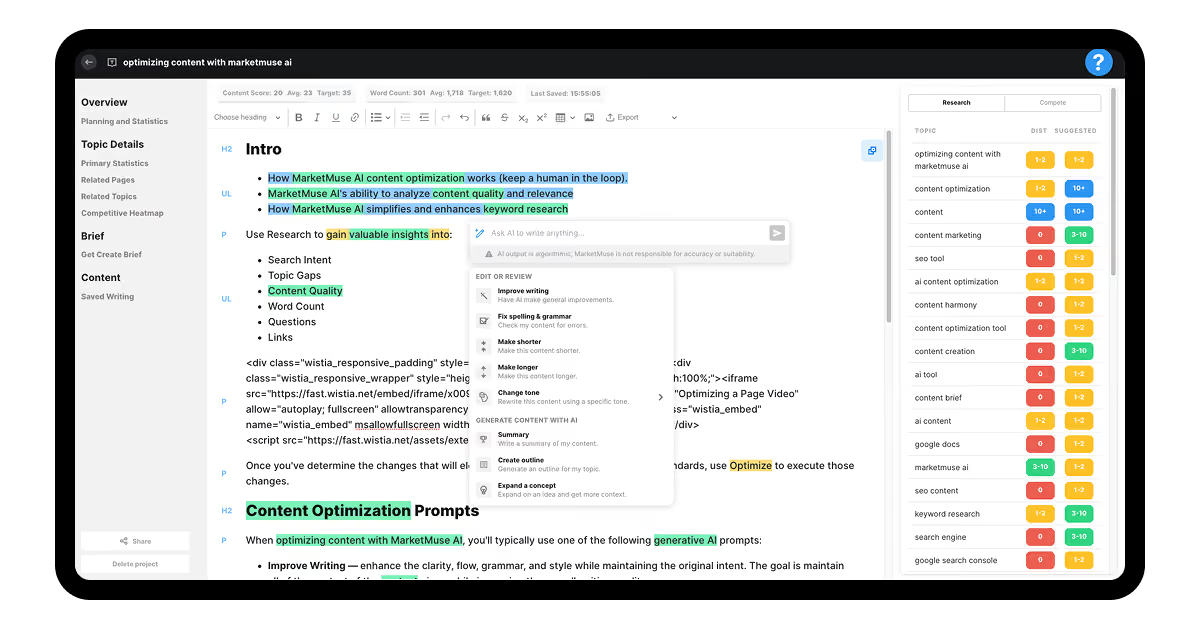
MarketMuse maps your entire site's knowledge gaps in one move.
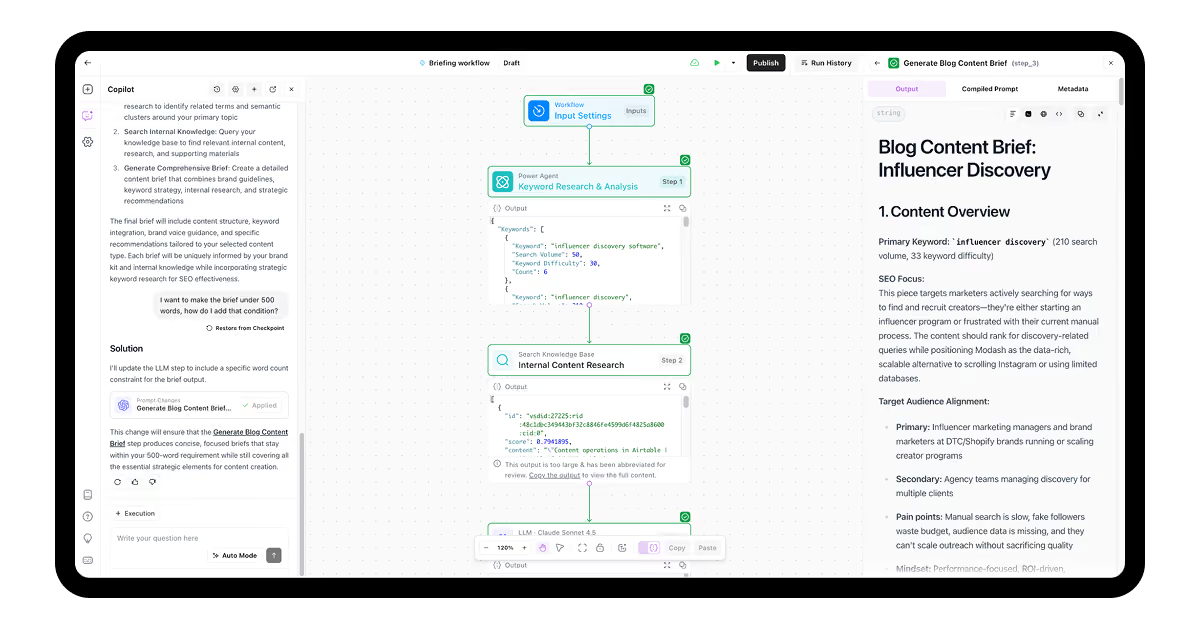
AirOps builds the workflows so your content team stops doing the same task twice.
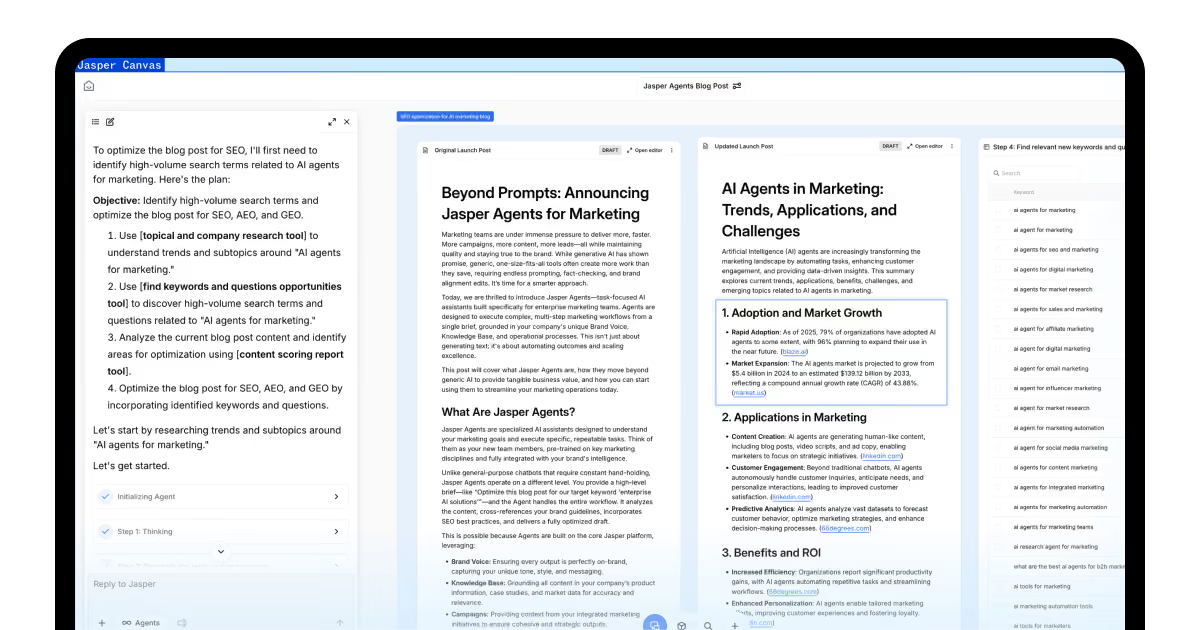
Jasper writes in your brand voice consistently, so your writer can finally take a vacation.
Frase goes from a blank page to an optimized brief in minutes.
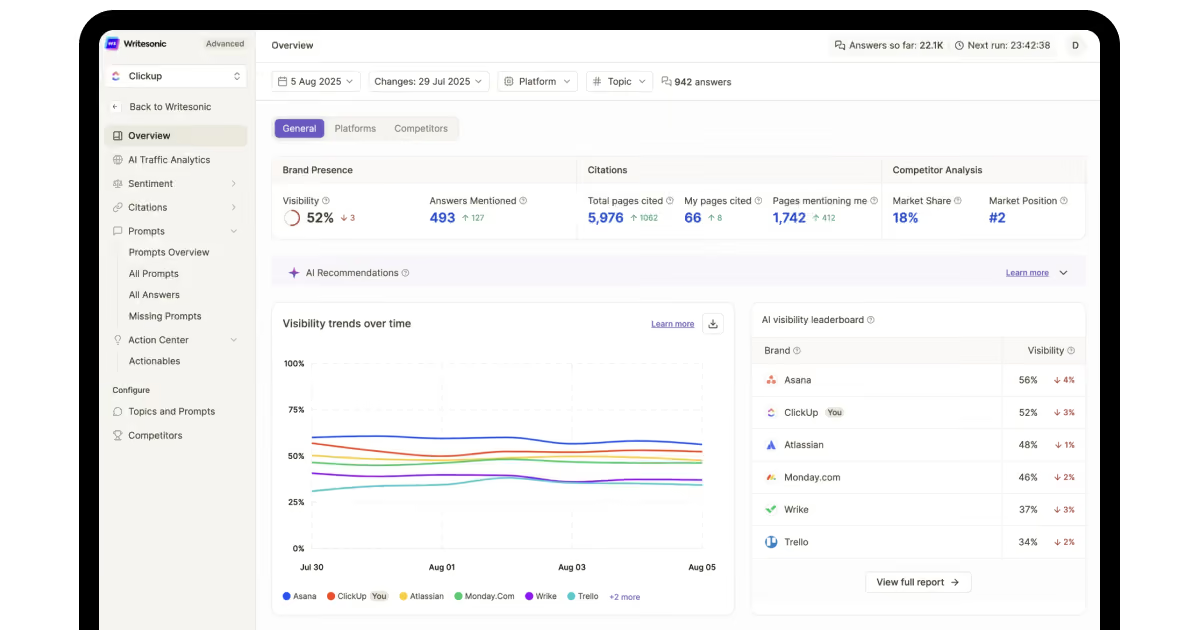
Writesonic watches how your content performs in ChatGPT and Perplexity.
Scalenut takes a keyword and hands you a publishable draft.
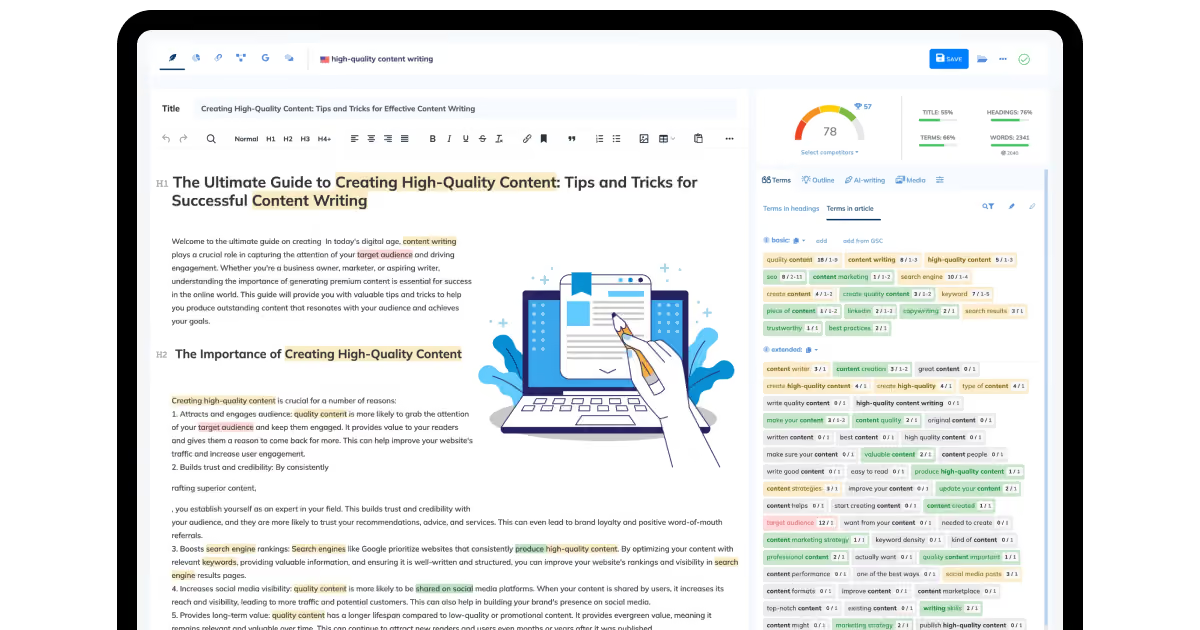
NeuronWriter does premium-level semantic optimization in nineteen languages.
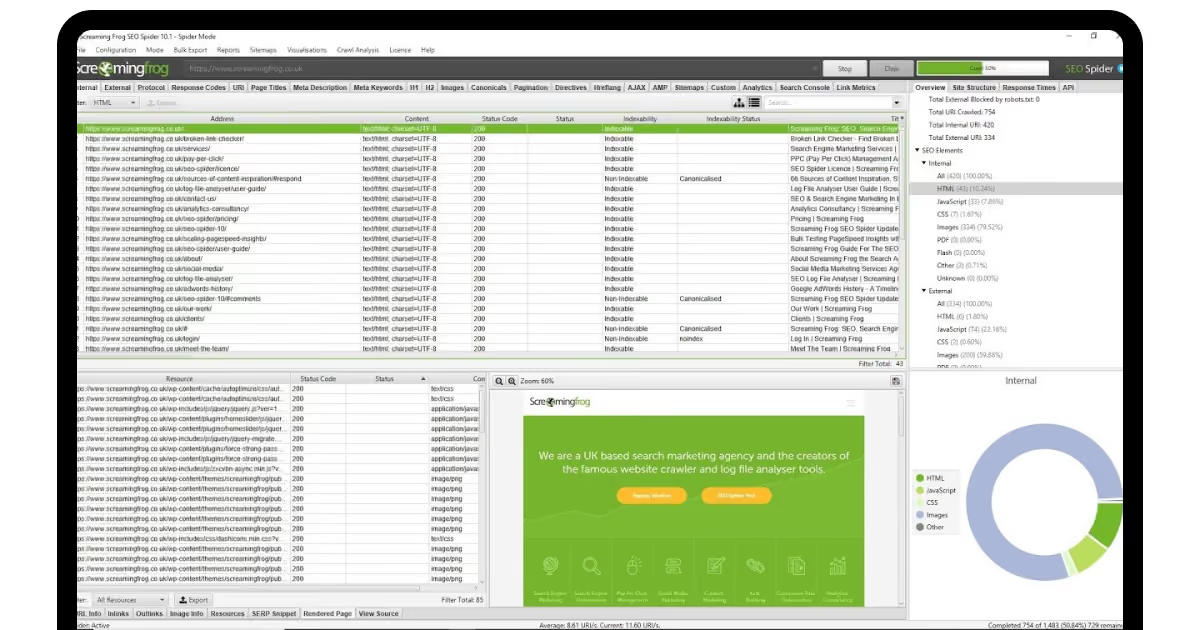
Screaming Frog crawls your site exactly the way Google does.
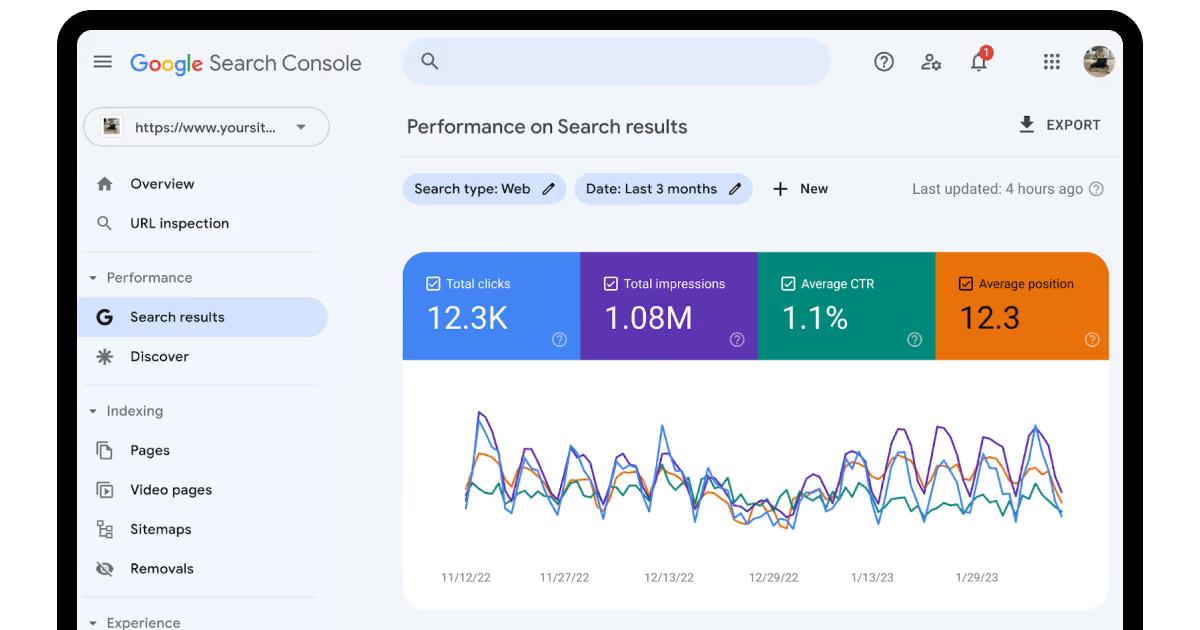
Google Search Console is free, non-negotiable, and clear.
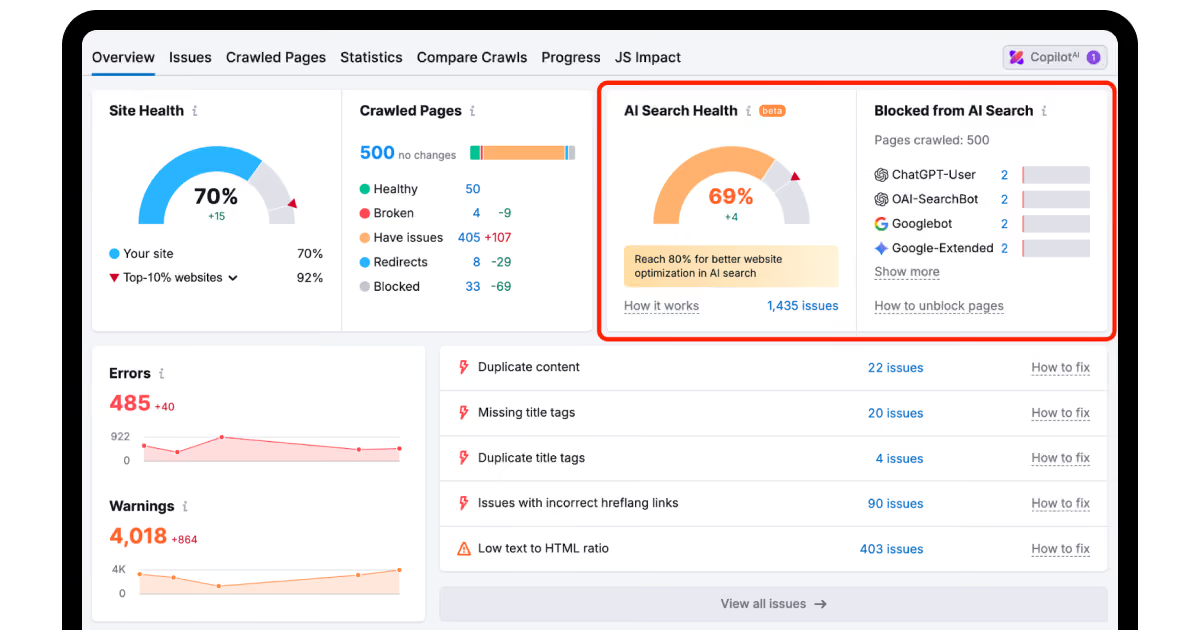
Semrush Site Audit compares today's site health against last month’s.
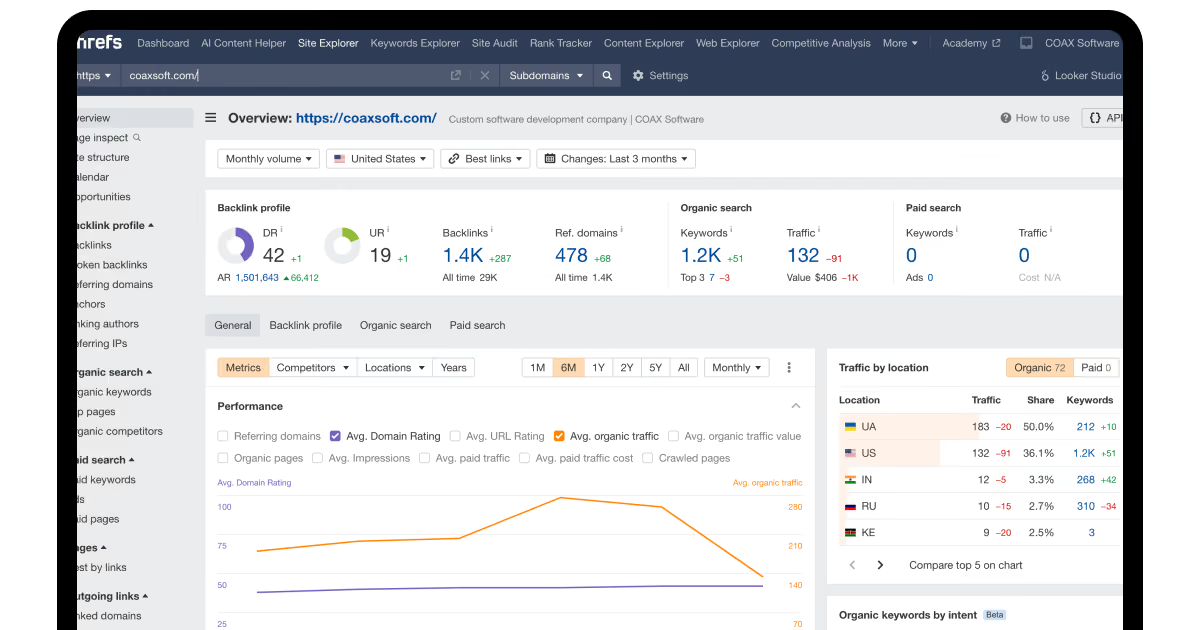
Ahrefs Site Audit finds the internal links and content gaps you are missing.
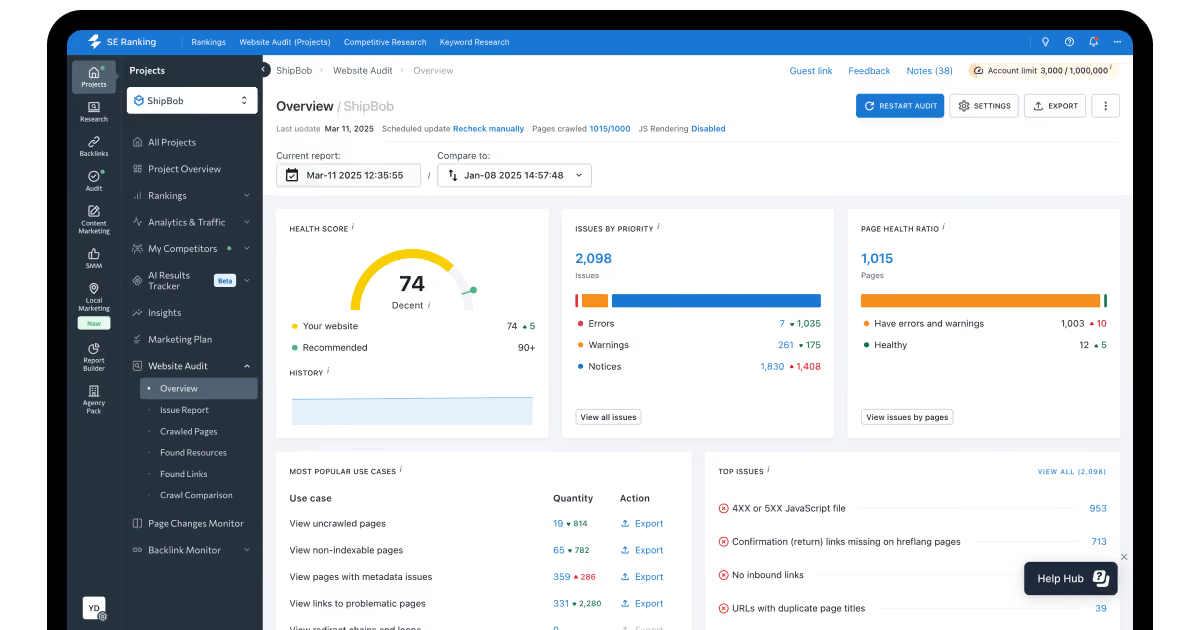
SE Ranking Site Audit tracks how your pages show up in AI search snippets.
Apart from the top content optimization tools, we have the key moments to optimize together with some 16-year-proven tips and best practices in this guide. Bonus: clear signs your content is performing badly (and what you might totally miss), and the situations where you might need external expertise.
What is content optimization?
Content optimization is the ongoing process of improving your existing digital assets (web pages, blog posts, and landing pages) so they get found, read, and acted on. You publish something once, but you optimize it continuously.
The most common goal is search visibility. When someone searches for a topic you cover, optimized content shows up. They find you, learn something useful, and sometimes become a customer.
It is worth separating content performance optimization from general SEO. SEO covers your entire site, including technical structure, backlinks, and page speed. Content optimization is the on-page slice: the right words, structure, and intent match. Some call it on-page SEO. You aren't just writing for readers, but also for the systems that decide whether readers ever see you.
Well-optimized content does three things at once:
Drives organic traffic
Supports your PPC efforts
Positions your brand as an authority.
For example, a platform offering career courses might run a blog about job-hunting tips. Every post that ranks pulls in people who were never looking for that platform specifically. They came for the advice but stayed for the product. Content optimization turns your existing work into a long-term asset rather than a one-time publication.
What’s on content optimization market these days?
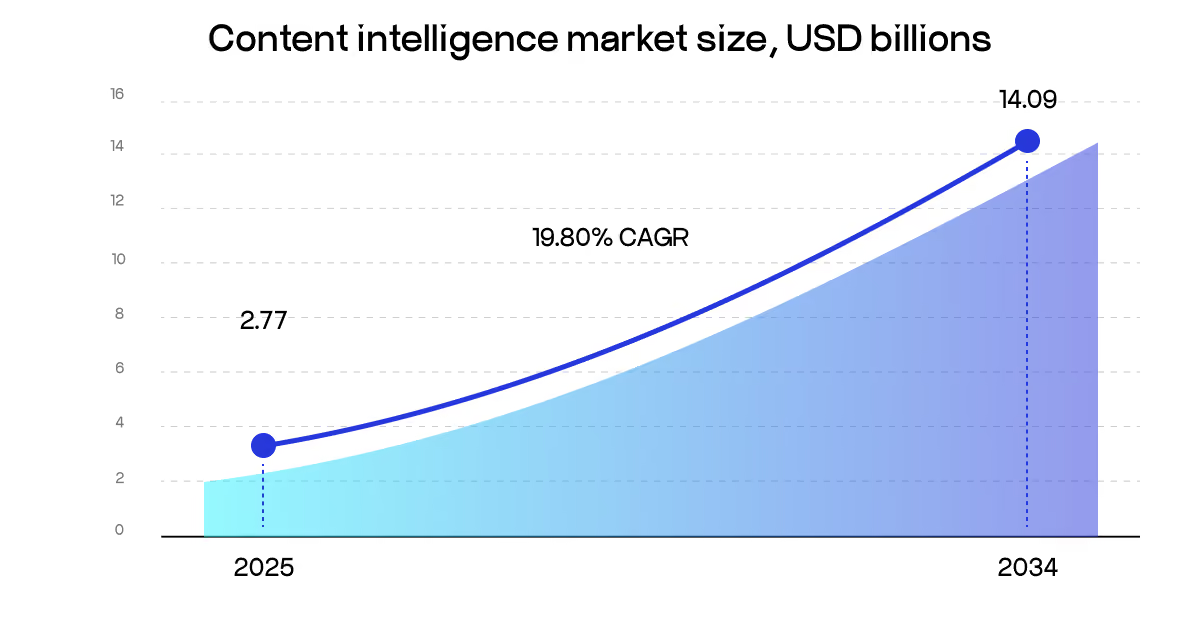
Why does a $2.77 billion industry exist just to help people fix their content? Because most content fails quietly - gets published, indexed, and ignored. The global content optimization tools market is projected to reach $14.09 billion by 2034. That growth is driven by businesses realizing their content isn't performing and looking for a content optimization strategy to fix it.
This demand is hard to argue with. Content marketing generates three times more leads than traditional outbound marketing at 62% lower cost. Companies with a documented content strategy are 3.5 times more successful than those without one.
But having content isn't the same as having optimized content. Just over half of marketing teams actively track content marketing ROI internally - so the other half is publishing blind.
That gap is what content optimization AI tools can help close. In 2026, 87% of marketers use AI tools for content creation, with the biggest gains in speed, keyword targeting, and content gap analysis. AI saves marketers an average of 12.5 hours per week on content-related tasks.
The market is responding to a problem: there is more content than ever, competition for attention is higher than ever, and the difference between page one and page two is often one well-executed optimization pass.
Key elements of content optimization
In 1895, John Deere didn’t launch a magazine to sell tractors. They launched The Furrow to teach farmers how to farm better. Every issue answered real questions, used clear language, and built trust before asking for anything in return. That was content optimization before the term existed. It was simple - know your audience, answer their questions precisely, structure information so it is easy to absorb, and maintain it over time. Still relevant 130 years later.
Those same principles drive every content optimization solution today, just with different tools and measurable signals.
Strategic keyword research comes first. You identify what your audience is actually searching for, including long-tail variations, and place those terms in the page title, URL, opening paragraph, and subheadings. The goal is natural integration, not repetition. Stuffing keywords triggers penalties. Placing them with intent triggers rankings.
Content quality and user intent alignment matter just as much. A page that ranks but doesn't answer the reader's actual question generates bounces, not conversions. Your content needs to match what someone expects to find when they click. Informational queries need explanations. Commercial queries need comparisons. Transactional queries need clear next steps.
On-page structure helps both readers and search engines parse your content. Clear H1, H2, and H3 tags create a content hierarchy. Short paragraphs and lists reduce cognitive load. Internal links connect your content into a network rather than leaving pages as isolated dead ends.
Content maintenance is where many teams fall behind. A post that ranked well in 2023 can lose ground by 2025 simply because it has not been updated. Updating existing content can boost organic traffic by 106%. The best optimization tools include audit features that flag content decay before it becomes a ranking problem.
Technical optimization covers the parts readers never see, but search engines always check. Meta titles and descriptions determine whether someone clicks at all. Image alt text improves accessibility and image search visibility. Mobile performance and load speed affect rankings directly.
Data closes the loop.Analytics tell you which pages drive traffic, which convert, and which are wasting space. Without that feedback, content optimization systems run on guesswork.
When do you need content optimization?
In 2014, Malaysia Airlines ran a "bucket list" contest while the world was still processing two of its flight disasters. The campaign went live, generated outrage, and got pulled fast. The team stopped paying attention to signals around them.
The moral of the story is that content failure rarely announces itself. It creeps in quietly, but you can spot the moment your content starts underperforming - even if it’s not as evident as the tone-deaf strategies that drive people angry.
Indicators that your content underperforms
Your analytics can very much hint at what elements of your content optimization strategies are driving your business down. Let’s break them down.
Engagement drops first. Fewer comments, shares, and saves. Then time on page shrinks, bounce rate climbs, and scroll depth shows users leaving before they ever reach your offer. These aren't random fluctuations. They are the gap between what you published and what your audience actually needed.
Visibility follows. Flat or falling organic traffic means your SEO content optimization has stalled. Low search impressions mean you aren't even in the conversation. Declining social reach means the algorithm has already made its judgment.
Then the business numbers arrive. High cost per acquisition, low conversion rate, stagnant leads. A low conversion rate is often a clear sign that your campaign is underperforming, even if your click-through rate is high. If there is no pipeline impact by month six, the content strategy isn't working.
Qualitative signals matter too. When your marketing campaigns feel repetitive and uninspired, it is a clear sign that your programs are stale and losing impact. Targeting everyone, inconsistent messaging, content that lacks a real point of view - these all produce the same result: forgettable.
Good strategies built around content testing and optimization catch these signals early. The right optimization software turns guesswork into a clear diagnosis, so you can improve conversion rate before the drop becomes a crisis.
Key moments to optimize your content
You don't need a full site overhaul to start. You need to recognize the moments when optimization pays the most.
Before a campaign launch is the clearest one. Paying to drive traffic to a weak page is expensive. Aligning on-page language with your ads, tightening the structure, and adding FAQs before you spend media budget is basic content marketing optimization that protects your investment.
When you launch a new product or service, product content optimization matters immediately. Your pages need to answer the questions buyers actually have, not the ones your internal team assumes they have.
When AI tools start influencing how your audience researches, your content needs dynamic content optimization that responds to how those systems read and surface information. Structured answers, semantic markup, and clear factual statements now determine whether you appear in AI-generated responses.
When organic traffic plateaus, that is the signal for targeted content optimization for SEO. Refreshing existing content can boost organic traffic by up to 106%. That is faster and cheaper than creating new pages from scratch.
After a merger, a rebrand, or a major strategic shift, your content tells an outdated story. Optimizing it isn't cosmetic. It is how your audience understands who you are now.
The rule is simple as this: any time your content stops doing the job it was built to do, that is the moment to optimize.
Best SEO-focused content optimization tools
If you type in “what are the best tools for content optimization” in a search system, you get dozens of answers. Most of them are good and detailed, but the real question is which tool fits your workflow, your team size, and what you are actually trying to fix. Here are the five tools that consistently deliver results.
Tool
Key strength
Key weakness
Pricing
Best for
Surfer SEO
Real-time content scoring with NLP keyword guidance
No site-level strategy, usage caps on entry plan
From $99/mo
Content teams publishing optimized articles at volume
Clearscope
Best NLP accuracy, unlimited seats
Only 20 reports, on-page focus only
From $129/mo
Enterprise editorial teams prioritizing precision
Rankability
Dual IBM Watson and Google NLP, expert coaching included
No Google Docs integration, steep learning curve
From $166/mo
Agencies needing repeatable optimization systems
MarketMuse
Full-domain topic modeling and content gap analysis
Complex, slow on large runs, pricey at scale
From $99/mo, free tier
Content strategists managing large sites
AirOps
AI search visibility tracking, direct CMS publishing
Steep learning curve, custom team pricing
Free solo, team pricing
Scale-focused teams optimizing for AI and traditional search
Surfer SEO
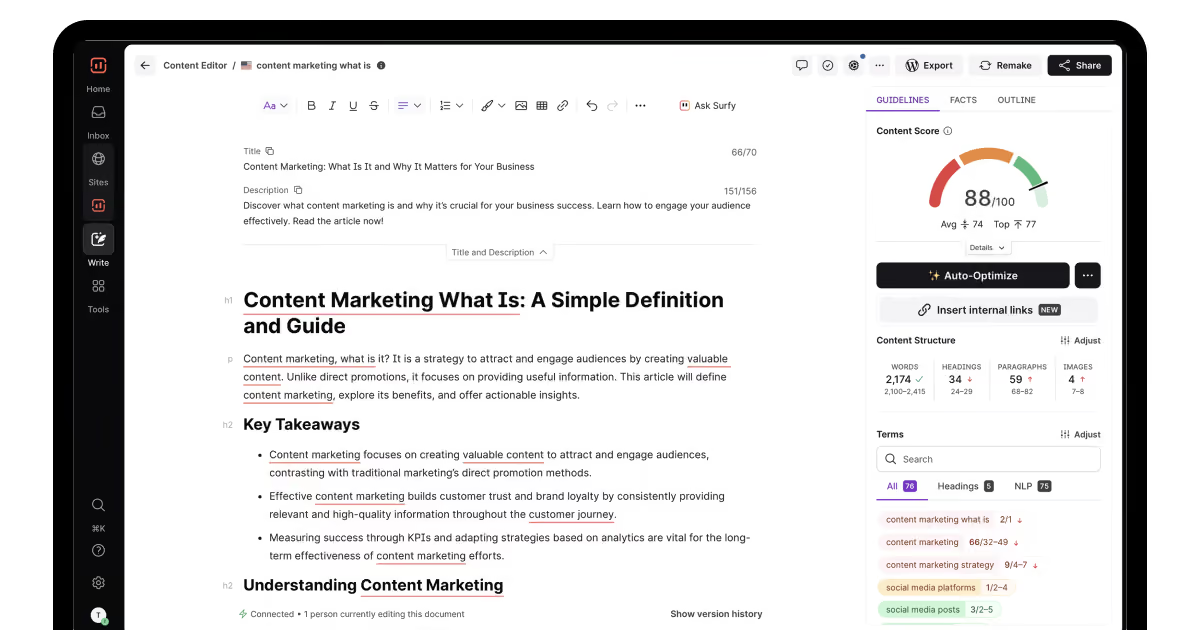
Surfer is the closest thing to a universal answer when content teams ask about SEO content optimization software. It works by scraping top-ranking pages for your target keyword, then generating a content brief with recommended terms, word count, heading structure, and topic coverage. You write directly inside the editor and watch your content score update in real time as you add the right signals. The Google Docs and WordPress integrations mean you never have to leave your existing workflow.
Key features:
Real-time content scoring against top-ranking competitors
NLP-based keyword and topic suggestions
AI writer with brand voice customization
Content audit for existing pages
Google Docs and WordPress integrations
Where Surfer falls short is the depth of strategy. It tells you what to write, but not necessarily why your broader content plan is or isn't working. The entry plan at $99 per month also has usage limits that high-volume teams will hit fast. That said, for teams focused on publishing optimized articles efficiently, Surfer remains the most practical daily-use tool in the category.
Clearscope
Clearscope is the tool enterprise editorial teams reach for when accuracy matters more than speed. It uses precise NLP analysis to generate keyword and related-term recommendations, grading your content from A to F based on topic coverage. The scoring is notably accurate, and the unlimited user seats make it one of the few tools that scales across large teams without per-seat costs blowing up the budget, which is a key reason it qualifies as scalable SEO software for bigger organizations.
Key features:
A to F content grading system
Precise NLP keyword and related-term suggestions
Content inventory tracking and decay alerts
Unlimited user seats on all plans
Google Docs integration
The main limitation is price. At $129 per month for only 20 monthly topic explorations and drafts, the cost per report is high for teams producing content at volume. It also focuses tightly on on-page optimization rather than broader strategy or technical SEO. However, the quality of recommendations is consistently rated best-in-class, and the platform's support is strong. If your team produces fewer, higher-stakes pieces of content where precision matters, Clearscope justifies the investment.
Rankability
Rankability combines IBM Watson and Google NLP in a dual-analysis approach that produces more granular semantic keyword suggestions than most single-engine tools. It is built with agencies in mind, making it one of the strongest answers when teams ask about the best SEO platform for agencies, because it includes both the optimization software and monthly expert coaching calls that help teams build repeatable processes rather than just use a tool. The real-time content scoring is precise, and the included AI writer is available across all tiers.
Key features:
Dual IBM Watson and Google NLP keyword analysis
Real-time content scoring
AI writer included at all pricing tiers
Monthly SEO expert coaching calls
Agency-oriented workflow and reporting
The pricing at $166 per month is higher than Surfer's, and there is no Google Docs integration, which matters for teams that write inside Google Workspace. The learning curve is also steeper than that of more consumer-focused tools. But for agencies that need enterprise-grade optimization depth alongside structured training, Rankability builds the kind of system that produces consistent client results rather than one-off ranking wins.
MarketMuse
MarketMuse works at the strategy layer rather than just the page layer, making it genuinely useful as one of the best AI tools for SEO when your problem isn't a single underperforming post but an entire site without topical authority. It builds topic models across your domain, identifies content gaps, and generates automated briefs that writers can follow to close those gaps systematically. The SERP Heatmap and competitor analysis tools surface what the top-ranking pages cover that yours don't.
Key features:
Topic modeling and content gap analysis across full domains
Automated brief generation
SERP Heatmap for competitor content auditing
Content inventory and strategy documentation
Free tier available for workflow exploration
The tradeoff is complexity. MarketMuse requires more strategic thinking to use well, and the editor can slow down during heavy analysis runs. Pricing climbs significantly at higher tiers, which can push it out of reach for smaller teams. But for content strategists managing large sites where the goal is building sustainable topical coverage rather than optimizing individual posts, MarketMuse provides a depth of strategic insight that most other tools in the category don't attempt. The pricing starts from $99 per month, with a free tier available.
AirOps
AirOps is at the intersection of content optimization and workflow automation, and it stands out among AI search optimization tools because it explicitly targets visibility in AI-generated answers, not just traditional search rankings. It connects to your existing tools through CMS integrations, including WordPress and Webflow, runs SERP analysis and content gap workflows automatically, and can push optimized pages directly to your site at scale. This makes it one of the first comprehensive AEO tools for content optimization in the field.
Key features:
Custom AI workflows for keyword research, content generation, and SERP analysis
CMS integrations, including WordPress and Webflow
AI Overview and answer engine visibility tracking
Integration with Semrush data inside workflows
Free solo plan with 1,000 tasks per month
The learning curve is steeper than that of content-only tools, and beginners struggle to get full value from the platform. But for teams operating at scale who need automation, AI search visibility, and direct publishing in a single system, AirOps delivers efficiency that’s often worth the investment. As to the pricing, there’s a free solo plan available, and team pricing is custom.
AI-powered writing assistants
The best SEO content gets written twice. Once by a human who knows the subject, and once by an AI that knows what ranks. The tools below sit at that intersection: they don't replace your expertise, but they make sure your expertise gets found.
Tool
Key strength
Key weakness
Pricing
Best for
Jasper
Brand Voice consistency across all content types
First drafts need editing, costly at team scale
From $69/mo per seat
Agencies and in-house teams running multi-channel campaigns
Frase
Research, brief, writing, and optimization in one workflow
Less precise keyword recommendations than premium tools
From $39/mo
Solo creators and small teams on a budget
Writesonic
AI search visibility tracking across Google and AI
Generic output on lower tiers, significant editing required
From $79/mo
Teams wanting content creation and AI search monitoring combined
Scalenut
SEO-ready drafts in under five minutes
Copy needs editing, slow on large projects
From $24/mo, 7-day trial
Fast research-to-publish workflow
NeuronWriter
170-plus languages, strong NLP at a low price point
Less polished interface, scoring has a learning curve
From $19/mo
SMBs and international content teams on tight budgets
Jasper
Jasper is the content optimization platform for teams that need to produce on-brand content at scale without losing consistency. Its Brand Voice feature learns from your existing content, style guides, and product documentation, then applies that knowledge across every asset the team generates. The Content Pipelines feature lets you automate entire workflows, from brief to draft to final review, for teams publishing across multiple channels.
Key features:
Brand Voice trained on your existing content and style guides
Content Pipelines for automated end-to-end workflows
50-plus templates covering blog, email, ad, and social formats
Jasper IQ for company knowledge integration
Browser extension for use inside Google Docs and WordPress
The tradeoff is that Jasper produces strong first drafts, not finished work. Every output needs human fact-checking and editing before publication. The platform also has a meaningful learning curve, and at $69 per month per seat, costs add up quickly for larger teams. For agencies and in-house teams managing multi-channel campaigns at volume, though, Jasper is one of the most suitable AI content optimization software options available.
Frase
Frase is the most affordable tool on this list that combines research, brief generation, AI writing, and optimization, making it a great SEO content optimization tool on a budget. You enter a keyword, Frase scrapes top-ranking competitor pages, and within minutes, you have an AI-generated content brief with outline suggestions, target keywords, and best word count. The AI writer then builds on that research, which produces more relevant output.
Key features:
AI-powered content brief generation from SERP analysis
Long-form AI writer grounded in competitor research
Real-time optimization scoring as you write
Topic modeling and question research
The keyword recommendations are less precise than Surfer or Clearscope, and AI-generated content often needs more editing than the premium alternatives. But at $39 per month for an all-in-one research, writing, and optimization workflow, the value is hard to argue with for individual creators and small business teams.
Writesonic
Writesonic is among the content optimization solutions that have positioned itself around AI visibility. Beyond standard article generation, it integrates Ahrefs and Semrush data into its workflow, runs real-time SERP analysis, and includes a tracking system that monitors how your content performs in AI-driven search engines like Perplexity and ChatGPT. Awesome for brands that want to optimize for both traditional rankings and AI answer visibility.
Key features:
AI Article Writer 6.0 with real-time SERP analysis
Ahrefs and Semrush data integration
Brand voice customization across content types
AI search visibility tracking across multiple engines
Competitor content gap analysis
The main criticism is output quality on the lower pricing tiers, where generated content tends to be generic and requires significant editing. At $79 per month as a starting price, though, Writesonic gives budget-conscious teams access to a surprisingly comprehensive content optimization software that covers both content creation and AI search monitoring.
Scalenut
Scalenut solves a problem many other tools ignore: getting from content strategy to a published, optimized article. Its Cruise Mode takes a keyword and generates a structured, SEO-ready draft in under five minutes, pulling from NLP keyword analysis and SERP data. The Topic Clusters feature goes further, mapping out entire content strategies across a domain, which makes it one of the more capable AI SEO content tools for a topical authority at scale.
Key features:
Cruise Mode for rapid SEO-ready draft generation
Topic Clusters for full-domain content planning
Real-time content scoring and NLP keyword guidance
One-click Fix It automatic optimization
WordPress and Semrush integration
The AI prose still needs editing before publication, and large-scale projects can feel sluggish on lower-tier plans. Additional features like advanced clustering can add cost beyond the base subscription. But for teams that want the fastest path to a publishable draft without separate research, writing, and content optimization tools, Scalenut is a good choice. Pricing starts from $24 per month, with a 7-day free trial.
NeuronWriter
NeuronWriter is the AI content optimization tool that punches above its price, making it the most practical choice for small and mid-sized teams that need semantic optimization depth. It uses NLP analysis grounded in Google's Natural Language API and competitor SERP data to generate keyword recommendations, content scores, and structural suggestions as you write. The tool covers over 170 languages, which makes it one of the few genuinely capable tools for SEO content writing for teams producing content in markets outside English.
Key features:
NLP-based content scoring using Google Natural Language API
Competitor SERP analysis and content gap recommendations
Internal linking suggestions based on your existing content
YouTube video analysis for multimedia content planning
Google Search Console integration for performance tracking
The interface is less polished than Surfer or Jasper, and AI-generated drafts need meaningful editing. But at $19 per month as a starting price, NeuronWriter delivers NLP optimization, internal linking intelligence, and multi-language support in a single AI content optimization software package that most competitors charge three to five times more to access.
Technical SEO and audit tools
Content can be perfect and still invisible. If search engines cannot crawl your pages, find your sitemap, or render your JavaScript, no amount of keyword optimization saves you. These tools fix the foundation on which everything else rests.
Tool
Key strength
Key weakness
Pricing
Best for
Screaming Frog
Most accurate site crawl, replicates bot behavior
Requires solid SEO knowledge to interpret
Free up to 500 URLs
Deep crawl data at low cost
Google Search Console
Direct first-party Google data, completely free
24–48hr data delay, no competitor analysis
Free
Every site owner
Semrush Site Audit
AI Copilot recommendations
Expensive for full access
Free, from $139.95/mo
Already using Semrush across SEO stack
Ahrefs Site Audit
Site hierarchy explorer, AI Content Grader built in
Less polished UI, verification friction on free plan
From $129/mo
Technical SEOs wanting audit and content optimization combined
SE Ranking Site Audit
AI snippet tracking included
Page-based pricing tiers, large sites hit caps fast
From $103.20/mo
Mid-sized teams and agencies managing multiple client sites
Screaming Frog SEO Spider
Screaming Frog is the closest thing to a universal standard in technical auditing, as it replicates exactly how a search engine bot crawls your site. You run it against any domain and within minutes, have a complete picture of broken links, redirect chains, missing metadata, duplicate content, and indexability issues. As one of the most reliable content optimization solutions for diagnosing, it belongs in every technical SEO workflow, regardless of what other tools you use.
Broken link, redirect chain, and duplicate content detection
JavaScript rendering for modern single-page applications
AI integration with ChatGPT and Gemini for bulk optimization tasks
XML sitemap generation and validation
The interface is desktop-based and requires more SEO knowledge to interpret than beginner-friendly dashboards. But for raw technical depth at a price that is hard to argue with, nothing in the category matches it. The free version crawls up to 500 URLs, which covers most small sites entirely, while the paid license (at $279 per year) unlocks unlimited crawling, JavaScript rendering, and direct AI integrations with ChatGPT and Gemini.
Google Search Console
No third-party tool gives you what Google Search Console gives you for free: direct first-party data about how Google sees, crawls, and ranks your site. It shows you which pages are indexed and which are excluded and why, surfaces Core Web Vitals issues, flags mobile usability errors, and lets you track clicks, impressions, and average position by query and page. For teams building any kind of best free search engine optimization workflow, this is the non-negotiable starting point.
Key features:
Index coverage reporting with exclusion reasons
Core Web Vitals and mobile usability diagnostics
Click, impression, and position tracking by query and page
Sitemap submission and URL inspection tool
Manual action and security issue alerts
The limitations are there, too. Data takes 24 to 48 hours to update, and there is no competitor analysis. But as the primary source of truth for how your site performs in Google, it’s the best.
Semrush Site Audit
Semrush's Site Audit module is the most complete browser-based technical audit tool within a broader search engine optimization tools suite. It crawls your domain, scores site health, and categorizes issues by severity. What separates it from standalone crawlers is the ability to compare audits over time, track issue resolutions, and receive automatic re-crawl alerts. The integration with Semrush Copilot adds AI-driven recommendations directly inside the dashboard, surfacing prioritized fixes without requiring you to dig through reports manually.
Key features:
Site health scoring with severity-based issue categorization
Audit comparison dashboard for tracking improvements over time
HTTPS, Core Web Vitals, and internal linking analysis
Ahrefs Site Audit is the on-page optimization tool choice for technical SEOs who want granular analysis categories and a workflow that connects directly to content performance data. It checks JavaScript rendering, redirect loops, crawl depth, and indexability while also surfacing Internal Link Opportunities, a feature that recommends specific anchor text and target URLs across your entire site to strengthen topical authority through linking structure.
Key features:
JavaScript rendering and crawl depth analysis
Internal Link Opportunities with anchor text recommendations
AI Content Grader for topic coverage scoring
Structural site hierarchy explorer
Direct integration with Google PageSpeed Insights and Core Web Vitals
The user interface is less polished than Semrush, and ownership verification for the free audit tool adds friction for new users. Pricing starts at $129 per month, which means it competes directly with Semrush at a similar cost. For teams that want technical auditing and content optimization in one platform, it’s one of the strongest AI optimization tools in the category.
SE Ranking Site Audit
SE Ranking is the best website optimization tool for teams that need professional-grade technical auditing without the enterprise price tag. Starting at $103.20 per month, it delivers core web vitals reporting, on-page SEO scoring, internal link analysis, and dedicated audit comparison. The AI Summaries feature generates plain-language text summaries of audit findings. The AI Results Tracker goes further, monitoring how your pages perform specifically in AI-generated search snippets.
Key features:
Site health scoring with Core Web Vitals breakdown
On-page SEO audit with automated optimization checklist
Audit comparison dashboard for tracking improvements
AI Summaries for plain-language report generation
AI Results Tracker for AI snippet visibility monitoring
The main limit is that pricing tiers scale by number of pages, so large sites can hit caps at lower plan levels. For mid-sized teams and agencies managing multiple client sites who need reliable, affordable search engine optimization tools with strong reporting, SE Ranking consistently delivers more value per dollar than its competitors.
How to choose the right tool for your needs
Sixteen years of launching and marketing products across travel, transportation, logistics, and several other industries teaches you one thing fast: the wrong tool doesn't just waste money. It wastes the three months you spent generating content with it before realizing the problem. Here are the key factors to consider when making this decision.
Budget relative to content volume. A logistics company publishing four technical guides per month has no business paying $189 per month for Clearscope's 20-report limit. That same budget makes far more sense for a travel brand running a content operation that publishes daily across multiple destinations. Before you evaluate any SEO content optimization tools, calculate your cost per published piece at each pricing tier. If the number exceeds what a freelance editor would charge to do the same optimization manually, reconsider.
Team size and technical literacy. Tools like Screaming Frog and Ahrefs reward users who already understand what a redirect chain or a crawl depth problem means. When we worked with a mid-sized freight forwarding company building their first content team, putting a non-technical writer inside a full-site crawler produced paralysis, not output. They needed a content optimizer tool with a guided interface, not raw crawl data. Match tool complexity to the person who will use it daily, not to the person who selected it.
Whether you are optimizing existing content or creating new content. These are different problems requiring different tools. A transportation marketplace with three years of blog content sitting at page two needs an audit-first workflow: identify decay, refresh, reoptimize. A new travel brand with fifty pages needs a creation-first workflow: research, brief, write, score.
If your audience researches products through ChatGPT, Perplexity, or Google AI Overviews rather than traditional search, generative engine optimization isn't optional. This applies particularly to B2B logistics buyers and travel planners, two audiences that increasingly use AI tools to shortlist vendors and destinations before ever visiting a website. Tools that don't track AI snippet performance are already partially blind to where your traffic decisions are being made.Integration with your existing stack.
Also, remember that a content optimization tool that doesn't connect to your CMS, your Google Search Console, or your analytics platform creates manual export and import loops that kill adoption within six weeks. We have seen this happen repeatedly with agency clients who selected tools based on feature lists rather than workflow fit.
Matching tools to use cases
You are a travel brand publishing high-volume destination content. Your problem is consistency at scale. Surfer SEO's real-time scoring inside Google Docs means your writers optimize as they write rather than in a separate pass. Combine it with Writesonic's AI search tracking to monitor whether your destination guides are appearing in AI travel recommendations, which is now a primary discovery channel for trip planning.
You are a logistics company with an underperforming service page library. Your problem isn't creation but diagnosis. Start with Google Search Console to identify which pages have high impressions but low clicks, then run those pages through an SEO content tool like Clearscope or MarketMuse to identify topic gaps. Layer in SE Ranking's on-page checklist to check whether weak calls to action or poor page structure are suppressing conversions alongside the content issues.
You are an agency managing technical SEO for multiple clients across industries. Your problem is scale and reporting. Screaming Frog handles the technical depth. SE Ranking handles multi-client audit management and client-facing reporting at a price that doesn't destroy margin. Rankability adds the expert coaching layer that helps junior team members make correct decisions without senior oversight on every deliverable.
You are a transportation marketplace launching a new product category. Your problem is building topical authority from zero in a competitive vertical. MarketMuse is the right starting point because it tells you not just how to optimize a single page but which twenty pages you need to build before any of them rank. It is a cluster problem, and treating it as one changes the entire content roadmap.
You are a small business with a limited budget and no dedicated SEO resource. Start with Google Search Console and Google PageSpeed Insights, both free, before spending a dollar on paid tools. Add Frase when you are ready for a combined research, brief, and optimization workflow. The combination covers the full process from keyword discovery to published, optimized content without requiring technical expertise.
Pick the website content optimization option that solves the specific bottleneck your team is hitting right now, not the tool with the longest feature list. The best tools are the ones your team opens every morning and gets better results with.
Common challenges and mistakes in content optimization
The most common mistake business owners make is treating content optimization as a one-time project. You pick your keywords, update your title tags, and wait. That approach stopped working about fifteen years ago.
There are over one billion websites and blogs online right now. If you are not continuously creating and refining content, you won't rank for anything beyond your own brand name. And unless you are a well-known corporation, nobody is searching for that.
The real problems we see repeatedly:
Publishing content without a content optimization checklist means missing basic elements every time: weak meta descriptions, no internal linking, mismatched search intent, images without alt text, and calls to action that go nowhere. Each missed item compounds over time.
Using a content optimizer without understanding the underlying strategy produces pages that score well in a tool but convert nobody. Optimization without conversion thinking is just decoration.
Ignoring technical issues while focusing only on content. Slow pages, broken redirects, and crawl errors quietly kill rankings that good content would otherwise earn. This is exactly where regular CRO audit work pays off: identifying where users drop off, where revenue leaks, and what friction is costing you conversions alongside your organic rankings.
The most efficient content optimization solutions won't save a strategy that lacks consistency. SEO isn't a sprint. Google rewards sites that demonstrate sustained relevance over months, not sites that optimized once and moved on.
Sometimes, the problem isn't effort but expertise. Travel, logistics, transportation, and other specialized industries have audiences, buying cycles, and competitive landscapes that generic optimization advice doesn't account for. Getting it right in those verticals requires people who have done it before.
Why do you need professional help more than you think?
You might select the best search engine optimization tools available, follow every list of SEO content optimization tips, and still see flat results. Tools execute tactics. Strategy determines whether those tactics solve the right problem.
Here is what actually goes wrong without professional support. Most businesses optimize what they can see: page titles, keywords, basic structure. They miss the deeper issues: content that ranks but doesn't convert, topic clusters with structural gaps, pages competing against each other for the same keyword, and content optimization efforts that ignore the actual buying journey of their specific customers.
87% of marketers report that content marketing generates demand and leads. But that number assumes the strategy behind the content is sound. A well-optimized page in the wrong topic cluster still brings the wrong audience.
COAX brings sixteen years of industry-specific experience across travel, transportation, logistics, and other verticals. Our SEO services combine technical audit work, content strategy, and conversion optimization into a single system built around your business outcomes rather than generic ranking metrics. The right expertise doesn't just fix what is broken. It builds something that compounds.
Our content marketing experts deliver data-led strategies that drive growth, from search intent mapping and SEO-optimized blog copy to engaging social media, email campaigns, and persuasive ad copy. You'll gain higher rankings, trust-building narratives, qualified leads, and scalable frameworks, backed by multi-channel deployment and proven ROI.
FAQ
What is content optimization, and how does it differ from content marketing?
Content marketing is the strategy: creating and distributing content to attract an audience. Content optimization is the execution layer: improving that content so it ranks, converts, and stays relevant over time. As researcher Ashwani Sharma notes, effective digital content strategy requires both data-driven decision-making and continuous refinement, not just creation.
Can general web optimization tools help with content optimization?
General tools for website optimization handle technical performance: speed, crawlability, Core Web Vitals. They don't replace dedicated content optimization tools that analyze keyword coverage, topic depth, and user intent alignment. You need both working together. A fast page with thin content still ranks poorly. A well-written page on a slow site converts nobody.
What are the main challenges of dynamic content optimization?
Dynamic content changes based on user behavior, location, or session data, making it harder to audit consistently. Standard crawlers often miss dynamically rendered elements entirely. Tracking performance across personalized variations requires more sophisticated analytics. Without a systematic content optimization checklist and regular CRO audit cycles, dynamic pages develop blind spots where conversion losses go undetected for months.
How does COAX provide efficient content optimization services?
We combine marketing strategy and technical engineering under one roof. Project managers, developers, SEO specialists, and designers work together without handoff gaps. Your data stays protected under ISO 9001 and ISO 27001 certification, with NDA signed on every project. We deliver transparent, agile content optimization across industries, built to scale from launch day forward.




































































.avif)
.avif)

We are interested in your opinion