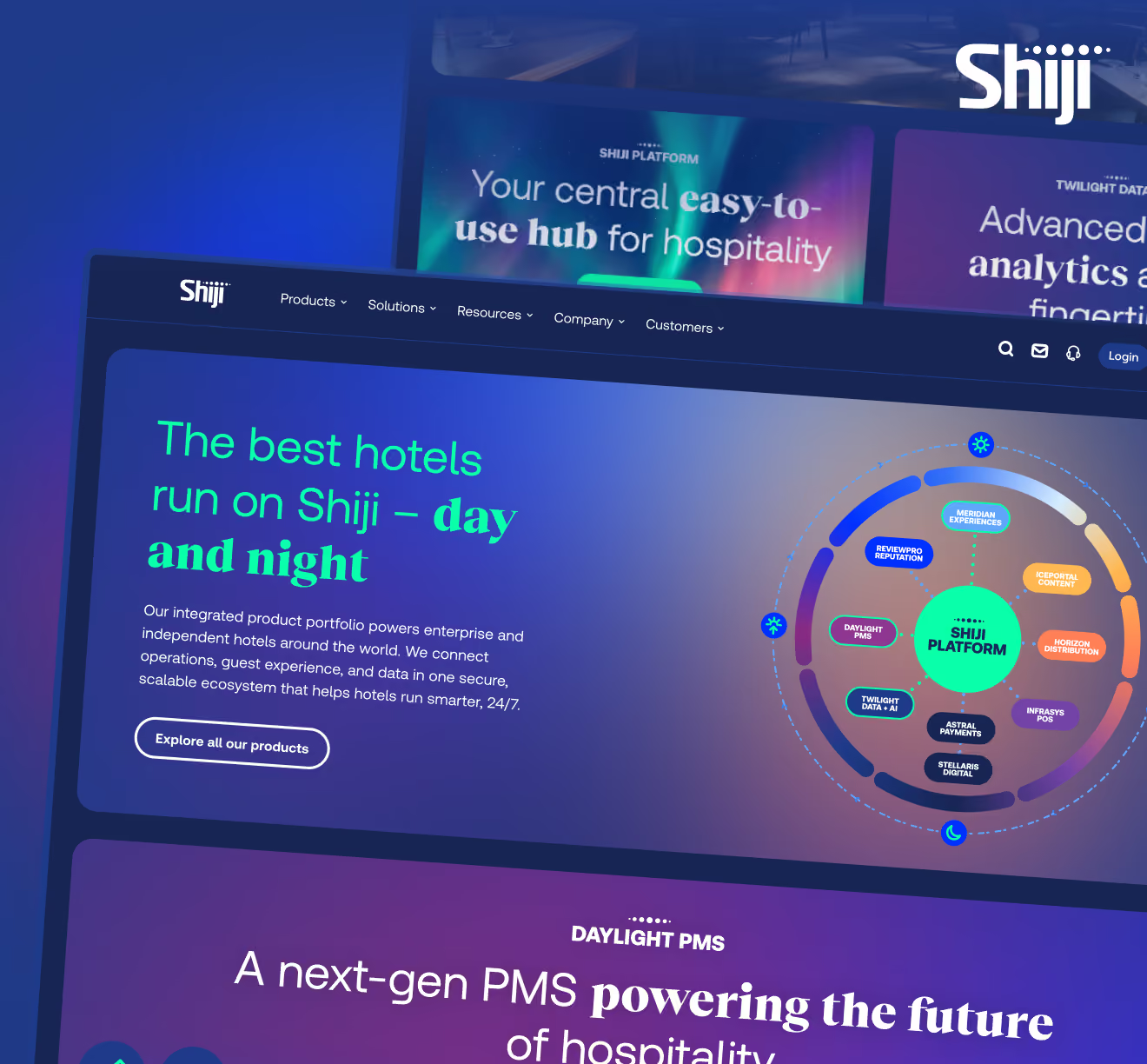
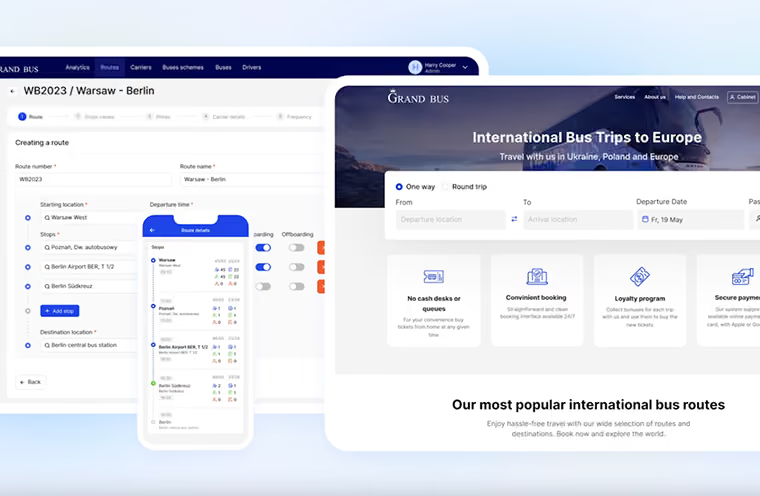
Shiji's website looked outdated after 25 years of growth. Its pages loaded fine. Nothing crashed. And yet, the engagement and conversion rates started to lower.
That's the trap of "good enough" design. A landing page can look polished and still fail to convert. Shiji's team knew this. They came to COAX to fix it. After our joint efforts with the Shiji team, the organic search traffic jumped 95% post-relaunch. The redesign didn't just look better. It converted better.
That gap explains why landing page optimization matters. Looking good and performing well aren't the same thing, and most pages only solve for the first one.
We've built travel, logistics, and hospitality platforms at COAX for 16 years. That work taught us where pages actually lose visitors, and it's rarely the part designers obsess over.
This guide shows how to optimize landing page performance. You won't need to gut your design to do it. You'll learn why your conversions stall and how to fix it. You'll also see which benchmarks matter for your industry.
What is landing page optimization?
Landing page optimization means testing and refining one page until it converts more visitors. It's different from tuning a whole site. This section covers the definition, the market data behind it, and where it differs from general website work.
Landing page optimization tests and refines one page toward a goal. It's a process, not a paint job. Swap colors and call it done, and you've prettified the page. You haven't optimized it. Real optimization ties every change to a tracked result.
The market backs that distinction. Average landing page conversion rates sit between two and seven percent. Top performers clear five to 11%.
Speed and mobile layout set the baseline now. Pages should load in under two seconds. Over 80% of landing page traffic starts on mobile, per industry research. That means fast loads and vertical layouts drive mobile landing page optimization.
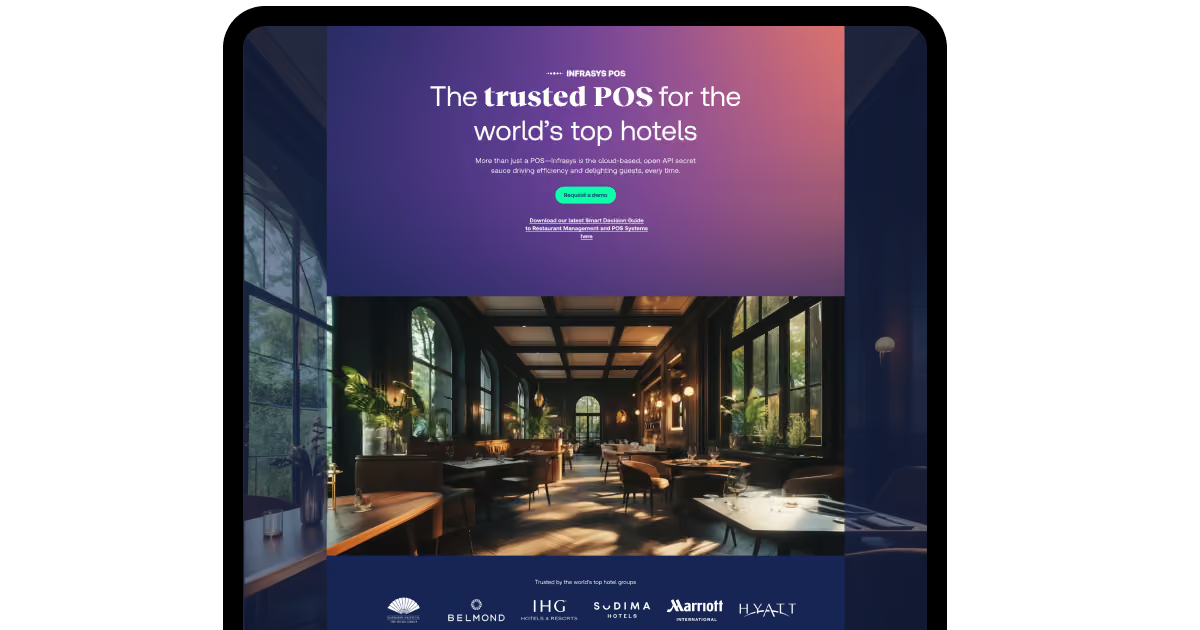
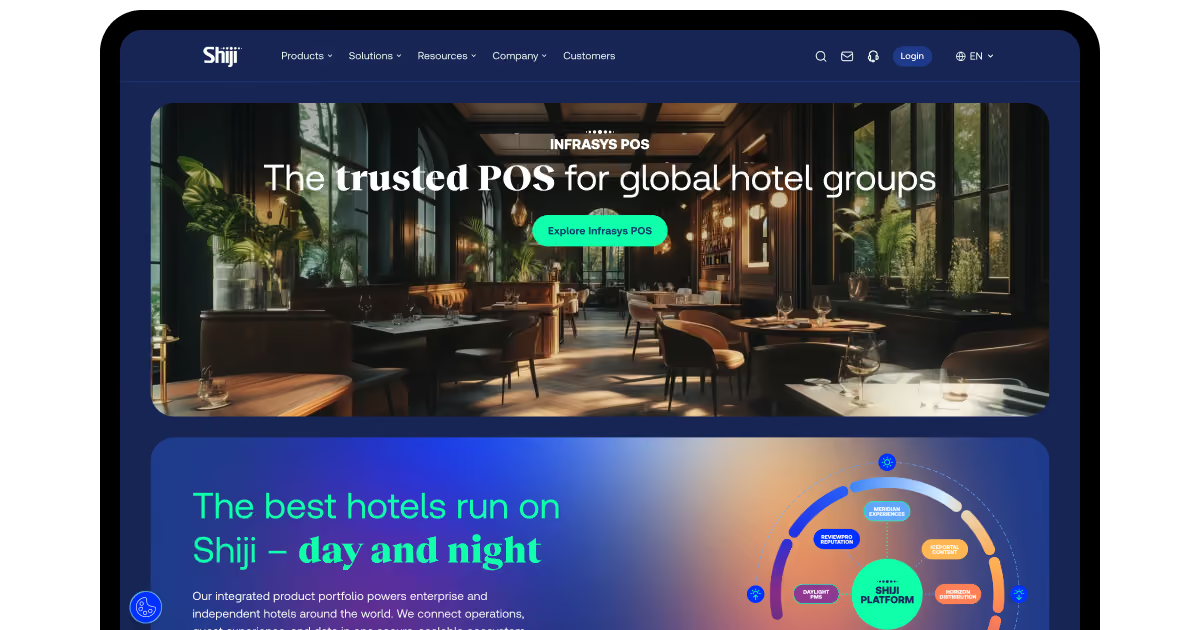
Shiji's product pages show this in practice. Each page carries its own headline and one CTA. The Infrasys POS page leads with "trusted POS," tuned to hotel buyers, not a generic pitch.
How it differs from general website optimization
Conversions stall, and you're left with a decision. Do you fix one page, or rebuild the whole site? The answer depends on where visitors actually drop off.
Aspect
Landing page optimization
General website optimization
Goal and focus
One CTA, no nav links
Many pages, menus, categories
Audience and traffic
Niche visitors from ads or email
Broad visitors via search or referral
Core tactics and metrics
Conversion rate, cost per acquisition, A/B tests
Organic traffic, sitewide UX, SEO rankings
Goal and focus. A landing page runs one CTA, with no nav links. A general website spans many pages, menus, and categories. Shiji built nine product pages, each locked to a single action.
Audience and traffic source. Landing pages target a narrow group. Visitors usually arrive from an ad or email link. General websites serve a broad audience. Visitors search for background info or discover the brand.
Core tactics and metrics. Landing pages track conversion rate and cost per acquisition. Fast A/B tests confirm what works. General websites measure organic traffic, sitewide UX, and search rankings over time. Project A needed exactly that: full-site SEO services, not a single-page fix.
That last split matters most for planning. Optimized landing pages solve one narrow conversion problem. Project A took a different route. They rebuilt sitewide infrastructure and SEO.
Improving landing page performance sitewide solves a different problem: reach and scale. Many projects need both approaches. That combination falls under landing page SEO optimization.
Both approaches share one goal: turn visitors into customers. Pick the one that matches where your funnel actually breaks.
Why is landing page optimization important?
A page's design doesn't decide whether it converts. Its optimization does. Five outcomes make conversion rate optimization for landing pages worth the effort: better user experience, higher conversions, stronger SEO, sharper ROI, and more trust. Here's what each one looks like.
Enhanced user experience
A slow, cluttered page frustrates visitors before they read a word. Optimization strips that friction out. It means faster loads, clear layouts, and content that matches intent.
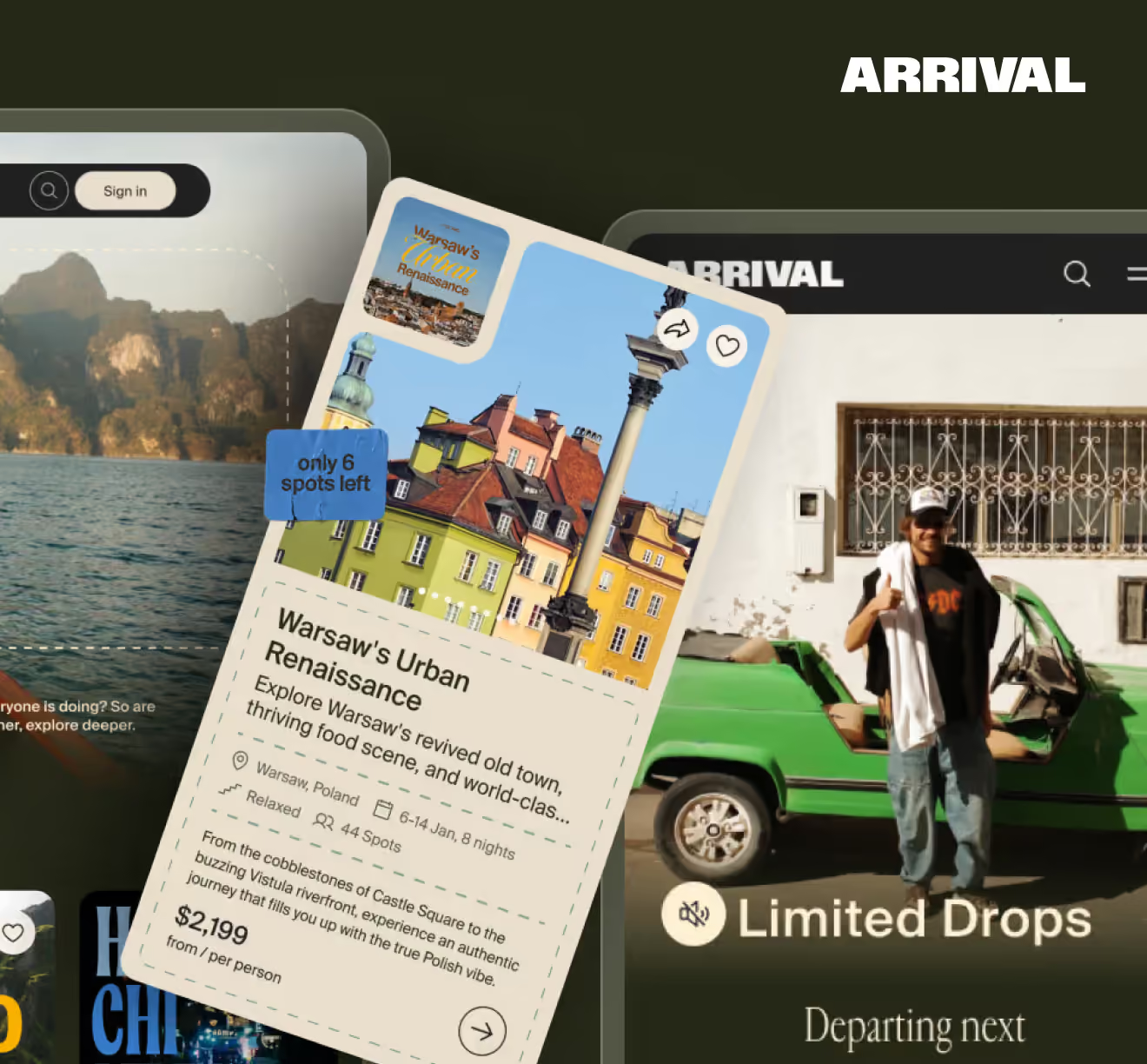
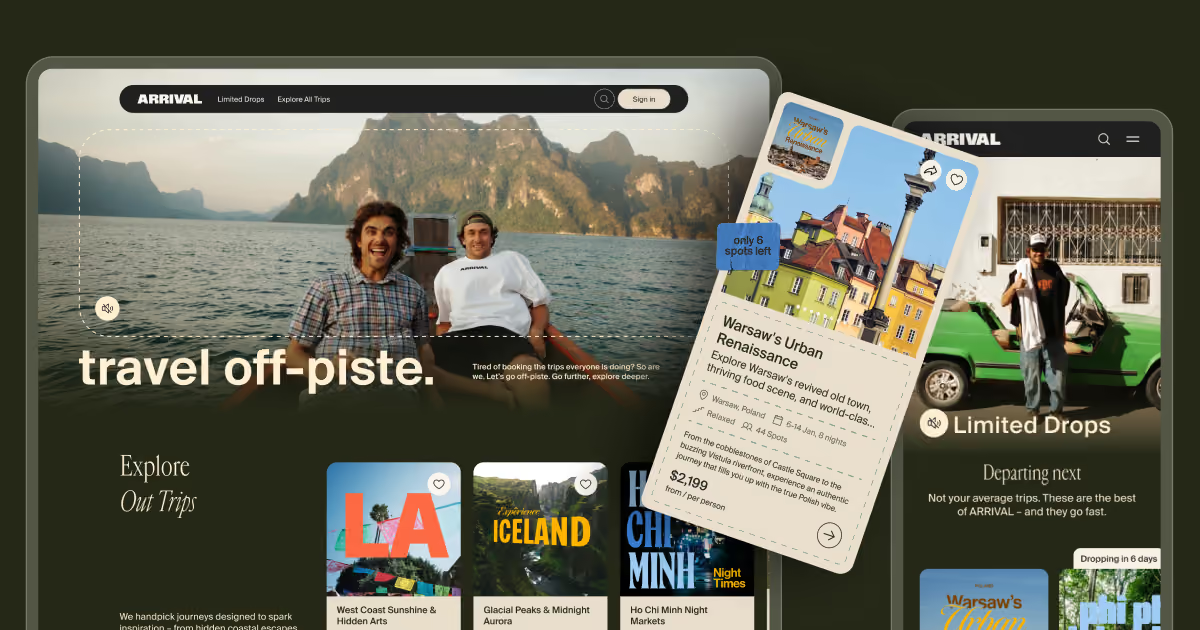
ARRIVAL's team faced a real version of this problem. Their original frontend had persistent performance bottlenecks. COAX rebuilt it, syncing trip data from Nezasa automatically, so pages loaded cleanly and stayed current.
The result speaks for itself. ARRIVAL pulled 500,000 total visitors and 20,000 weekly active users post-launch. None of that happens if the experience feels broken. CRO mistakes often start here: teams optimize copy while ignoring load speed and layout friction. Fix the experience first, and everything downstream improves.
Higher conversion rates
This is the metric everyone chases, and for good reason. A focused page, one goal, one CTA, converts more visitors than a cluttered one. Distractions cost you clicks.
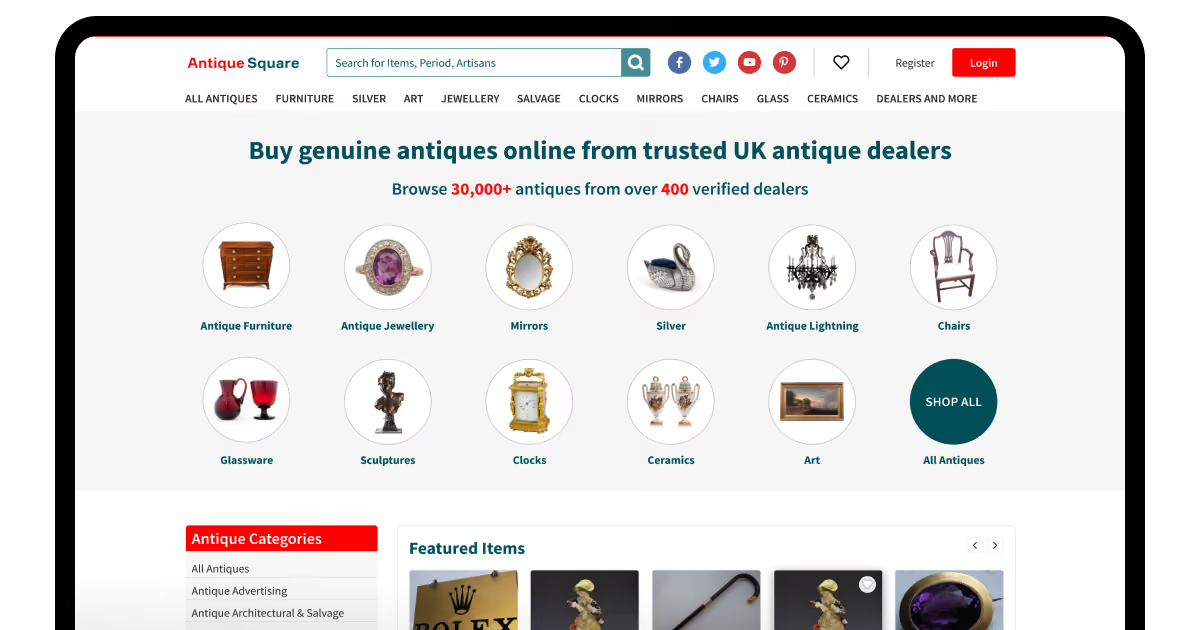
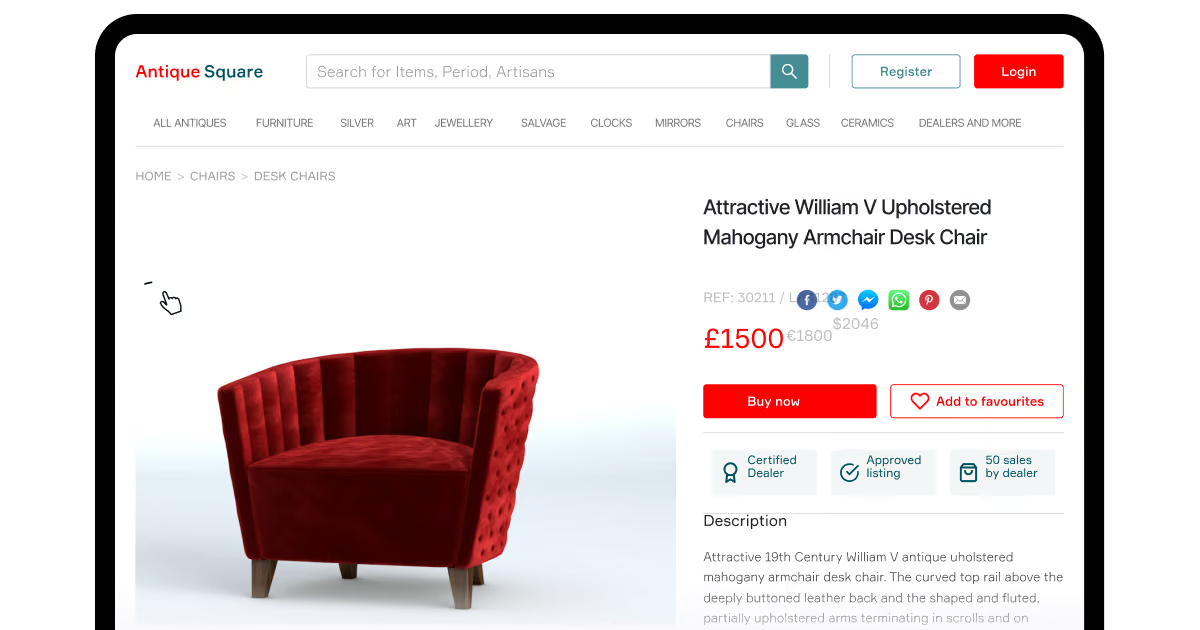
Project A's antique marketplace proves the scale of this gap. Their pages once loaded in six to eight seconds. After COAX's rebuild, load time dropped to half a second. Google Core Vitals jumped from below 20 to over 90.
Speed alone doesn't guarantee conversions, but it removes the biggest barrier to them. Visitors who wait, leave. Visitors who land on a fast, clear page stick around long enough to act. That's the entire premise behind improving landing page conversion: remove friction, then guide the visitor toward one action.
Better SEO performance
Search engines reward fast, well-structured, keyword-relevant pages. Optimization and SEO overlap more than most teams assume. A page built for conversions often ranks better too.
Shiji's rebrand illustrates this directly. COAX rebuilt their product pages with a unified visual system and cleaner content structure. Organic search traffic rose 95% after launch, without a separate SEO campaign driving it.
That's the mechanism behind seo landing page optimization: structure and speed do double duty. A page optimized for humans tends to satisfy search algorithms too. Landing page optimization examples like Shiji show this isn't theoretical. Clean architecture and fast pages consistently outrank cluttered, slow competitors, regardless of industry or product complexity.
Improved ROI on marketing campaigns
Every campaign costs money: paid ads, email sends, social promotions. A weak landing page wastes that spend. Traffic arrives, then leaves without converting.
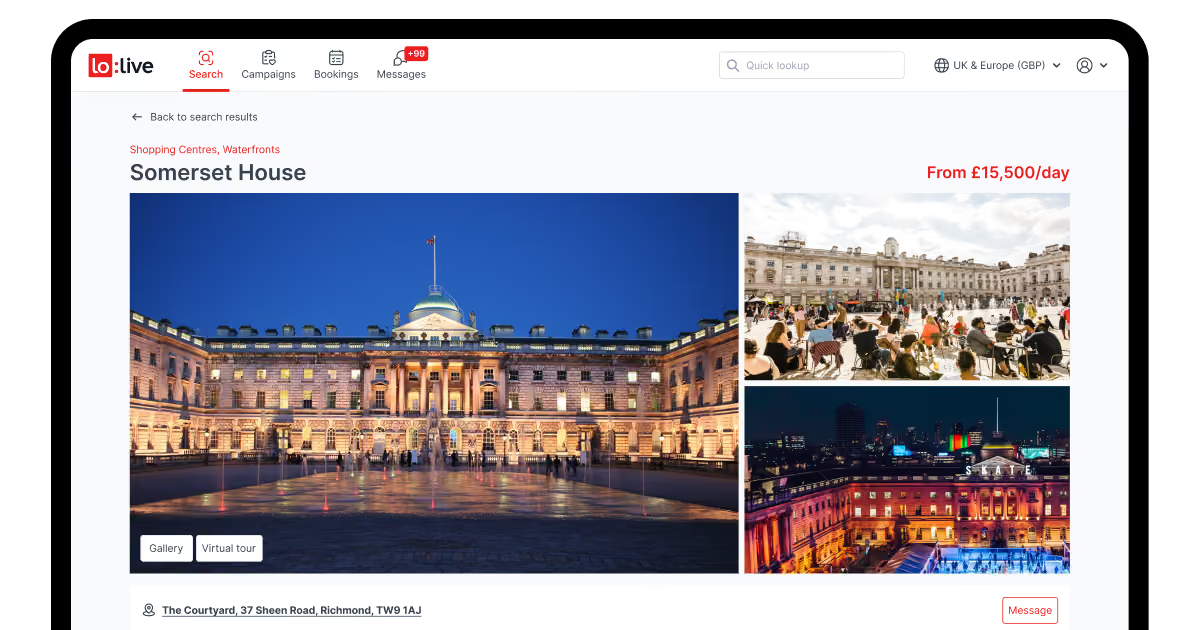
Location Live's campaign tools show the upside of getting this right. Campaign creation grew 140% from 2022 to 2025. Active engaged users surged 789% over the same stretch.
That growth didn't come from more traffic alone. It came from a platform built to convert the traffic already arriving. Every dollar spent driving visitors to an optimized page returns more value than the same dollar spent on a generic one. ROI isn't a vanity metric here. It's the direct payoff of doing optimization work properly.
Increased credibility and trust
A polished, professional page signals competence before a visitor reads any copy. Trust badges, testimonials, and consistent branding reinforce that signal further on truly optimized landing pages.
Location Live's client feedback captures this well. Their former CTPO called COAX the "engine room and compass" behind their platform, a level of trust built through years of reliable delivery, not a single redesign.
Credibility compounds over time. Visitors who trust a page convert faster and return more often. Businesses that treat trust signals as an afterthought lose visitors who'd otherwise convert. Building that trust starts with the same discipline behind every other benefit here: consistent execution, page after page, campaign after campaign.
Why is my landing page not converting?
A slow page or vague CTA often hides the real problem: you're judging performance against the wrong benchmark. This section covers realistic conversion rates by industry, the actual reasons pages stall, and metrics beyond conversion rate itself.
Good conversion rate benchmarks
Average conversion rates sit between two and three percent globally. Your specific "good" depends on industry, traffic source, and device. Top performers routinely hit above 11%.
Ecommerce: General ecommerce averages 2.5 to 3.0%. Top-tier stores clear 3.2%. Food and beverage runs higher, at 4.6 to 4.9%, due to repeat purchases.
B2B and SaaS: Free trial and demo pages average 2.5 to 5.0%. Strong performers exceed five percent. B2B lead generation ranges two to 5.0%, depending on form friction.
Channel and traffic source: Paid search averages 7.52% across industries. Organic search sits lower, at two to 4.0%. Social traffic converts weakest, at 0.5 to 1.5%.
Device: Desktop averages 2.5 to 3.9%, often boosted by complex checkouts. Mobile trails at 1.8 to 2.8%, despite carrying most traffic.
Knowing your category prevents chasing the wrong number. Project A's antique marketplace shows why this matters. Before COAX's rebuild, six-to-eight-second load times crushed both conversions and rankings. Learning how to optimize landing page speed pushed their Core Web Vitals score from below 20 to over 90.
That's the gap between guessing and applying real landing page optimization techniques.
Main reasons my landing page is not converting
Most conversion problems trace back to a handful of causes. They rarely involve big redesigns. They usually involve mismatched expectations, friction, or missing trust signals.
Headlines miss search intent. Visitors decide in seconds whether they're in the right place. A headline about your company, instead of their problem, loses them immediately. Match the language from the ad or search query that brought them there.
Pages load too slowly. Every extra second costs conversions, especially on mobile. Visitors on paid traffic are impatient by default. They'll bounce to a competitor before your page finishes rendering.
Calls to action stay vague or buried. Weak copy like "Submit" doesn't tell visitors what happens next. CTAs need to sit above the fold. They need specific, benefit-driven language instead of generic prompts.
Trust signals are missing entirely. A polished page without proof still stalls. Visitors need reviews, certifications, or case studies before committing. Location Live's client feedback, a former CTPO calling COAX their platform's "engine room," shows what earned trust looks like at scale.
Forms ask for too much too soon. Every extra field increases abandonment risk. Cut forms down to name, email, and one qualifying question. Gather the rest during a follow-up call instead.
Mobile experience breaks down. Tiny tap targets and zoom-required text drive visitors away. More than half of traffic now arrives on mobile. A page that only works on desktop loses the majority of its audience.
Fixing these six issues covers most conversion gaps. That's the foundation of solid landing page conversion optimization, and it rarely requires a full rebuild. Sometimes the fix isn't the page at all. Broad-match keywords or informational-intent SEO can send the wrong visitors entirely, which is a traffic problem, not a landing page optimisation one.
Metrics beyond conversion rate
Conversion rate tells you what happened, not why. Engagement, form, and technical metrics show where visitors actually struggle. Location Live's lo:live platform and ARRIVAL both prove this.
Lo:live tracked search activity as a leading indicator, not just bookings. Search volume held around 97,000 per year across 2024 and 2025. That steady engagement predicted the 789% surge in active users that followed.
ARRIVAL took a similar approach before launch. Early access alone generated 120,000 sessions, tracked independently of final bookings. That engagement data guided B2B landing page optimization decisions for their partner integrations, well before the public launch measured actual conversions.
Engagement and behavior metrics reveal how visitors interact with content.
Scroll depth shows whether your CTA and core message are visible.
Average time on page flags confusing or mismatched content when it's low.
Bounce and exit rates separate single-session drop-offs from later-page exits.
Click-through rate measures interest in specific buttons and links.
Form and technical metrics catch friction that conversion rate alone misses.
Form abandonment rate tracks users who start typing but never submit.
Page load speed predicts drop-off before visitors even see your offer.
Segmented device performance compares mobile completion against desktop, where gaps often hide.
Together, these metrics turn a single conversion number into a diagnosis. That's what separates guessing from real landing page optimization: knowing exactly where visitors stall, not just how many convert.
What should you do before landing page optimization?
Optimization without preparation wastes time and budget. Before touching design or copy, you need clarity on six fronts: your goal, your audience, your competitors, your baseline, your journey map, and your content plan.
Define a single conversion goal
One page, one goal. Trying to capture emails, sell a product, and book a demo on the same page dilutes all three. Pick the single action that matters most.
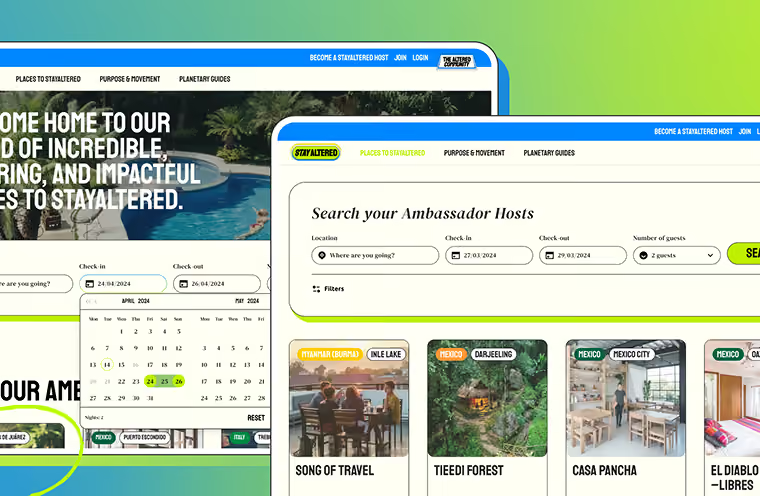
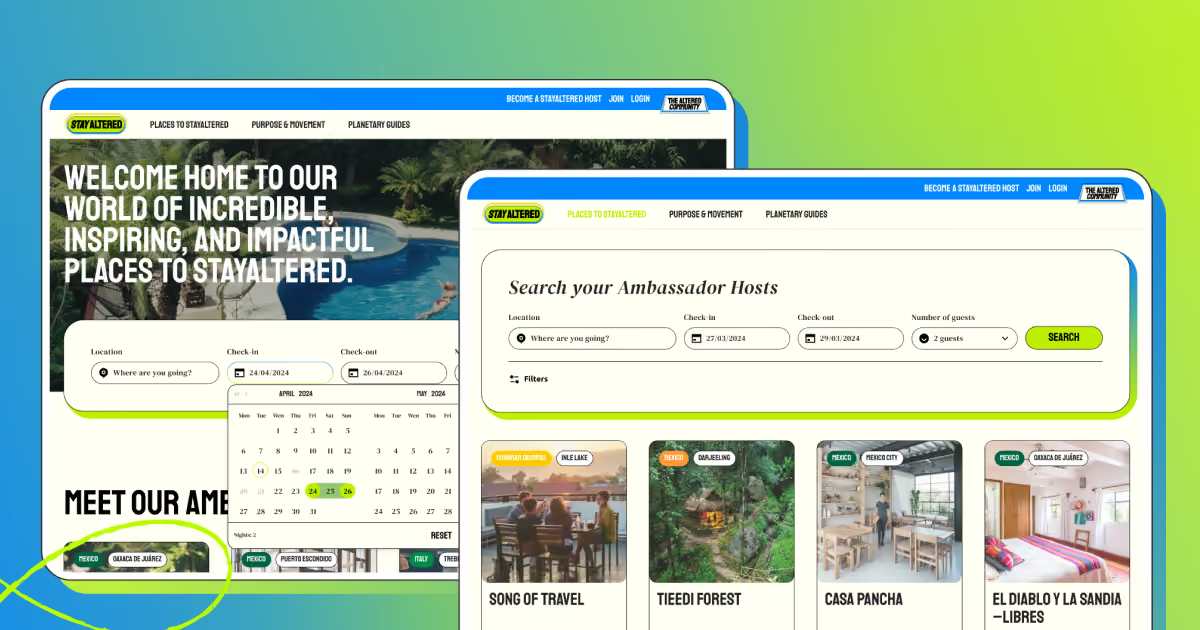
Stay Altered built this discipline into its booking flow. Their Instabook feature exists for one purpose: confirm a reservation instantly, without detours. That single-goal focus is core to any landing page conversion rate optimization effort.
Write your goal down before anything else. Every headline, CTA, and layout choice should serve it directly.
Understand your target audience
Generic pages speak to no one specifically. Understanding your audience means knowing what they search, what they fear, and what convinces them to act. Skip this, and your copy defaults to guesswork.
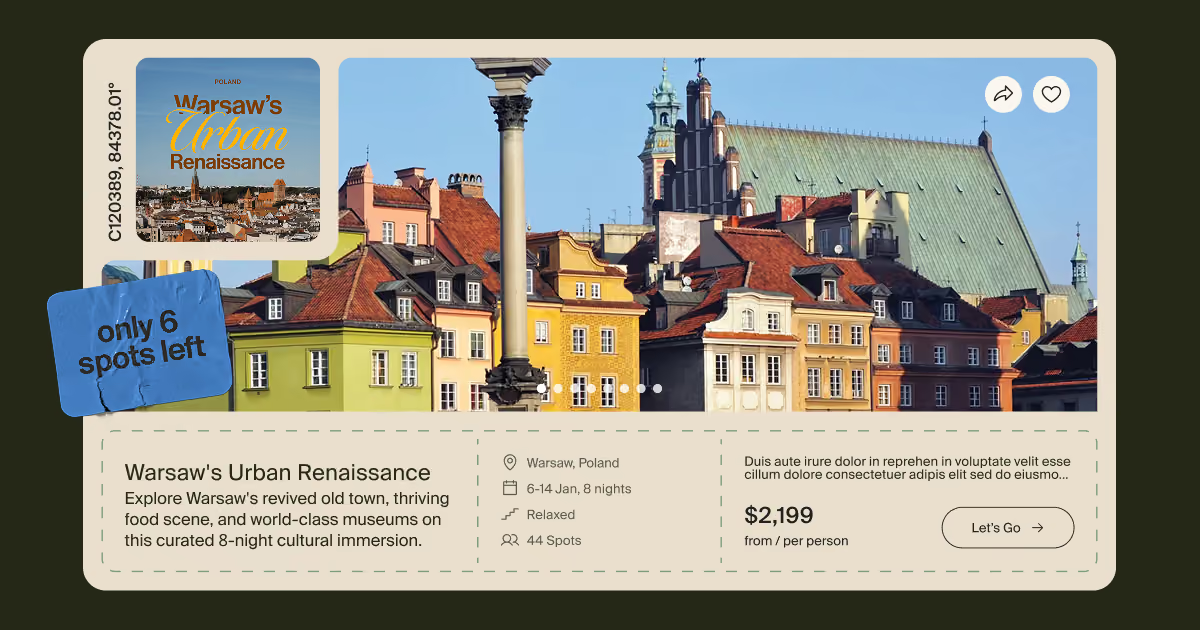
ARRIVAL solved this by building two distinct booking paths. Transactional trips suit visitors who want everything pre-arranged, while a non-transactional flow serves travelers who want to customize their own journey. That split only works because the platform understood its audience holds genuinely different needs, not just different preferences.
Interview past customers if you can. Ask what almost stopped them from converting.
Analyze competitors
Competitor pages reveal what your audience already expects. Study their headlines, CTAs, and trust signals before building your own. You're not copying; you're calibrating.
Project A's business directory expansion came from a clear market gap. Dealers wanted offline discovery tools competitors weren't offering. COAX built a geo-aware directory with Algolia-powered search to fill it directly.
Look at three direct competitors and three adjacent ones. Note what they emphasize above the fold.
Audit your current performance
You can't improve what you haven't measured. Pull existing analytics before making changes: conversion rate, load speed, bounce rate, and traffic sources. This baseline tells you where problems actually live.
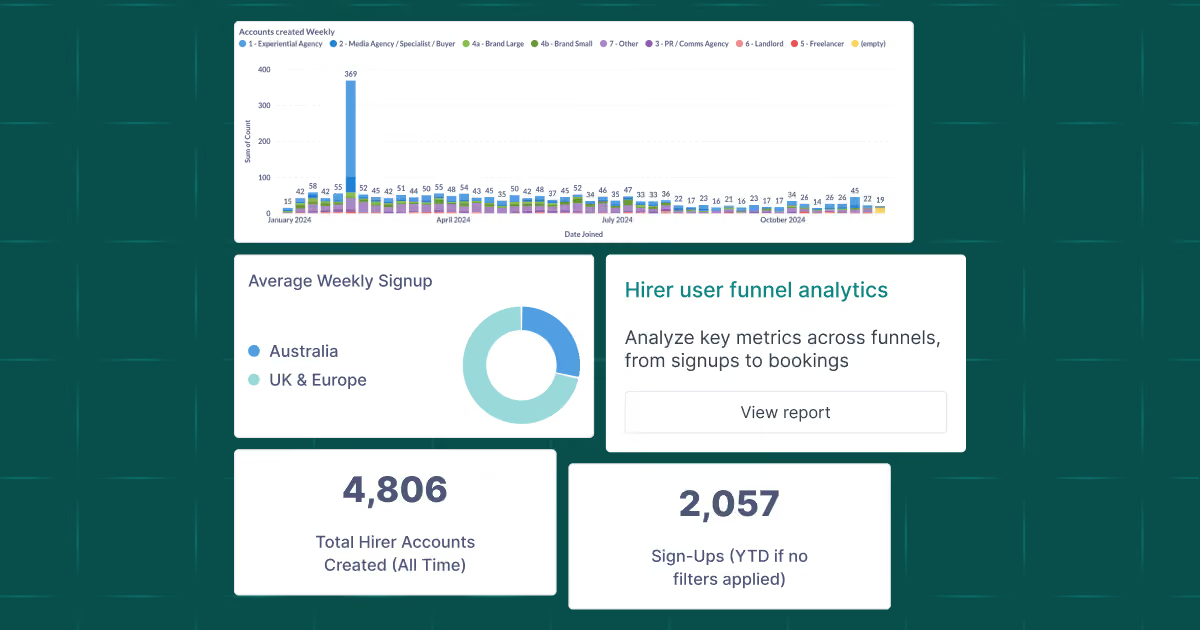
Location Live's analytics and reporting feature shows this discipline in practice. Metabase integration gives internal teams drill-down capabilities and period selectors for performance comparison, generated automatically. That's a baseline built into the platform, not bolted on afterward.
Most landing page optimization software platforms offer built-in analytics for this step. Set up tracking before you touch a single design element.
Map the user journey
A conversion goal means nothing if the path to it confuses visitors. Map every step from arrival to action, and flag friction points along the way. This exposes gaps design alone won't reveal.
Location Live's enhanced booking flows do exactly this kind of mapping. Step-by-step workflows eliminate fragmented processes and dead-end scenarios, guiding hirers from initial interest to confirmed booking. Clear stages replace ambiguity at every point in the journey.
Walk through your own funnel as a first-time visitor would. Note every point where you'd hesitate or leave.
Prepare content and technical foundations
Copy, images, and page structure all need groundwork before optimization starts. This includes technical SEO basics: page titles, meta descriptions, and clean URL structure. Get this wrong, and no amount of testing fixes it.
Watch out for AI copywriting risks here. Generated copy often ignores your actual audience research and sounds identical to competitors. Use AI for drafts, not final copy.
Learning how to optimize a landing page for SEO starts with this groundwork: fast load times, structured headings, and keyword-relevant content. Shiji's product pages paired unique visual identities with consistent underlying structure, letting search engines and visitors navigate the portfolio easily.
Get these six steps right, and the optimization work that follows has a real foundation. Skip them, and you're just guessing at what to optimize on landing pages first.
Best practices for landing page optimization
Well-optimized landing pages succeed on several fronts at once. Headlines and CTAs matter, but so do trust signals, load speed, form design, and visual storytelling. Here's how each plays out in practice, as we’ve seen from our work.
Strong headlines confirm visitors landed in the right place. They mirror the search term or ad that brought the click. Shiji's product pages show this per product. "The trusted POS for the world's top hotels" speaks directly to hotel buyers, not a generic audience.
Effective CTAs need contrast, action words, and thumb-friendly size on mobile. "Get your free quote" outperforms "Submit" every time. Stay Altered's Instabook button shows this well. One click confirms a reservation instantly, with no extra steps in between.
Trust signals close gaps that polished design alone can't fix. Reviews, certifications, and client logos reassure hesitant visitors fast. Location Live's platform is a great example of B2B landing page optimization. Their pages feature major client brands, including Marriott and IHG, to prove credibility instantly.
Form design decides whether interested visitors actually convert. Every extra field increases the odds someone abandons it. Stay Altered's Instabook flow asks only what's essential: dates, room type, guest count. Nothing more stands between interest and confirmed booking.
Page speed affects both conversions and search rankings simultaneously. A slow page loses visitors before they see your offer. Project A's transformation makes this tangible. Load times dropped from six to eight seconds to half a second after a full infrastructure rebuild.
Visual storytelling helps visitors grasp complex offers quickly. Static text alone struggles to explain layered products or services. Shiji's animated Day and Night concept solves this directly. Fluid transitions move visitors through a 24-hour cycle, tying together nine distinct products visually.
Mobile-first navigation matters more than most teams assume. Over 80% of landing page traffic now starts on mobile. Shiji's circular navigation wheel required custom Webflow workarounds to stay responsive. Complex portfolios still need to work cleanly on small screens.
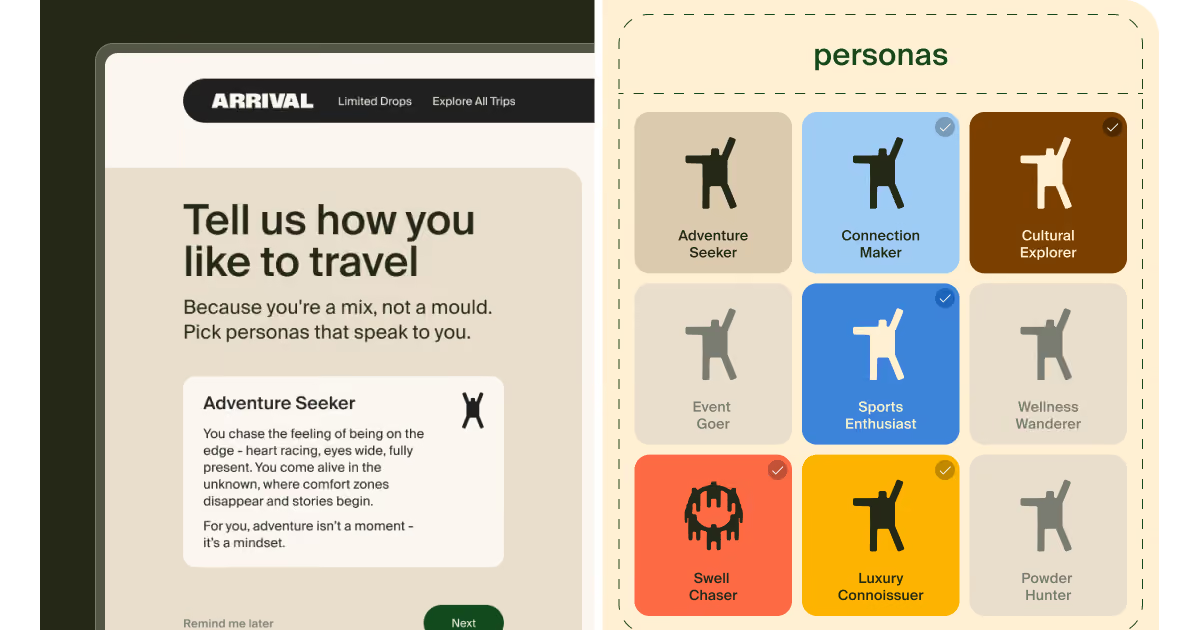
Personalization increases relevance for visitors with different needs. A one-size page can't speak to every visitor equally well. ARRIVAL's persona quiz personalizes each visitor's journey from registration. Travelers self-identify as a "Swell Chaser" or "Cultural Explorer," then see matched trips.
Applying landing page optimization best practices means testing elements individually rather than redesigning everything at once. A full redesign makes it impossible to know which change drove results. Isolate variables, run tests properly, and let data guide the next iteration. That discipline separates pages that improve steadily from pages that stall after one big launch.
Landing page optimization checklist
Ten checkpoints cover everything from hero copy to post-launch testing. Group them into three phases: above the fold, design and copy, and technical performance. Work through them in order, since early mistakes compound through every later stage.
Most landing page optimization software platforms can track these ten points automatically, flagging slow load times or high bounce pages. Still, no tool replaces reading real user behavior yourself, since dashboards show what happened, not why.
Above the fold decides whether visitors stay at all. Three checkpoints matter most here.
Clear value proposition: Put a benefit-driven headline and sub-headline in the hero section, stating exactly what visitors gain.
Single focus: Limit the page to one goal, like a form fill or a purchase, with no competing offers.
Immediate social proof: Show reviews, trust badges, or ratings visible without any scrolling required.
Get these three right, and visitors understand your offer within seconds. Miss them, and no amount of design polish downstream recovers that lost attention.
Design and copy carry visitors from interest through to action. These three checkpoints are very strong landing page optimization tools. They remove friction along the way.
Removed distractions: Delete main navigation bars, sidebars, and any extra outbound links.
Scannable content: Use short paragraphs, clear subheadings, and bullet points throughout the page.
Strong CTA design: Make buttons high-contrast, action-oriented, and easy to tap on any screen.
Each of these three reduces the cognitive load on a visitor deciding whether to act. A clean layout signals professionalism before a visitor reads a single word of copy.
Technical and testing checkpoints determine whether the page actually performs at scale. These matter regardless of how strong your copy reads.
Fast load speed: Keep load times under three seconds to prevent early bounce.
Mobile-first layout: Size buttons large and keep text brief for phone and tablet users.
Systematic A/B testing: Split traffic 50/50 on variants and wait for statistical significance.
Ongoing iteration: Revisit and refresh pages regularly as traffic sources and behavior shift.
Every element on the page should earn its place. If it doesn't move the visitor toward one action, cut it says Orest Falchuk, Head of Engineering at COAX Software.
Real projects show these checkpoints working together, not in isolation. Location Live's lo:live platform removed dead-end steps from its entire booking flow. That single change touched design, copy, and technical performance simultaneously. Engaged users surged 789% between 2023 and 2025 following that overhaul.
These landing page optimization tips work together, not independently of each other.
That's the full checklist. Next, we'll cover which tools actually help you optimize landing page performance at scale.
Best tools for landing page optimization
Picking the right platform means matching features to your actual bottleneck, not chasing the longest feature list. This section covers ten landing page optimization tools, the criteria that separate them, and how each performs in practice.
Evaluating landing page optimization software takes more than a features checklist. We tested each tool against five criteria: build flexibility, testing depth, AI usefulness, integration reach, and pricing fit.
Build flexibility measures how far you can push custom design. Template-based tools move fast, but visual CMS platforms scale better. Shiji's portfolio needed full flexibility. Nine distinct product identities required custom Webflow components, not template constraints.
Testing depth covers whether a tool runs real statistical A/B tests. Some tools guess at winners. Others wait for genuine significance before declaring results.
AI usefulness separates real automation from marketing buzzwords attached to old features. AI landing page optimization should reduce manual work, not just generate filler copy nobody reads.
Integration reach determines how well a tool fits your existing stack. A tool that can't sync with your CRM creates more work than it saves.
Pricing fit weighs cost against team size and actual usage. Enterprise tools often overshoot the needs of a five-person marketing team.
Tool
Page builder
AI features
Testing
Best for
Unbounce
Drag-and-drop
Smart Traffic AI
Native A/B
Paid ad campaigns
Instapage
Drag-and-drop
AI content gen
Native A/B
Enterprise teams
Leadpages
Template-based
Basic AI copy
Limited
Small businesses
HubSpot
CMS-integrated
Predictive lead scoring
Native A/B
Full-funnel marketing
Webflow
Full visual CMS
None built-in
Third-party
Custom design needs
Optimizely
N/A (testing tool)
Stats-based AI
Advanced A/B
Enterprise experimentation
VWO
N/A (testing tool)
Behavior AI
Advanced A/B
Data-heavy teams
Brizy
Drag-and-drop
Prompt-based AI
Basic
Budget-conscious builders
Landingi
Template-based
AI content gen
Native A/B
Agencies, multiple clients
ConvertFlow
Overlay-focused
Segmentation AI
Native A/B
Personalization-heavy sites
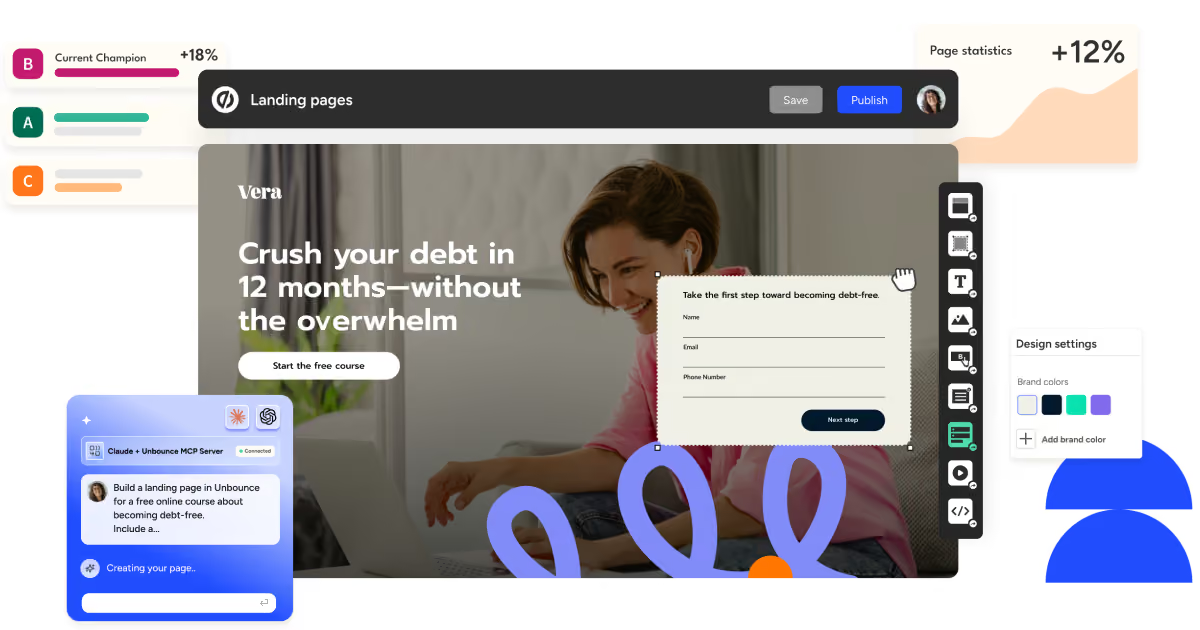
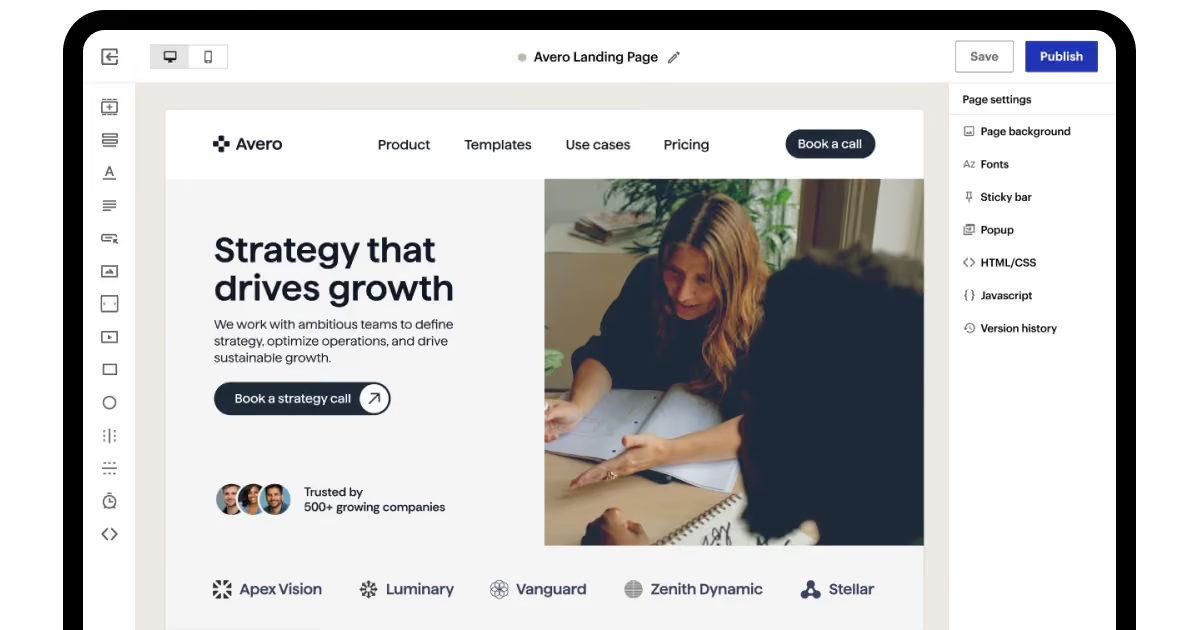
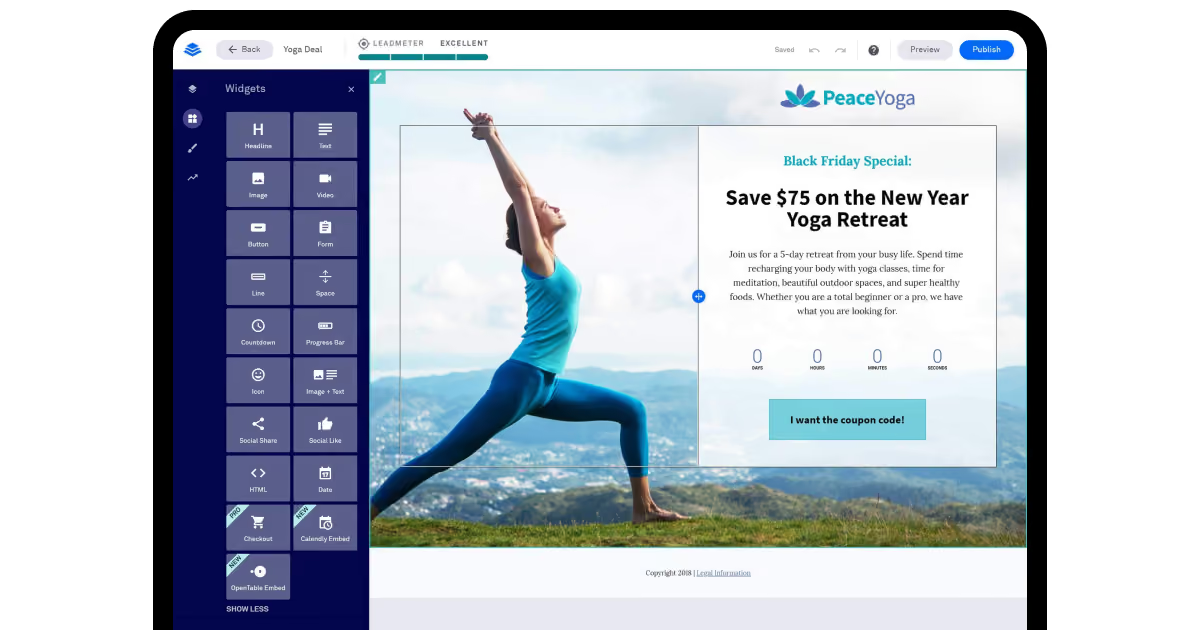
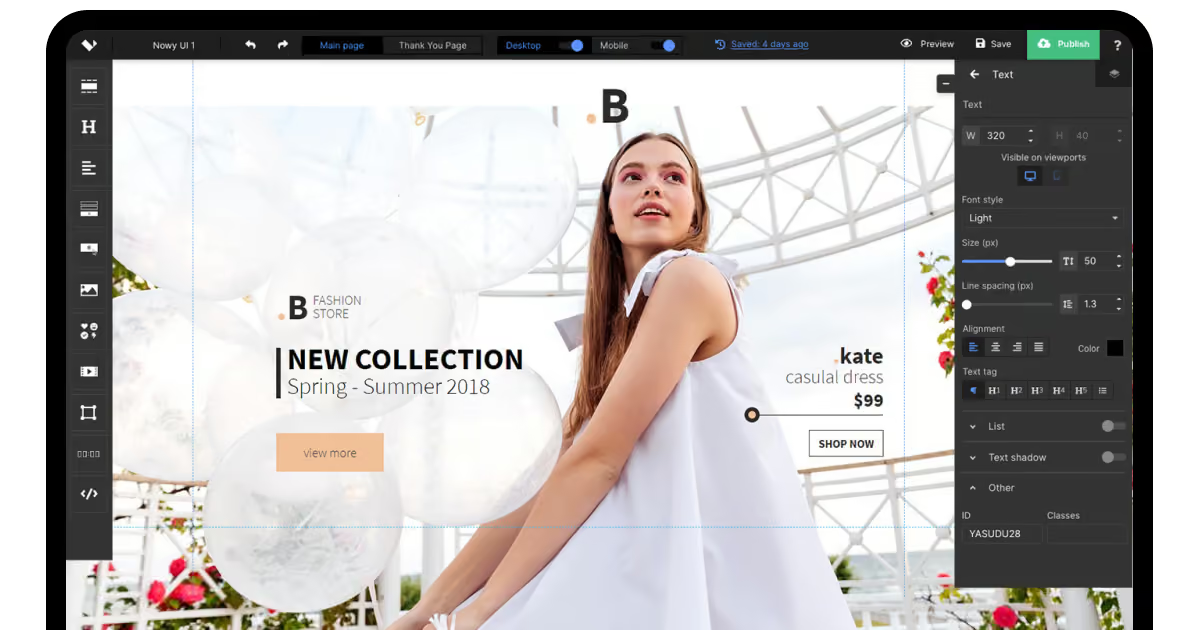
Unbounce built its reputation on paid-campaign landing pages specifically. Smart Traffic AI routes visitors to the best-performing variant automatically. The builder stays intuitive even for non-technical marketers. Our testing found Smart Traffic genuinely lifts conversions within two to three weeks. Setup takes longer than competitors if you need custom tracking parameters.
Instapage targets enterprise teams running many simultaneous campaigns. AI content generation drafts headlines and body copy from a brief. Collaboration tools let large teams review pages before launch. We found the AI drafts useful as a starting point, not a final version, good enough to optimize a landing page. Teams without a dedicated designer will still need one for polish.
Leadpages keeps things simple for small businesses without a marketing team. Templates cover common use cases: webinars, lead magnets, simple opt-ins. Pricing stays accessible compared to enterprise-tier competitors. Testing showed solid performance for straightforward pages, but flexibility drops fast. Complex, multi-section pages hit template limitations quickly.
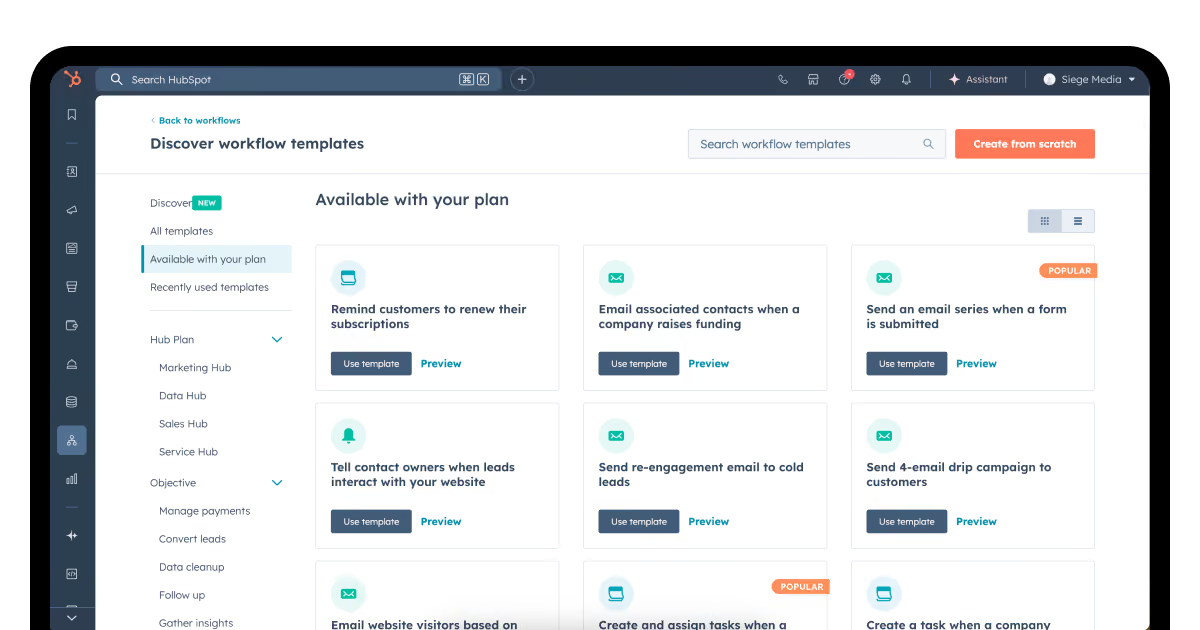
HubSpot connects landing pages directly to its full CRM and marketing suite. Predictive lead scoring flags high-intent visitors before they convert. That data feeds sales teams automatically, closing the loop end to end. We found this integration valuable specifically for teams already inside HubSpot's ecosystem. Standalone use, without the CRM, doesn't justify the cost.
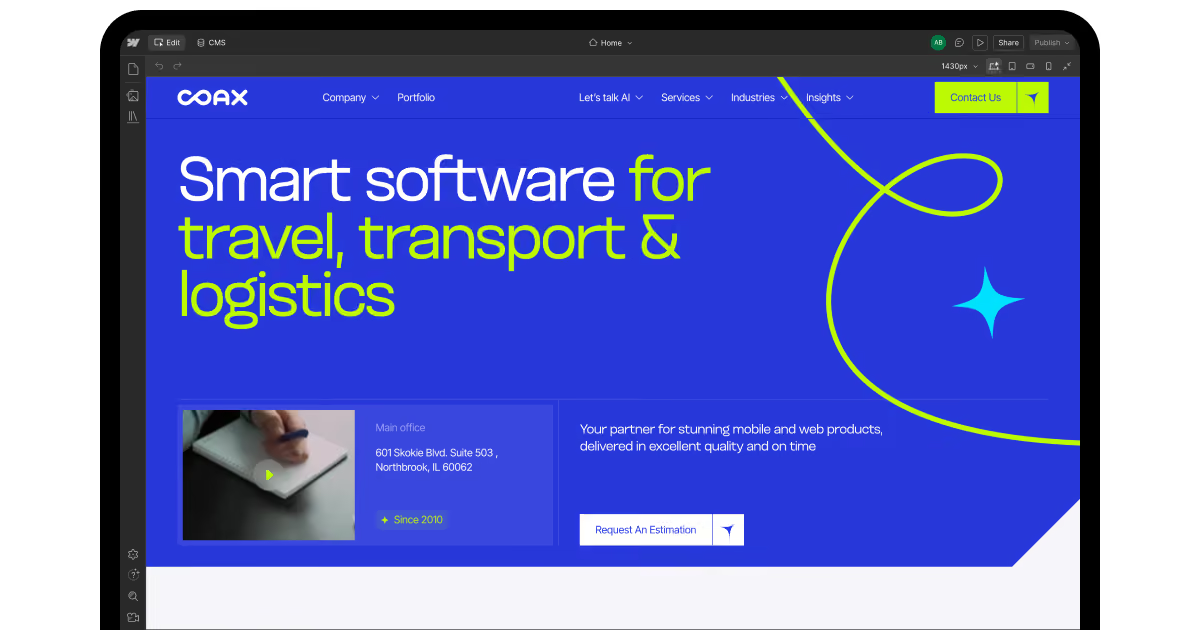
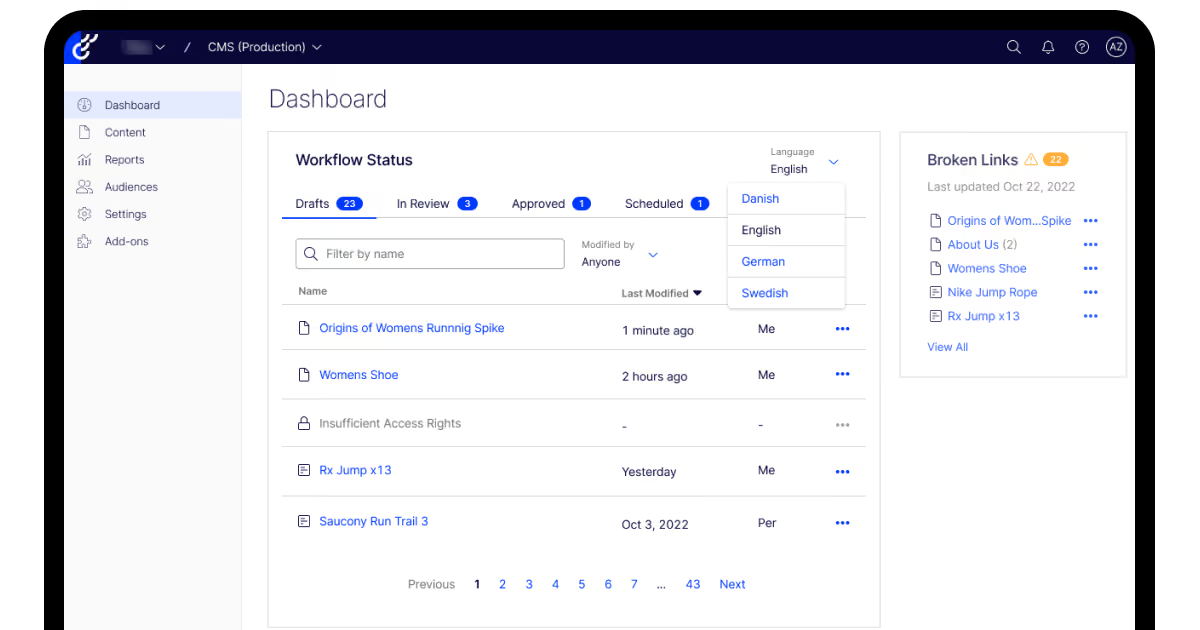
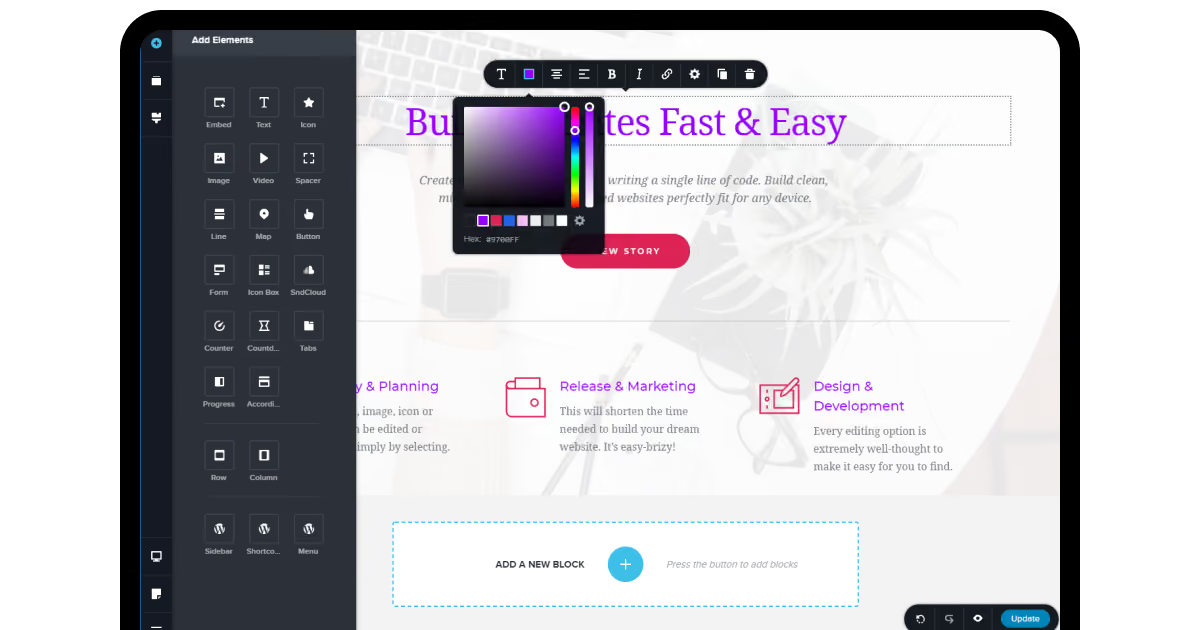
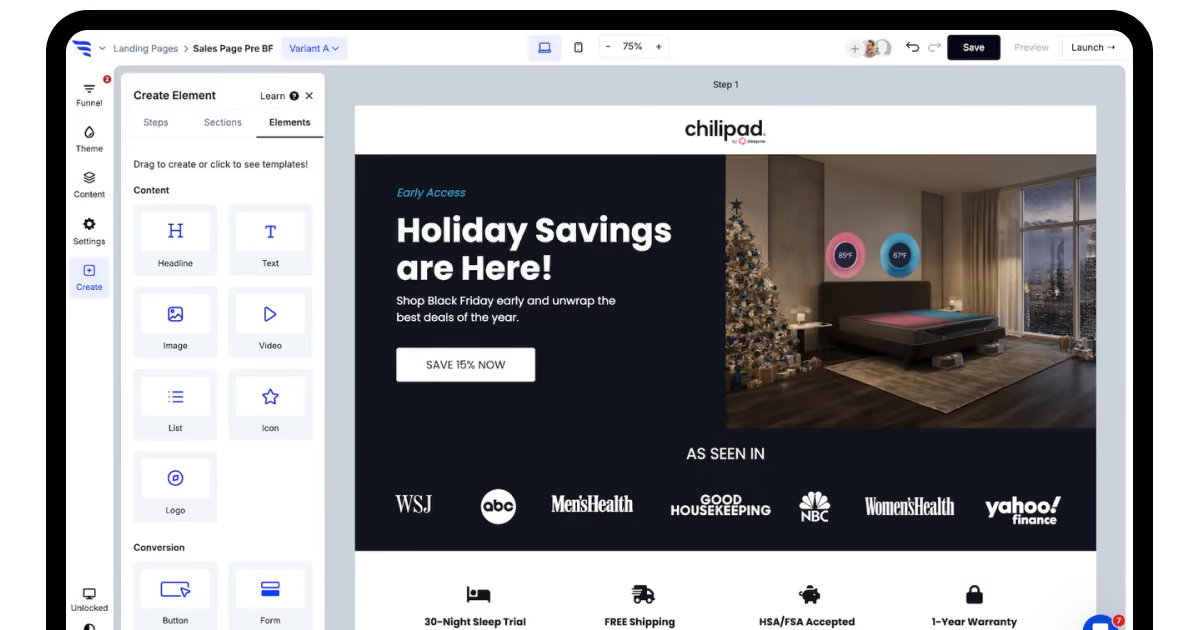
Webflow offers the deepest design control of any tool on this list. No template ceiling exists; teams build exactly what they envision. COAX builds on Webflow regularly for this reason. Shiji's rebrand needed a custom circular navigation wheel; Webflow's flexibility made that scope achievable. The tradeoff is a steeper learning curve for non-developers.
Optimizely exists purely for experimentation, not page building itself. Statistical rigor here outperforms most native A/B tools bundled elsewhere. Enterprise teams running dozens of simultaneous tests get the most value. Our evaluation confirmed its significance calculations hold up under real scrutiny. Smaller teams will find the cost hard to justify.
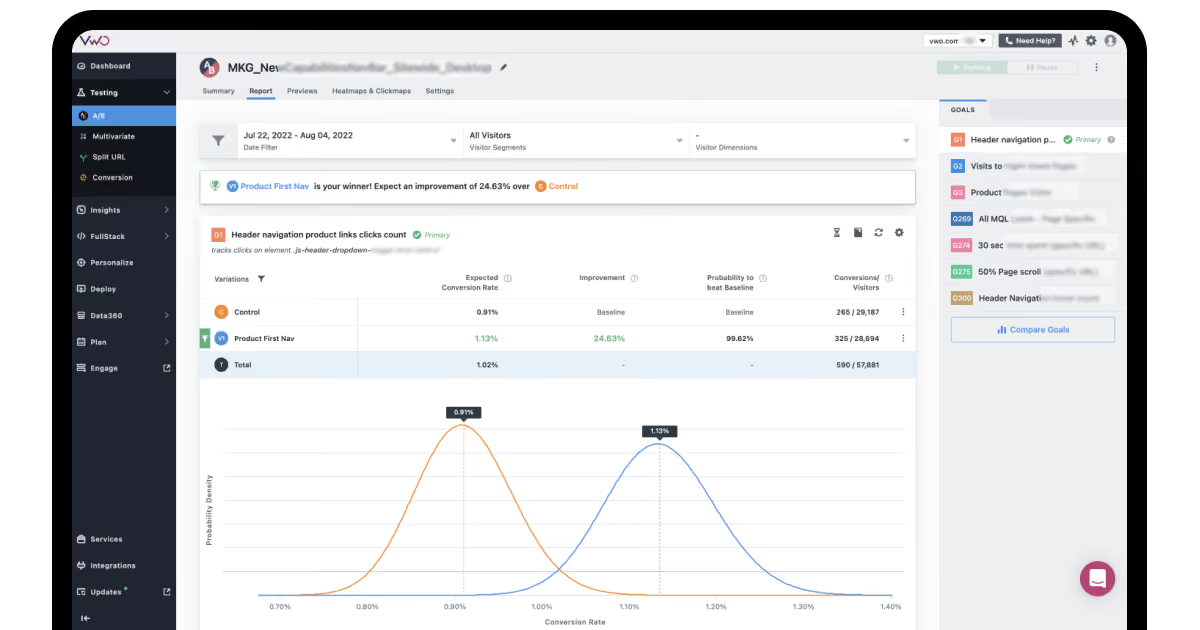
VWO pairs testing with behavior analytics like heatmaps and session recordings. That combination reveals not just what won, but why it won. Teams get visual proof behind every test result. We found the behavior data especially useful for diagnosing form abandonment. Still, with this landing page optimization software, the pricing scales quickly as traffic volume grows.
Brizy recently shifted toward prompt-based AI page generation. Describe your page, and a first draft appears within seconds. Budget-conscious teams get real functionality without enterprise pricing. Testing showed the AI output needs manual refinement before launch. It's a strong starting point, not a finished product.
Landingi serves agencies managing landing pages across many client accounts. Multi-account management keeps campaigns organized without constant tool-switching. AI content tools help agencies move faster across accounts. Our testing found this genuinely saves time at scale. Individual businesses managing one account may not need this structure.
ConvertFlow focuses on personalization and overlay-based conversion tactics. Segmentation AI adjusts messaging based on visitor behavior in real time. That's useful for sites already driving solid traffic volume. We found it strongest paired with an existing page, not as a standalone builder. It complements a landing page optimization tool rather than replacing one.
Every landing page optimization platform here solves a real problem well. None solves every problem equally. Match the tool to your actual bottleneck: design flexibility, testing rigor, or integration depth, and the right choice gets obvious fast.
Two things set a landing page optimization company apart from a generic dev shop: vertical depth and team continuity. We have created strategies and content optimization solutions focused on travel, transportation, logistics, and mobility technology for almost 20 years. That work spans booking platforms, marketplaces, concierge tools, and supplier connectivity systems. Few providers in Europe or Asia match this level of specialization.
How to choose the right landing page optimization tool?
Choose your tool based on what actually constrains you today. Content velocity, technical complexity, or integration depth, pick the one bottleneck that matters most, and let that decide.
Tool choice depends on your dev resources, content velocity, and integration needs. There's no universal winner here. What worked for one platform can fail for another with different constraints.
If we rebuilt ARRIVAL's stack from scratch today, flexible content management would top our list. Their team publishes at social-media speed, with no developer bottleneck. Any landing page optimization software without a strong CMS layer would've slowed that down immediately.
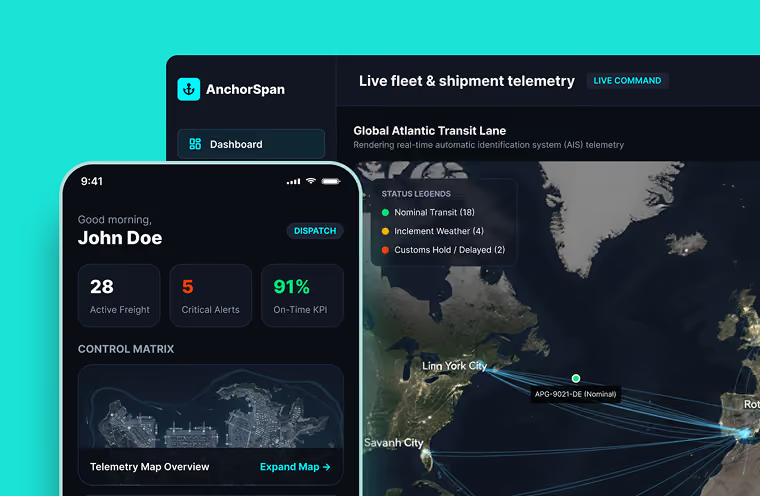
For a logistics platform like DriveIQ, the calculus shifts entirely. Real-time GPS ingestion from 500 vehicles demands custom infrastructure, not off-the-shelf builders. We targeted the 20% of routes causing 80% of the issues first, using rule-based alerts while models were trained. That phased approach mirrors how to optimize a landing page: fix the highest-leverage problem before chasing smaller wins.
Our work on the antique marketplace shows why single-metric thinking fails. We didn't treat bounce rate as the goal itself. It was one symptom among several, alongside load time and database performance. We rebuilt the underlying experience end to end instead of chasing one number.
That's the groundwork behind COAX's user journey optimization services. The goal isn't gaming a metric. It's making sure each page does its job, so visitors move exactly as far as they should.
Even if you already use a ready-made platform, we can tailor it further. Our team integrates new data sources, expands legacy tools, and builds custom feature modules.
You can count on this reliability. Median engineering tenure at COAX runs 6.5 years, well above typical industry turnover. Clients get accumulated domain knowledge, not a rotating cast of new developers relearning their business. That consistency shapes every CRO services engagement, from a single landing page audit to a full rebuild.
Tell us what your current stack lacks. We'll build, bridge, and customize the exact solution you need.
FAQ
What's a realistic timeline for landing page optimization software to show results?
Most teams see measurable shifts within two to four weeks, once traffic volume supports statistical significance. Smaller sites need longer to gather enough data. Don't judge a test after three days. Give it a full traffic cycle, including weekends, before drawing conclusions. Patience here matters more than most founders expect going in.
How to optimize a landing page for lead generation without hurting SEO?
These goals usually align, not conflict. Fast load times and clear structure help both lead capture and search rankings simultaneously. The tension appears with gated content: forms blocking crawlable text can hurt indexing. Keep core value-proposition copy visible to crawlers, and gate only supplementary content behind the form itself.
What is landing page optimization going to cost for a small business?
Costs range widely, from a few hundred dollars monthly for template tools to five figures for custom builds. Match spend to your traffic volume and technical complexity, not to what competitors spend. A high-traffic page justifies real investment fast. A low-traffic page rarely needs custom development work at all.
How to optimize a landing page for SEO when it's built for paid ads?
Paid landing pages often shouldn't compete for organic rankings at all. Consider setting thin, campaign-specific pages to noindex, so they don't dilute your site's authority. Reserve full SEO treatment, internal links, and keyword depth for evergreen pages meant to rank long-term. Mixing both goals on one page usually weakens both outcomes.
Can I run landing page optimization myself, or do I need an agency?
Simple sites with moderate traffic can often self-manage using built-in tool analytics. Complex builds, custom integrations, or high-stakes campaigns benefit from outside expertise. We've seen founders waste months debugging tracking setups that an experienced team resolves in days. Match the decision to your available technical resources, not your ambition alone.























































.avif)
.avif)

We are interested in your opinion