No matter how much traffic you have, putting effort into driving it is pretty much useless if it barely converts. The good news is that with our 15-years proven CRO tips, you can create your own roadmap for improvement. First of all, let’s understand why conversion rate optimization is important:
Systematic CRO roadmaps remove guesswork through research-driven hypotheses, prioritization frameworks (PIE/ICE), and structured A/B testing that delivers measurable results.
CRO and SEO must work together: SEO drives traffic, but CRO ensures visitors convert, creating a feedback loop that maximizes both rankings and revenue.
Industry-specific tactics for e-commerce, B2B, travel, and hospitality address unique conversion barriers in each sector.
Proven quick wins like page speed optimization (17% conversion boost per second), mobile optimization, and social proof that deliver immediate impact.
In this CRO guide, we will define the formulas for calculating your conversion rates, outline how it works together with SEO, and break down the steps to build your own improvement roadmap.
What is CRO?
First of all, what does CRO stand for? Conversion rate optimization is the systematic process of increasing the percentage of website visitors who complete a desired action. Making a purchase, completing a form, subscribing to a newsletter, or clicking a button could all be examples of that action. This way, you concentrate on converting more of the current visitors rather than investing additional funds to attract new ones.
This is how it works. Let's say 100 people come to your product page, but only two of them buy anything. You currently have a 2% conversion rate. CRO resolves those issues and helps you understand why the other 98 customers just leave without making any purchase. Perhaps they are confused by your checkout procedure or there isn't enough detail in your product photos?
The goal is to turn more visitors into customers by removing these obstacles and improving their experience. Research by Zimmermann and Auinger shows that companies can improve some touchpoints along the journey to increase conversions through targeted marketing actions. Before we get to the CRO tactics, let’s define why it’s vital for you.
Why does Conversion Rate Optimization matter?
The answer is simple - without requiring more traffic or increased advertising spends, CRO has an impact on your bottom line. Each visitor gains value as the conversion rate increases.
Let’s see the market situation - we can take retail, for instance. The average e-commerce conversion rate is 1.74%, so the majority of online retailers lose 98 out of every 100 visitors who do not make a purchase. However, optimized stores achieve 2.9% conversion rates. Although it may seem insignificant, ecommerce conversion rate optimization ends in 67% more revenue from the same traffic.
How does it translate to cost savings? You pay $50 per customer if you spend $10,000 a month on advertisements to attract 10,000 visitors and 200 of them convert at a rate of 2%. With optimization, you can raise that conversion rate to 3%, and you'll have 300 clients paying only $33 for each. More sustainable in the long run, and more secure in our unstable economy.
What about the different channels’ impact? Targeted optimization programs can boost email conversions by 25% and on-site conversions by 60%, according to McKinsey research. This results in an approximate 20% increase in annual sales and a 30% increase in annual profits.
However, the advantages go beyond quick sales. There are additional conversion rate optimization benefits:
When more visitors convert, you spend less on each new customer.
When your website converts better, your marketing budget can be allocated better.
The modifications that increase conversions typically make your website more user-friendly.
You get more value out of the visitors you already draw in while rivals try to attract more.
Over time, minor gains in conversion can add up to substantial increases in revenue.
What you get as a result of conversion rate optimization strategies is higher sales, lower acquisition costs, greater competitive advantage, and a more secure future in your niche. So, how do you start?
How can you calculate conversion rates?
The trick in conducting an efficient CRO audit is that it’s not just one formula that shows you the whole picture. Let’s cover it all and go from the plain calculation to more specific other aspects to estimate.
The fundamental conversion rate formula
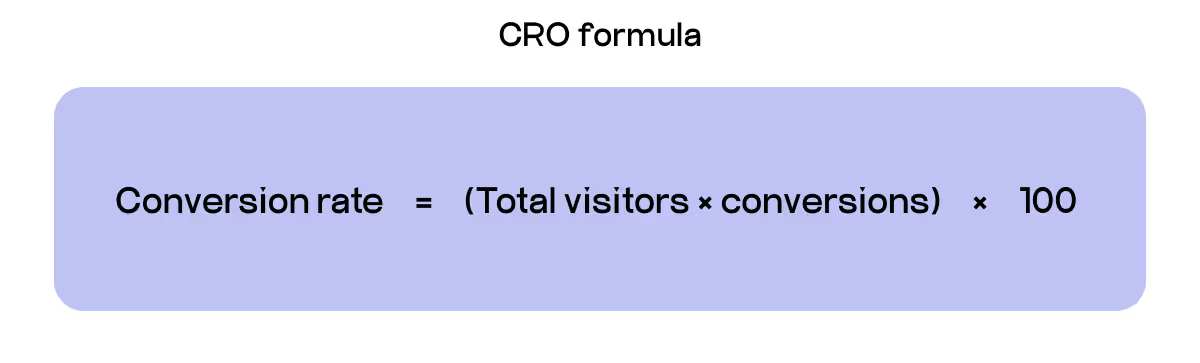
This one’s basic. After dividing the total number of conversions by the total number of visitors, you multiply the result by 100. This shows you the proportion of people who did what you wanted them to.
This is what the CRO formula looks like: Conversion rate = (Total visitors × conversions) × 100. For example, if your product page receives 1,000 visits this month, and 50 of them buy something, you have a 5% conversion rate - so 5% of your visitors become clients. The remaining 95% leave without making a purchase.
This isn’t just for purchases - any conversion goal can be achieved with this formula. You may monitor account registrations, form submissions, and newsletter signups. Count the number of people who complete the action that is most important to your company, then compare that figure to your overall traffic.
One more thing to add - without context, raw conversion numbers are misleading. With 100 conversions from 1,000 visitors, the rate is 10%; with 10,000, it is only 1% - the same result, but very different performance. In high-comparison settings, Matzler and others discovered retail conversion rates of 10–40%, where a 1% improvement increases sales by 5%. Also, conversion rate alone isn’t enough to get full CRO audits - you often need to know your lead goal, too.
Calculating your lead goal
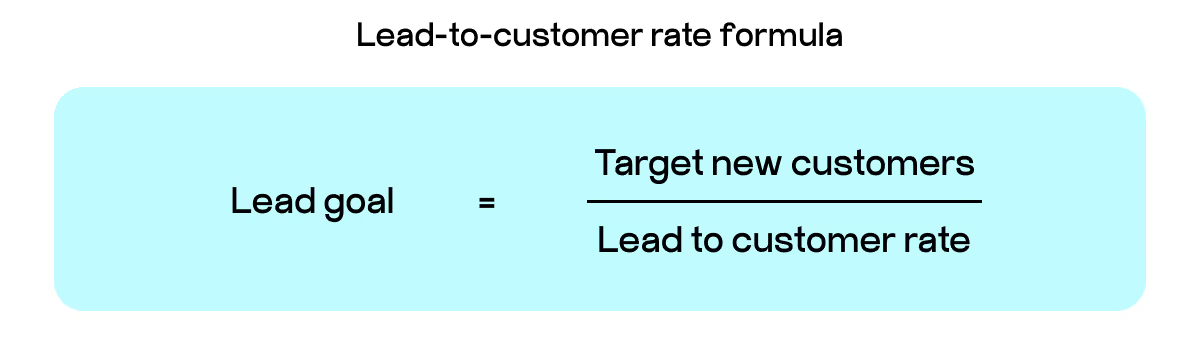
The percentage of leads that actually make a purchase is displayed by your lead-to-customer rate. To calculate it, divide the total number of customers by the total number of leads, then multiply the result by 100.
The formula for this metric is the following: Lead goal = Target new customers ÷ Lead to customer rate. For instance, you need 200 leads if you want 20 new clients this month and close 10% of your leads. This is the reason: 20 x 0.10 = 200.
The majority of companies monitor this throughout their whole funnel. Visitors, leads, and customers are all measured independently. Every conversion point has a unique rate - a visitor becomes a lead, then a lead becomes a client, so tracking this is useful to fully get the benefits of conversion rate optimization.
You can work backward from revenue goals with the aid of this calculation. For instance, start by determining the desired income you must earn, and then determine the number of clients necessary. Next, figure out how many leads you need to produce to acquire those. Unsure how to define how many customers you need for this, exactly? Let’s figure it out.
Calculating your target number of customers
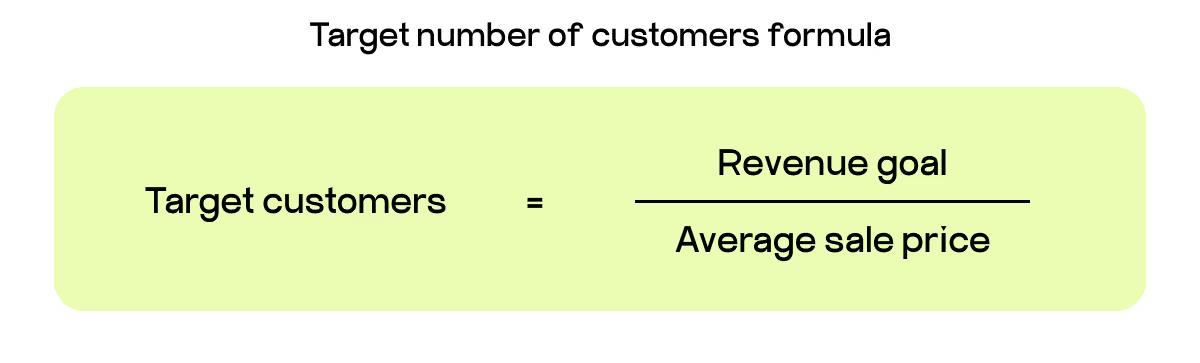
This one’s easy, too - just divide your revenue goal by your average sale value to know how many customers you need to hit your targets. The formula looks like this: Target customers = Revenue goal ÷ Average sale price. If your average customer spends $500 and you want $50,000 in revenue this month, then you need 100 customers by this estimation.
This works in reverse, too. Multiply your current customer count by average sale value to project revenue. Have 80 customers at $500 each? Expect $40,000 in revenue. Knowing your target customer number helps you plan the rest of your funnel. Once you know you need 100 customers, you can calculate how many leads and visitors that requires based on your current conversion rates.
Many companies focus on the wrong metric, measuring traffic growth, letting conversion rates sit still or even worsen. As a result, they spend more to acquire visitors who convert at lower rates. Eventually, the cost per customer rises even as visitor counts get higher. It’s smarter to accept modest traffic growth while improving conversion rates. This drives sustainable growth at a lower cost, being one of the effective conversion rate optimization techniques.
Where to implement a CRO strategy?
It’s important to understand where exactly to implement the CRO best practices and techniques. Let’s review specific touchpoints where it will be more resultful.
Landing pages generate the highest conversion rates of any page type, averaging 6.6%. They cut down distractions and concentrate on a task. Create landing pages with a single offer and a few navigational options. Try different headlines that convey value right away. For example, China Expat Health saw a 79% increase in website conversion rate optimization when they changed their headline from "Health Insurance in China" to "Save Up to 32% on Your Health Insurance in China." Use trust badges, customer testimonials, and benefit-focused copy that directly responds to visitor concerns.
Product pages are at the critical decision point of buying. Add user-generated content here, as research by Dingre shows that product pages with reviews, photos, and ratings increase conversions by 34%. Include multiple high-quality product images from different angles, detailed specifications, and clear pricing without hidden costs. Test different layouts for your buy buttons, product descriptions, and recommendations to find what works for your audience to achieve better CRO ecommerce results.
Carts and signups are another important touchpoint - 69.8% of carts are abandoned. Cut the number of necessary steps and form fields to streamline your checkout process - eliminating a single form field can result in an 11% increase in conversions. To prevent abandonment, provide guest checkout options rather than requiring account creation, prominently display security symbols and trust badges, and clearly display shipping costs early in the process. Also, check button colors, field labels, form length, and page positioning.
Email marketing traffic convertsat 4.9% on average, making it one of your highest-performing channels. Moosend research shows abandoned cart emails achieve 45% open rates, with 21% of opened emails getting clicked, and half of those clicks converting to purchases. Personalize email content based on user behavior and preferences. Some CRO tips here: test subject lines, send times, call to action placement, and the balance between text and images to improve click-through rates.
Blog readers are valuable when it comes to conversions. The HubSpot report has shown that placement of text-based CTAs in blog posts generates an average of 93% of leads. Furthermore, adding relevant offers such as templates, guides, and tools related to the blog topic can also aid in increased conversions. To get the best results from your text-based CTA options, try a conversion optimisation strategy for testing the different formats available, including text links, buttons, and slide-ins with your visitors.
Many of the decisions regarding whether or not to purchase are based on their pricing pages. Test different ways of displaying your pricing (monthly vs. annual) and how you present your various levels of pricing. Feature comparisons should also be provided to help visitors see the differences in what they receive from each level of pricing. If you also allow visitors to contact you for custom quotes or to answer questions, this will improve the visitor-buyer experience.
On their first visit, the majority of visitors depart without making a purchase. You can re-engage them with retargeting.United Airlines promoted a 15-second video with a call to action for booking as part of a retargeting campaign aimed at viewers thinking about taking a vacation. Ad clicks accounted for 52% of YouTube conversions in a single month. Retargeting CRO strategy should be concentrated on users who have viewed high-intent pages (pricing or product details) - they exhibit stronger purchase signals.
A hint for efficient digital CRO: find pages that get a lot of traffic but don't convert well. These are your greatest chances for optimization. If technical problems are causing drop-offs, try different offers, modify your messaging to better match visitor intent, or speed up page loads.
CRO and SEO: What’s the difference?
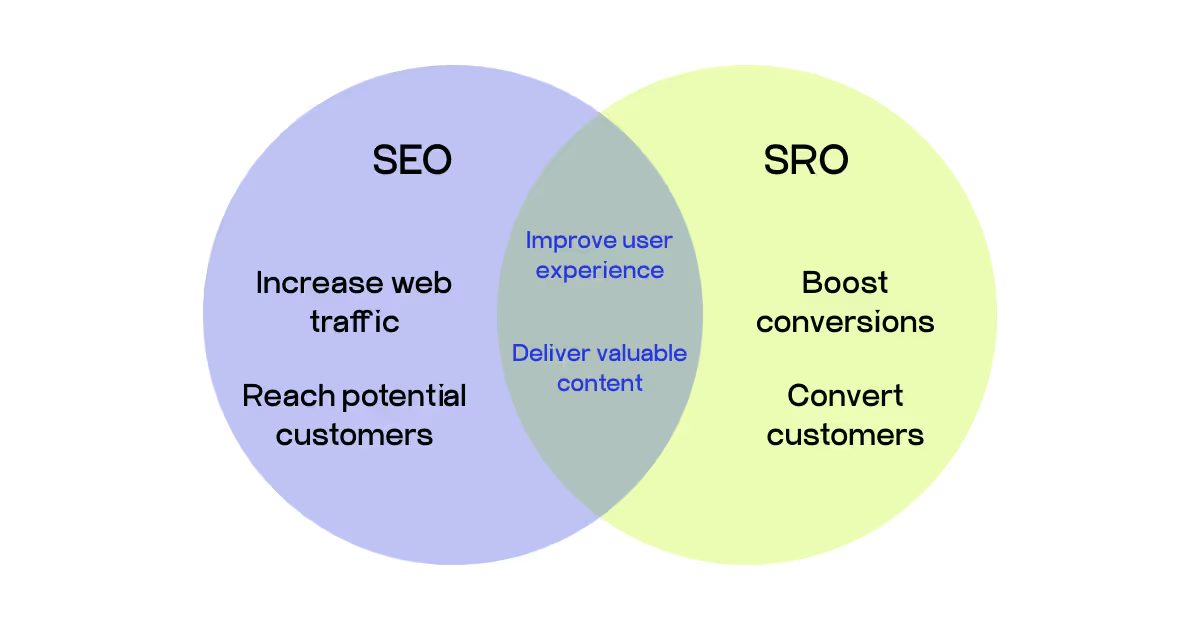
There’s one short answer: SEO drives traffic to your website. They become clients thanks to CRO.
Increasing your website's organic traffic and ranking higher in search results are the main goals of SEO. You enhance technical performance, develop backlinks, optimize content with keywords, and produce pages that respond to search queries. Clicks and visibility are the objectives.
CRO is concerned with what transpires after a visitor arrives at your website. You test page layouts, evaluate user behavior, improve calls to action, and eliminate obstacles that prevent users from converting. Action (purchases, signups, and downloads) is the aim here.
SEO attracts customers to your store. Before they depart, CRO ensures they make a purchase. Every strategy has metrics of its own. SEO monitors click-through rates, backlinks, keyword rankings, and organic traffic. CRO tracks conversion rates, bounce rates, time on page, and revenue per visitor.
SEO and CRO success aren’t obviously in line. You can have great SEO with terrible conversions. Lots of traffic means nothing if no one takes action. You can also have great CRO with no traffic. A perfect landing page doesn't matter if no one sees it.
How do SEO and CRO work together?
There exists a connection between SEO/CRO in the form of a feedback loop that allows for growth. Optimizing for search attracts customers who are searching for your product or service and therefore, have a higher likelihood of converting compared to someone who finds your site by accident. Quality visitors convert better than random visitors.
Content that is beneficial to both users and ranks high on search engines improves conversions. When you write your content for search intent, you will get visitors interested in the products you sell. When you provide helpful information to answer their questions, it builds trust. Providing clear CTAs will help direct potential customers through the conversion process. For instance, if you sell cookware, by writing an SEO optimised article on the best pans for tuna steaks, you will target potential customers looking for cookware. By including product recommendations, customer reviews, and an easy purchase path, you will convert that traffic into sales.
One of the best conversion rate optimization ideas is to close this loop with constant improvement. An improved search engine rank will create more traffic. Increased traffic will create more data for conversion. Having a larger pool of data will allow for testing and improvement of the conversion process. The cycle of SEO and CRO will continue to feed on each other, as both require a positive user experience to succeed.
This mix is highly dependent on website conversion tools. A fast loading website will improve both SEO and CRO. Clear navigation will improve both SEO and CRO. And so will mobile-optimized websites. By correcting user experience problems, you will benefit from both.
The internal linking of your website can help search engines understand the structure of your site. Additionally, internal links can guide your visitors through their purchasing journey. By linking from blog posts to your product pages, and from your product pages to your checkout page, you will support both SEO and CRO strategies.
Before making major changes, consider both impacts. Will removing this section hurt rankings? Will adding this content reduce conversions? Test changes and monitor both SEO and CRO metrics. The best results come when both strategies work toward the same goal.
Conversion rate optimization strategies
As an experienced conversion rate optimisation agency, we at COAX have learned some proven paths to take when you want to improve the rates for your products in varied industries - travel, transportation, logistics, hospitality, e-commerce, and others. Let’s break them down.
Boost the speed of page loading. Visitors' decision to stay or go is directly impacted by speed. Bidnamic claims that for every second a website loads more quickly, conversion rates increase by 17%. Images can be compressed without sacrificing quality - turn on browser caching, reduce the number of redirects, and cut any unnecessary code. To pinpoint particular speed problems, use Google PageSpeed Insights. The price is high: conversions are lowered by 7% with a one-second delay.
Simplifying navigation and site structure is one of the top website conversion best practices. Visitors leave when they cannot find what they need quickly. Clear navigation keeps people engaged and guides them toward conversion. Use descriptive menu labels. Group related items logically and add a prominent search function. For instance, FRAME uses a simple top menu highlighting main categories (new arrivals, women, men, stores). When shoppers hover over categories, subcategories appear for easy navigation.
62.45% of traffic comes from mobile devices, but conversion rates are lower. Many websites provide subpar mobile experiences, which is why there is a gap. Make buttons big enough to be tapped with the thumbs. Make sure that clickable elements are spaced apart. Make use of responsive design. Make forms simpler. Turn on the digital wallet and autofill. As part of your conversion rate optimization plan, instead of relying solely on desktop browser emulators, test your entire conversion funnel on real mobile devices.
Your CTA determines whether interested visitors will actually take action. If your CTAs are weak, you will lose conversions even if everything else is functioning well. Use action-oriented language for your CTAs and contrasting colors to help them stand out. Put your main CTAs at the top of the page, where visitors will see them without scrolling down. During your CRO website audit, test button copy that emphasizes the benefits of clicking through to your website. Limit your page to one primary CTA.
Add social proof - the majority of consumers are more likely to trust what other consumers have to say than they are to trust marketing messages from companies. Make sure to show customer reviews prominently, featuring testimonials that address common objections and including user-generated content. Display trust badges as proof of security and certification. For example, Tortuga has "Over 3,000 five-star reviews" stated prominently on their homepage to provide immediate credibility to new visitors.
Implement exit-intent pop-ups. Exit-intent technology detects when visitors are about to leave and presents a final offer. These pop-ups recover conversions that would otherwise be lost. Trigger popups only on exit behavior. Offer something valuable and keep the message clear. Make closing easy. As one of your CRO best practices, tailor exit-intent messages based on which page visitors are leaving.
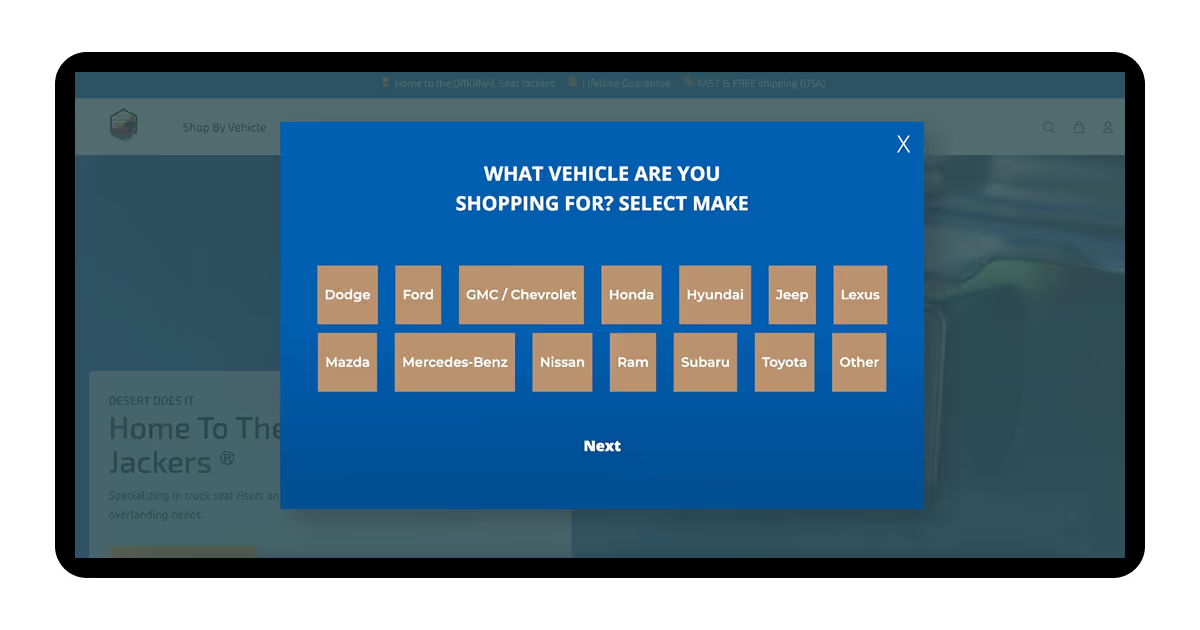
Reduce form friction. Long forms create massive conversion barriers. So you should request only essential information upfront. Use multi-step forms. Add inline validation. Enable autofill and explain why you need sensitive information. For instance, Desert Does It used a multi-step quiz starting with a simple yes/no question. This effortless first step led to 4.96% conversion rate and 85% of subscribers becoming buyers. Our final CRO recommendations: for complex forms, use progress indicators showing how many steps remain.
To give you a better understanding of what to focus your next conversion optimization audit on and what areas to improve, we also gathered some tips and tricks related to specific sectors.
Industry-specific tactics
Let’s review some of the most efficient techniques in every industry, together with some examples of conversion rate optimization.
E-commerce.
With average rates of 1.74% worldwide, e-commerce faces particular difficulties. Through improved mobile optimization, streamlined checkout, and quicker load times, optimized stores achieve 2.9%.
So, how to do conversion rate optimization for ecommerce right? Make use of excellent photos taken from various perspectives. Include specifications and size guides. Put wise product recommendations into practice. Display the inventory in real time and show the shipping deadlines.
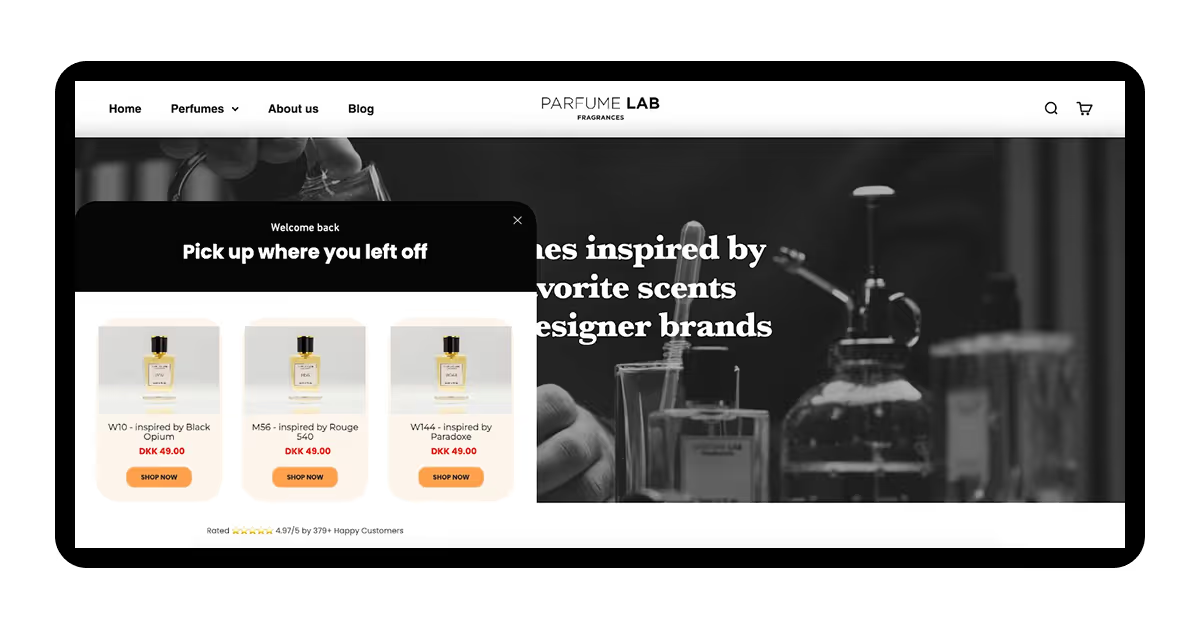
For instance, ParfumeLab launched a campaign to remind users to browse for ten seconds after they returned. 19.22% of returning visitors made purchases as a result of this subliminal message.
Some more advanced tips? Try out mystery discounts that disclose amounts after you sign up via email. Static discounts are frequently outperformed by curiosity-driven strategies.
Professional services and B2B.
Professional services average much higher conversion rates (up to 10%) because visitors arrive with specific needs, while B2B conversion rates are also higher than average (2-5%). However, sales cycles are longer.
How to fix it? Demonstrate expertise through detailed case studies. Offer valuable lead magnets like industry reports. Use conversational forms and provide multiple contact options.
As a b2b conversion rate optimization example, Campaign Monitor, a B2B email marketing platform, boosted leads by using exit-intent pop-ups on their sign-up page to offer an existing email marketing guide to abandoning visitors, achieving a 10.8% conversion rate and capturing 271 leads in one month through A/B testing.
Among our conversion rate optimization tips is to optimize for qualified leads rather than maximum volume. Better qualifying questions improve lead quality significantly. This niche is more specific that the others, so to truly improve, you might need B2B SEO services and expert-led conversion rate optimisation consultancy to combine both strategies efficiently.
Travel.
Travel businesses face extended research periods where customers browse for weeks before booking. Most leisure travelers book within 45 to 90 days of inquiry.
Here’s what you can do. Respond to inquiries within two hours when possible. Fast response increases conversions by up to 300% in travel. Create destination-specific content. Use high-quality imagery showing experiences and display real-time availability. Implement flexible payment options as well.
Elite Escapes luxury travel agency uses such a conversion rate optimisation strategy: it tracks conversions within 90 days since luxury travelers take longer to decide. Client referrals convert at 25%, website inquiries at 12%, and travel show leads at 8%.
Our pro tip is to track conversion rates by destination and season separately to inform marketing spend allocation.
Accommodations and hospitality.
To compete with OTAs that charge high commissions, hotels must optimize for direct bookings. Conversion-optimized websites decrease reliance on OTAs and increase direct bookings.
Here’s a short conversion rate optimisation guide. Prominently display pricing and availability in real time. Display top-notch pictures of the rooms and facilities. Add visitor reviews that are specific to the property. Provide guarantees of the best rates. Put in place flexible cancellation procedure and make eye-catching packages.
For instance, a North American cruise booking platform sector improved its homepage through A/B testing of value propositions, shifting messaging from "savings only" to "More Choices, More Discounts." This drove a 21% revenue increase and 34.1% higher conversion rate.
Additional tips: Use retargeting to attract visitors who looked at dates but did not make a reservation. Remind them of the unique benefits of direct booking that are not available through OTAs.
The CRO process: Step by step
Effective conversion rate optimization follows a systematic workflow rather than random changes. The right conversion rate optimization process is 80% research and 20% experimentation. Dedicate more time to understanding your specific audience and website issues before jumping into testing.
Research and data collection
Start with analytics tools to identify where visitors drop off. Use Google Analytics to track visitor behavior, conversion funnels, and page performance. Look for pages with high traffic but low conversion rates. These represent your biggest opportunities.
Track these key metrics during the CRO audit:
Bounce rates by page and traffic source
Time on page and scroll depth
Cart abandonment points
Form field completion rates
Conversion rates by device type
CRO provides abundant data that paints the picture of what works and what doesn't. It uncovers areas of opportunity but stops there. It doesn't tell you why something works or fails.
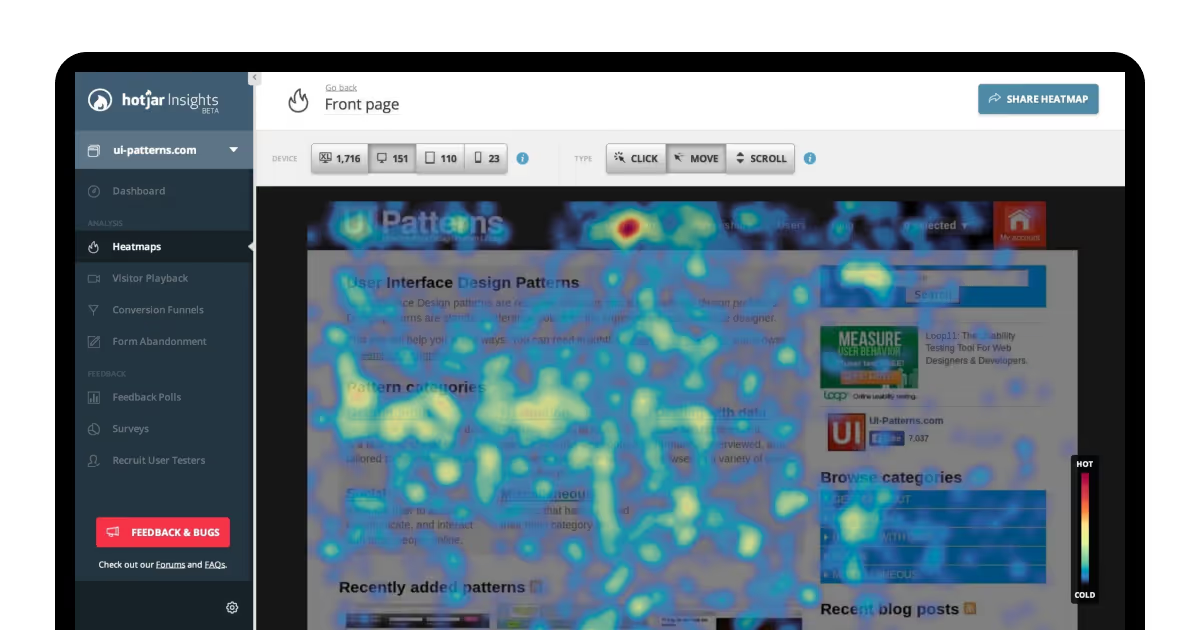
Heatmapsdisplay the elements that grab visitors' attention, where they click, and how far they scroll. Dossetto from Hotjar claims that by showing how much content users actually see, scroll maps improve user experience and boost conversions.
To see actual user behavior, watch session recordings. You will identify issues with navigation, unclear components, and points of friction that your team was unaware of. While quantitative research demonstrates what occurs, qualitative research explains why.
Now, heatmaps and analytics aren’t the only ones of the best CRO tools. Another great way to reach the greatest amount of improvement in conversion is to conduct interviews or surveys with your customers. Having structured conversations with potential customers, current customers, and lapsed customers will allow you to rapidly achieve a better knowledge of customers' needs.
You can also adapt a hybrid approach - watch customers complete tasks on your site while asking their thoughts. This uncovers roadblocks, confusion, and missing information.
Hypothesis creation and prioritization of changes
In the second step of our experimentation process, we will take the insights we have uncovered through research and create testable hypotheses of how we believe our website changes may influence your conversion rate optimization efforts. For a quality hypothesis to be made, it must contain: the variation we create, our anticipated results from modifying our website, and our justification for believing that the modification will be effective.
Hypotheses can be structured like this: "By changing [specific aspect of our website], we will see an increase/decrease in [specific metric] because of our [justification]." For example, "By including customer testimonials as part of the website design, we expect to see a 15% increase in conversion rates because of the trust concerns cited in user research." And surely, all of your hypotheses must be written based on research findings.
Among the conversion rate optimization best practices is not to test everything at once. You should prioritize hypotheses using structured frameworks.
ICE framework. Score each hypothesis on Impact (potential improvement), Confidence (certainty it will work), and Ease (simplicity of implementation). Evaluating potential, importance, and ease helps identify the best starting areas. Rate each factor from 1 to 10, then calculate: (Impact + Confidence + Ease) ÷ 3.
PIE framework. Among our strong CRO tips is the PIE framework, evaluating Potential (how much improvement can be made), Importance (how valuable is this page), and Ease (how easy to test technically and politically). Start testing in focused areas and scale from there. If you generate quick wins in a strategic area, you build momentum to scale testing across your entire website.
Premiering common errors. Instead of focusing on immediate "quick gratification" solutions, focus on systematic processes instead of tactics and growth hacks, which may often seem to have more glamour, but systematic processes will be more effective long-term.
The effectiveness of each tactic and growth hack will vary widely based on the context in which it is being used - what works for Amazon or Best Buy will likely not work for you. You cannot simply take someone else's highly developed tactics and implement them into your site and expect to replicate their success.
Creating your testing roadmap
List all hypotheses with their priority scores. Conversion rate optimization audits are both science and art. Both mindsets are necessary: expansive ideation space and reductive validation space. First of all, focus first on high-traffic, high-impact pages like:
Homepage
Key product or service pages
Checkout process
Lead generation forms
Pricing pages
Document your reasoning for each test. The experiment's goal is trying to solve the issues you identified, not to try random things or implement everything at once. Create a testing calendar, scheduling one test at a time. Most tests need two to four weeks to reach statistical significance. Running too many simultaneous tests makes results impossible to interpret.
A/B testing, multivariate testing, and experimentation are where theory meets reality. You stop guessing and start proving what works. Test different versions of your pages and elements to see which ones drive more conversions. To run these experiments effectively, businesses often rely on advanced conversion rate optimization tools that streamline testing, data collection, and performance analysis. These tools make it easier to manage variations and measure results accurately.
A/B testing compares two versions of something to see which performs better.
You show half your visitors version A and half version B, then measure which one wins. As one of the CRO examples, you test whether a green button converts better than a blue one. You send 50% of traffic to each version. After collecting enough data, you can see which color actually drives more clicks.
Multivariate testing takes things further.
Instead of testing one element at a time, you test multiple changes simultaneously to see how they interact. You might test three different headlines, two button colors, or two form layouts. A multivariate test would create every possible combination of these elements and test them all at once. This shows you which headline works best with which button color and form layout.
The catch is that multivariate testing requires serious traffic. You need substantial visitor volume because you're splitting traffic across many variations. Testing five elements with three variations each creates 243 possible combinations. Split your traffic that many ways and you'll wait months for meaningful results. Use multivariate testing when you have high traffic volume, multiple elements likely interact with each other, when you need to optimize an entire page experience, or when you want to understand how changes work together.
How to run experiments that actually teach you something to improve your CRO strategies?
Your hypothesis connects an observation to a proposed change and an expected outcome. This keeps you focused on learning, not just trying random ideas.
Also, design tests properly. Good test design means:
Changing only what you intend to test
Running tests long enough to capture normal traffic patterns
Including weekdays and weekends in your test period
Splitting traffic randomly between variations
Avoiding changes to pages mid-test
There’s another nuance to this stage of the CRO process - your winning variation might work great on desktop but terrible on mobile. The 2024 Conversion Benchmark Report found that desktop converts 8% better than mobile on average, but that doesn't mean your desktop version will work on smaller screens.
You should also factor in implementation effort. A 5% lift sounds great until you realize it requires three months of development work. Consider the return on effort, not just the return on conversion. Some questions to ask:
How hard is this change to implement?
Does it require ongoing maintenance?
Will it create technical debt?
Could we get similar results with less effort?
Sometimes, a 3% lift that takes an afternoon to implement beats a 5% lift that takes weeks.
You can spot patterns across experiments to avoid retesting things that already failed. For example, if your headline test showed that benefit-focused copy outperforms feature-focused copy, apply that insight to other pages.
Measuring results and iterating for continuous improvement.
Successful CRO requires ongoing measurement and refinement. Sometimes, you might sacrifice accuracy to get quicker results, but you need to know when and why you're breaking predefined rules.
Metrics to help you analyze conversion rate optimization include:
Overall conversion rate
Micro-conversions at each funnel stage
Average order value
Revenue per visitor
Cost per acquisition.
Track these consistently across all tests. Also, monitor bounce rates by page and traffic source to identify where visitors lose interest. Measure form completion rates field by field to spot friction points. Once you understand issues and their severity, you can plan your experimentation roadmap.
Conversion rate optimization best practice demands statistical significance before declaring winners. Document every test outcome, whether it wins, loses, or proves inconclusive. Having a team who understands what you're talking about helps maintains testing rigor.
Analyze winning tests to understand why they worked. Look for patterns across multiple successful tests. Similarly, for losing tests, dig into segments. A test might fail overall but succeed with specific traffic sources or customer types.
For instance, ecommerce CRO often focuses on product pages, cart optimization, and checkout flows where most revenue impacts occur. Set quarterly improvement goals based on your baseline metrics. Even small gains compound significantly over time. A retailer improving from 2% to 2.5% conversion rate generates 25% more revenue from identical traffic.
Best CRO tools
Now that you understand the best practices, let’s define the most optimal off-the-shelf conversion rate optimization solutions that you can use.
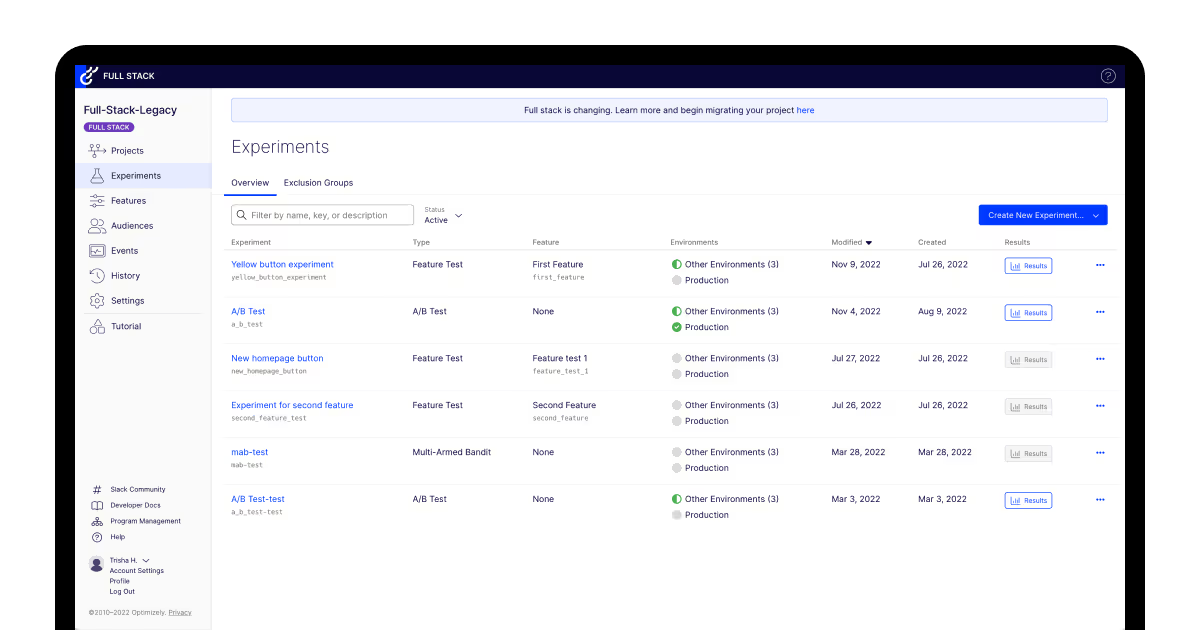
As a modular platform, Optimizely offers enterprise-grade A/B testing, feature flags, personalization, behavioral targeting, and warehouse-native analytics. For high-traffic websites requiring accurate statistical engines, it works well for complex personalization and large-scale experiments. Custom pricing ranges from about $36,000 per year to more than $200,000 depending on modules and traffic.
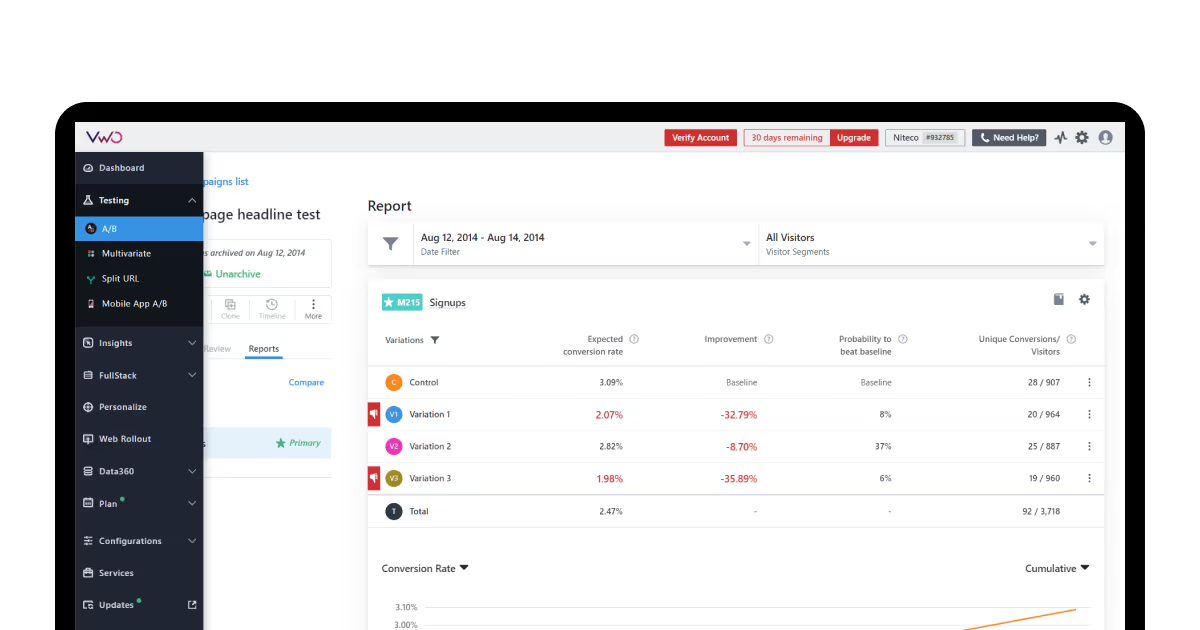
A/B and multivariate testing, heatmaps, session recordings, form analytics, personalization, and AI-powered Copilot for testing insights are just a few of the conversion rate optimization tools that VWO provides. For mid-sized teams executing full-funnel optimizations with behavioral data integration, it performs exceptionally well in comprehensive experimentation. A free Starter plan is available, followed by Growth at about $249 per month, Pro at $599 per month, and customized Enterprise options.
To visualize user interactions and friction points, Hotjar provides heatmaps, session replays, surveys, and tools for incoming feedback. It is ideal for identifying workflow drop-offs and for conducting rapid user behavior analysis and UX enhancements without the need for coding. The Basic plan is free, Plus is $32 per month, Business is $80 per month, and Scale is $171 per month for the Observe module.
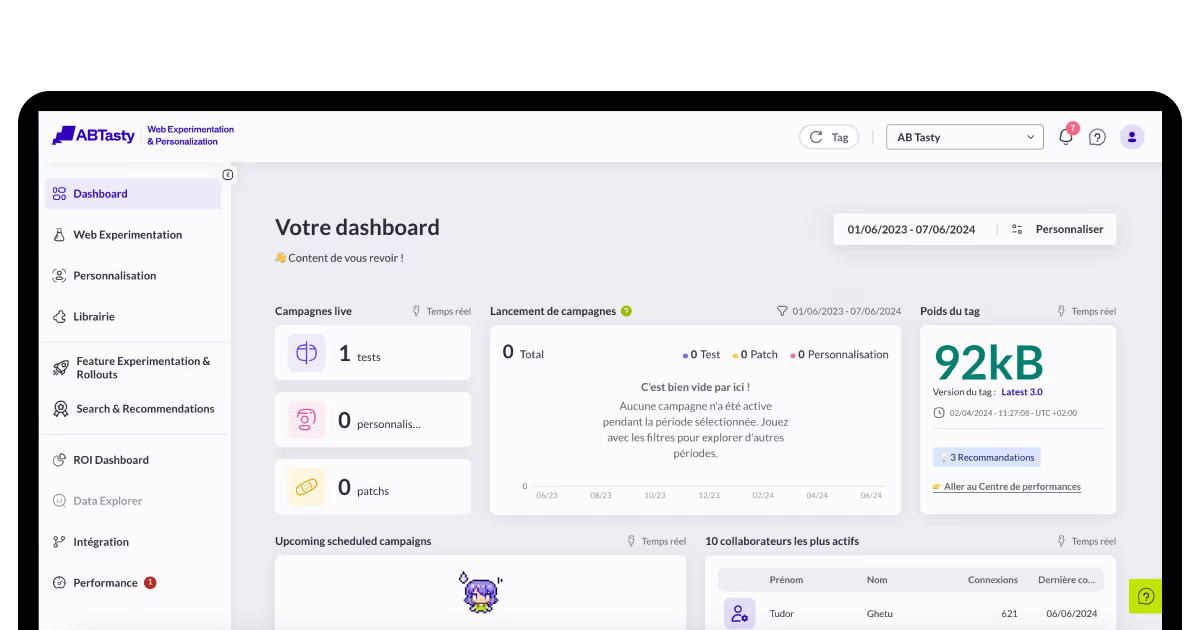
AB Tastyprovides conversion rate optimization software for A/B and multivariate testing, personalization, recommendation engines, and mobile app optimization with no-code editors. For enterprise web and app personalization campaigns aimed at high-traffic websites with sophisticated segmentation, it works just perfectly. Pricing starts around €15,000/year or $60,000 annually for base enterprise plans, with custom quotes scaling by traffic and features.
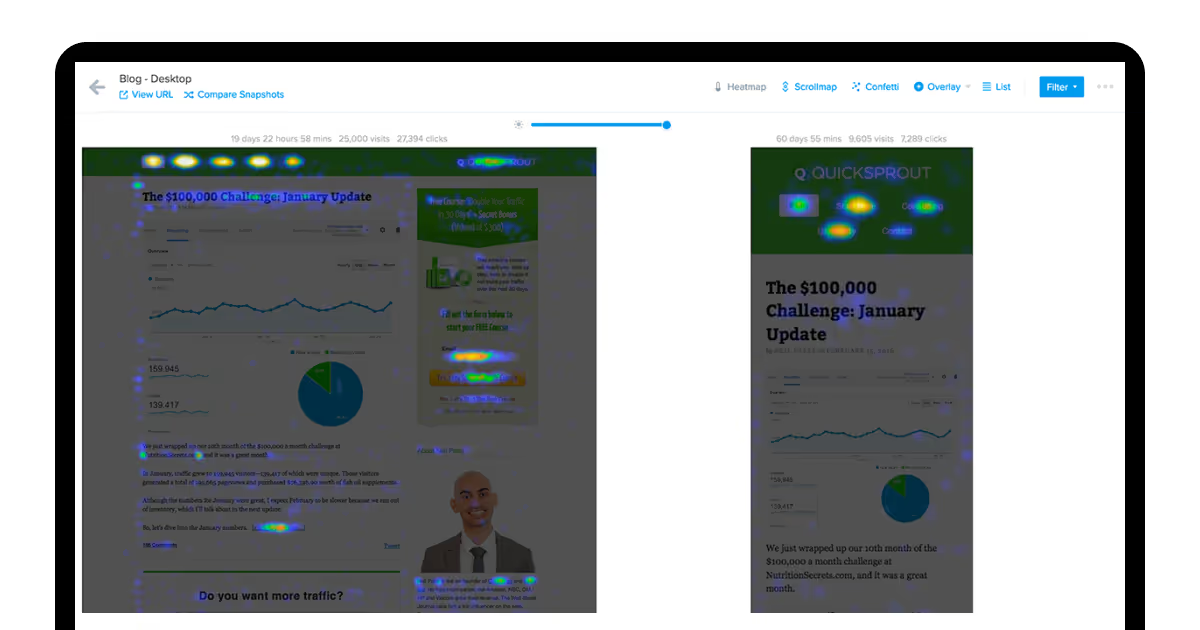
Heatmaps, scrollmaps, session recordings, A/B testing, surveys, and AI-powered insights across an infinite number of domains are what Crazy Egg offers. For SMBs looking for quick tests and intuitive visual behavior analysis to identify UX problems, it will be a great option. Starter, Plus, Pro, and Enterprise are priced at $29/month (annual), $99/month, $249/month, and $599/month, respectively, with a 30-day trial.
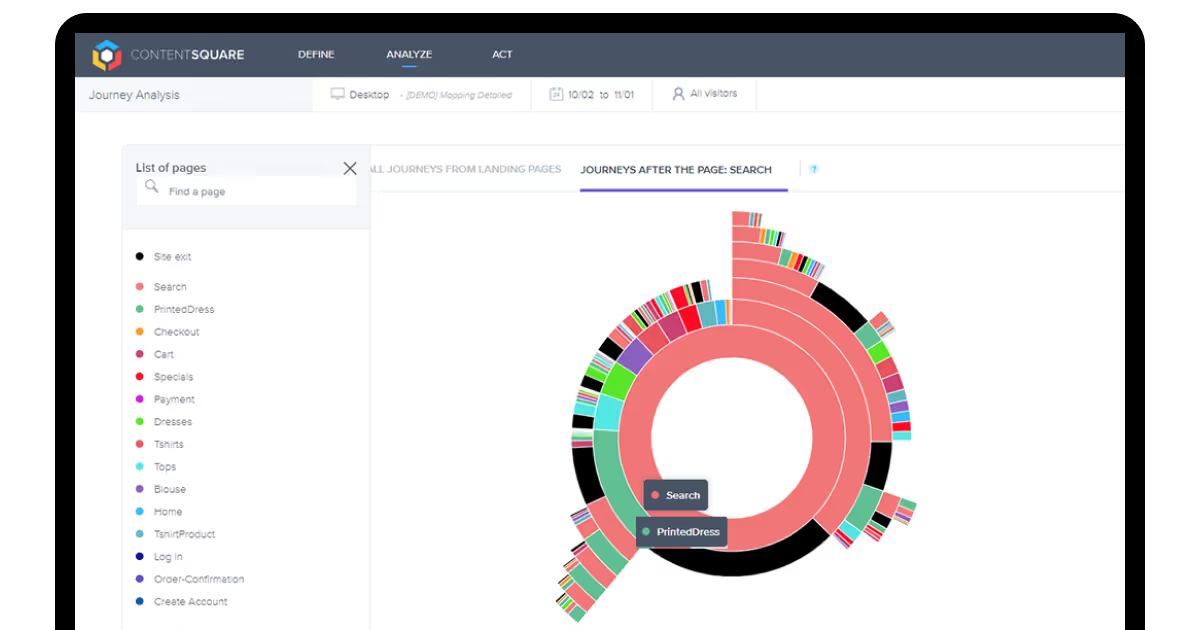
For the purpose of optimizing the digital experience, Contentsquare offers zone-based analytics, heatmaps, session replays, frustration scoring, and AI-based insights. In order to identify revenue leaks and user pain points at scale, this CRO tool excels in enterprise-level journey analysis. Custom enterprise-only pricing usually starts in the tens of thousands per year, depending on the volume of traffic.
While platforms like the ones we described provide powerful testing and analytics capabilities, they're ultimately just tools. Most businesses struggle to interpret behavioral patterns, prioritize the right experiments, and implement changes that actually move revenue metrics.
At COAX, we combine 15+ years of experience with a thorough, data-backed methodology that analyzes your entire conversion funnel, identifies revenue leaks, and prioritizes high-impact fixes using proven PIE/ICE frameworks. Our conversion rate optimisation consultants uncover friction points through behavioral analysis, apply payment psychology principles, and benchmark against competitors to give recommendations.
Every audit includes an actionable implementation roadmap with specific copy changes, CTA adjustments, layout modifications, and technical requirements. Once we've identified your conversion blockers, our full-stack development services bring every recommendation to life. We handle everything from frontend UI/UX improvements to backend optimization, integrations, and performance improvements, ensuring your conversion gains become reality.
FAQ
What is conversion rate optimization?
The percentage of visitors who complete desired actions is systematically increased by CRO. According to Somavarapu, it is the process of removing conversion barriers through statistical methodology, qualitative research, and quantitative analysis. As said by Praveen, CRO maximizes revenue per visitor by analyzing every touchpoint (landing pages, checkout flows, payment psychology) and using data-driven insights to shape consumer perceptions.
What are the steps of conversion optimization?
Follow these steps:
Identify goals
Gather and analyze user data
Form hypotheses
Run A/B tests
Implement winning changes
Iterate on changes.
Focus on understanding customer behavior through analytics and testing elements like CTAs, page speed, and mobile experience to boost conversions.
What does CRO mean in business?
According to Praveen, CRO is an organized strategy that improves customer journey transitions. Revenue is greatly impacted by small improvements, according to Somavarapu. Through data-driven optimization techniques, CRO optimizes current traffic value in a cost-effective manner while addressing trust issues, performance, and personalization. It achieves 34% conversion lifts and an 8:1 ROI.
How to improve conversion rate optimization if I'm a small business owner?
Start with quick wins: ensure fast loading (under 3 seconds), optimize mobile experience, simplify checkout with fewer form fields. Add clear CTAs and trust signals like reviews. Use free tools like Google Analytics and Hotjar to identify drop-off points, then prioritize fixing friction areas first.
How does COAX's conversion rate optimization agency achieve efficient CRO results?
COAX uses rigorous data-backed methodology: funnel mapping, behavioral analysis, competitor benchmarking, and PIE/ICE prioritization. ISO 9001 certification ensures quality processes; ISO/IEC 27001:2022 certification guarantees security management. We deliver actionable roadmaps plus full-stack development, generating $4.2M+ client revenue with 34% average conversion lift.




































































We are interested in your opinion