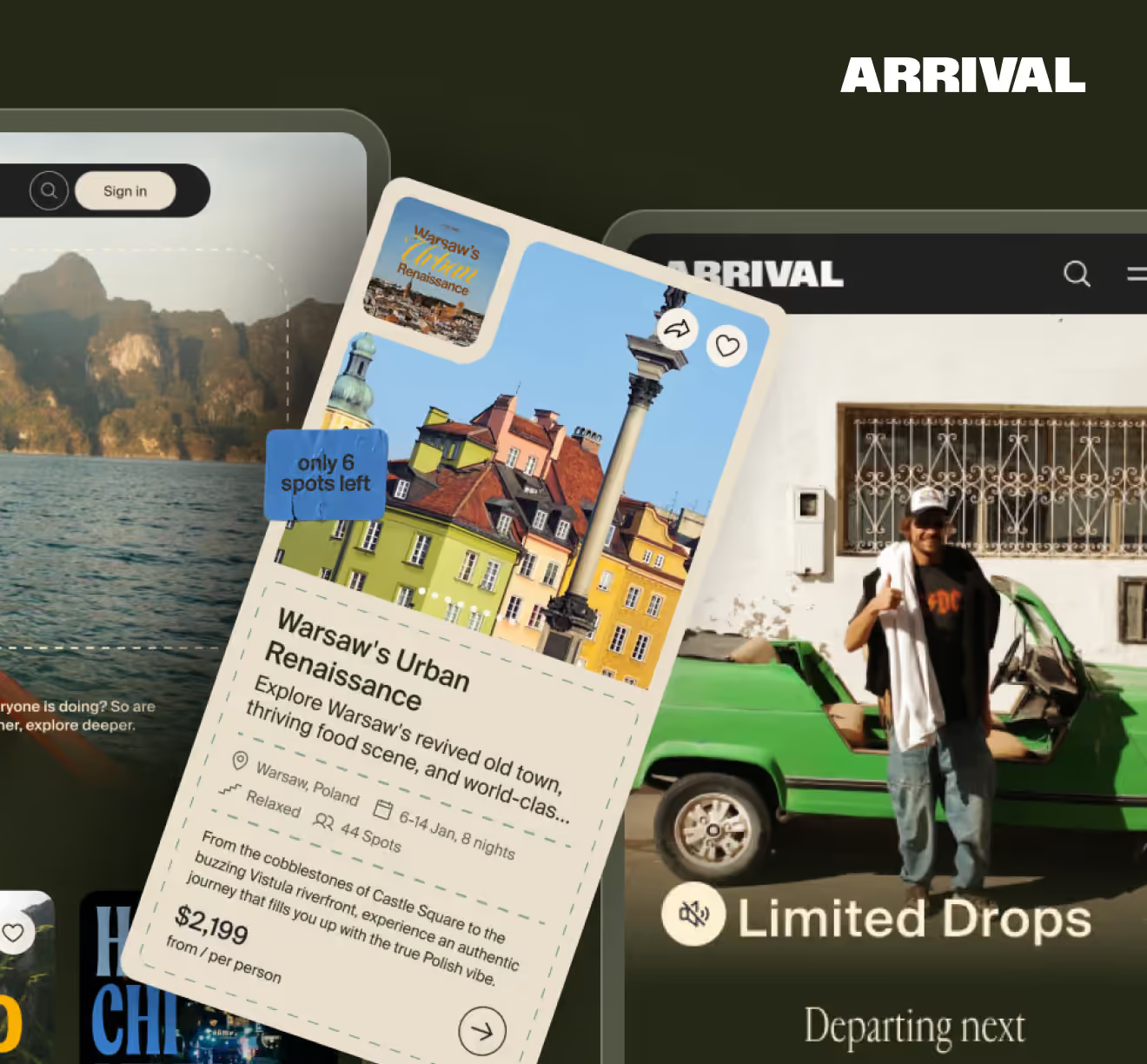
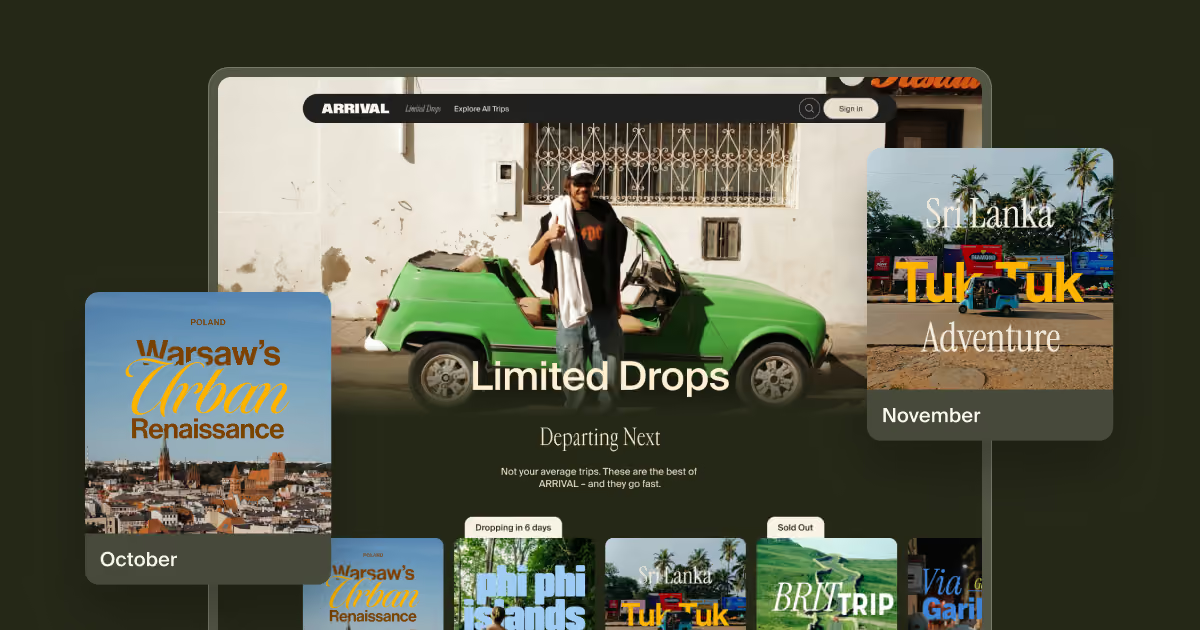
Two Australian creators had two million followers before they built a business. Matt Ford and Jack Steele turned their travel content into ARRIVAL. A code-gated Instagram post alone drove 120,000 sessions before launch day. That's not a marketing campaign. That's trust, converted into ticket sales.
At COAX Software, we built the platform behind that launch. We watched an audience turn into paying travelers, post by post. It gave us a close look at something most brands still misunderstand. Creators don't just promote products anymore. They build relationships that outlast any single campaign.
This article breaks down the influencer marketing trends defining 2026. We'll walk through platforms, content formats, and measurement. You'll also get a practical influencer marketing strategy. One built to survive past a single campaign.
What is influencer marketing, and why does it matter?
Let’s start with a short definition. Influencer marketing means brands partner with creators to reach real audiences. Creators lend their trust, not just their follower count. Brands get attention money can't buy through ads alone. That's the whole model, in one sentence.
Marketing didn't stay passive either. Influencer marketing platforms now handle discovery, contracts, and compliance. Dedicated influencer marketing software tracks performance in real time. The infrastructure caught up with the demand.
We've seen this firsthand in travel tech. TikTok travel content views jumped 410% since 2021. Nearly a third of users booked stays they found there. Instagram remains many Americans' top travel platform. Creators don't just inspire trips; they close bookings.
Why is influencer marketing changing so quickly?
Three forces drive this shift: money, trust, and platform behavior. Budgets keep climbing. Trust in ads keeps falling. Platforms like TikTok reward creators over brands.
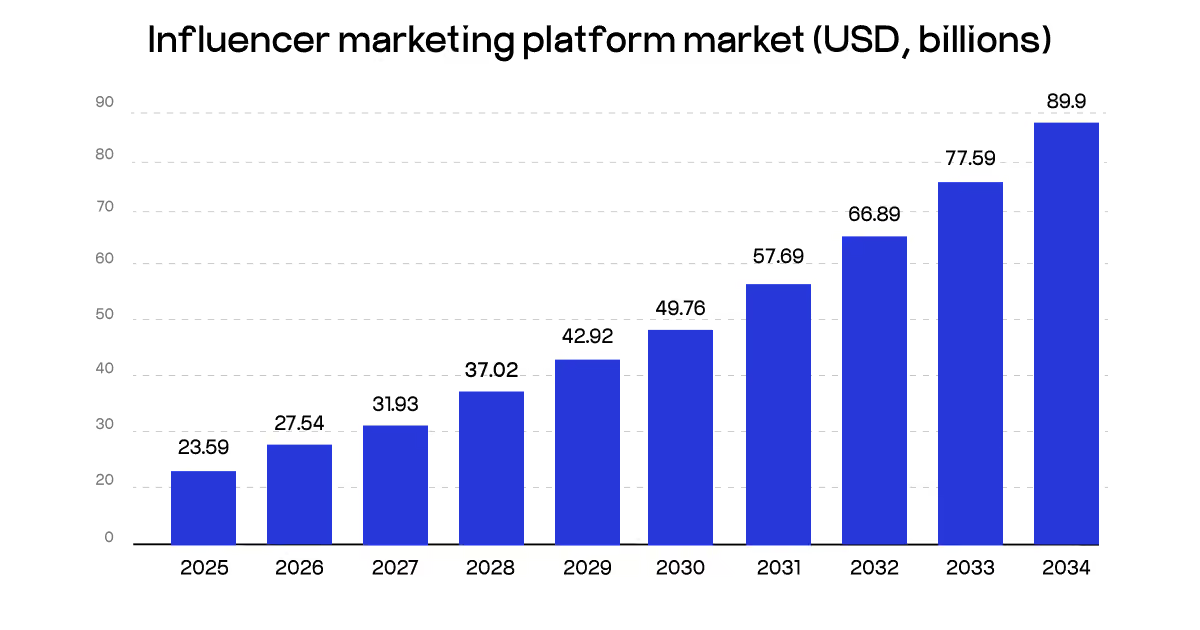
The creator economy is on track to pass $480 billion by 2027. More than 50 million people worldwide call themselves creators. About 2 million earn a full-time income from it. Meanwhile, 71% of consumers trust creators over branded ads.
Nowhere is this clearer than on TikTok. TikTok influencer marketing now drives real purchase behavior. 62% of users say the app inspires them to buy. Campaigns there can deliver 11 times the ROI of traditional ads. Its average ad engagement rate beats every other platform.
Budgets keep growing heading into 2026. But one-off, pay-to-post deals are losing power. Brands increasingly treat creators as long-term consultants. This changes what a product marketing strategy looks like, too. Creators now shape a product's story before launch, not just after.
We've watched this play out, too. ARRIVAL, the platform we built for two creators, launched in July 2025. Four outlets, including Rolling Stone, covered it within a day. Pre-launch, a single Instagram post drove 120,000 sessions. By launch day, 50,000 users had already signed up.
The momentum held after launch too. ARRIVAL now counts 500,000 visitors and 20,000 weekly active users. Travelers have booked more than 200 trips directly, no OTA commission involved. That's what travel influencer marketing can build. It just needs the right platform behind it.
Top influencer marketing trends in 2026
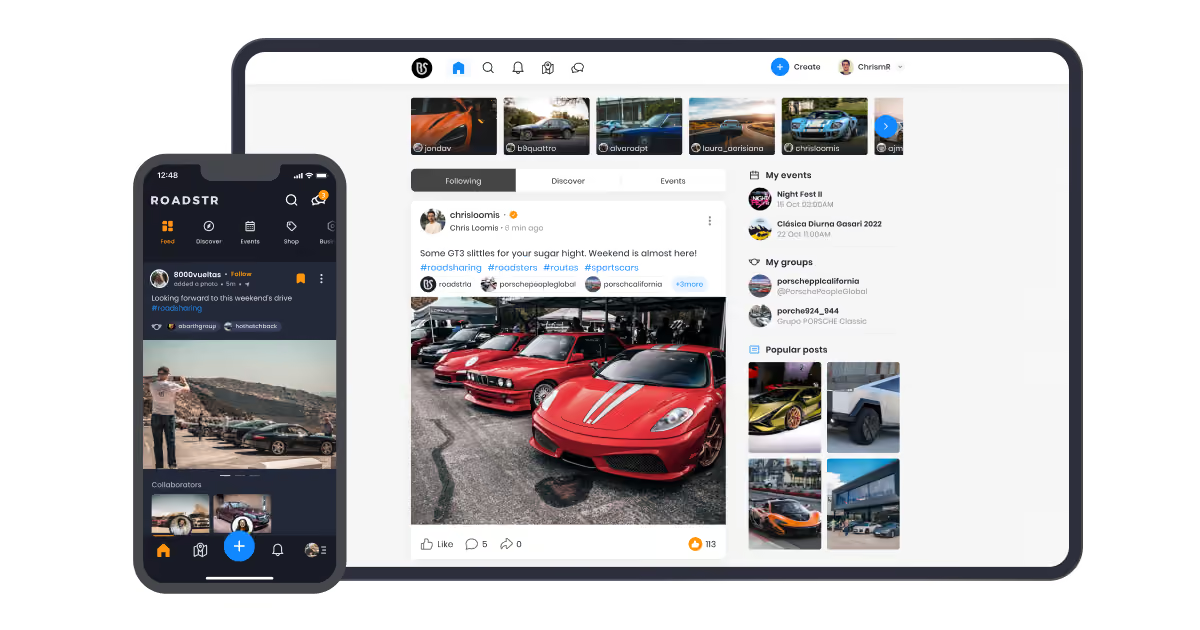
Niche communities spot fake voice within seconds. We learned that building RoadStr, a social network for car enthusiasts. Members share locations to find nearby drivers. Authenticity wasn't a feature request. It was the entire product.
That same principle now drives influencer marketing trends everywhere. Brands win when creators feel native to a niche. They lose when content feels rented. Below are the twelve shifts shaping influencer marketing trends 2026.
Micro and nano influencers continue to drive the highest engagement.
Small audiences aren't a weakness anymore. Nano influencer marketing consistently beats big-name endorsements on engagement. Followers in the 1,000 to 10,000 range trust these creators like friends.
We saw this dynamic firsthand with RoadStr. The app connects car enthusiasts through hyper-local groups and meetups. Niche audiences reward creators who genuinely belong to their world. That's micro-influencer marketing in its purest form.
Travel brands see the same pattern. Hotel marketing strategies increasingly favor small creators over celebrities. Ferryhopper and ResortPass now work with micro-influencers directly. Their focus stays on local, utility-driven content. Island-hopping guides and day-pass reviews outperform generic ads.
Single posts rarely move audiences anymore. Brands now sign creators for months, not moments. This shift changes the essence of how influencer marketing campaign planning works.
Consultant-style relationships are becoming standard practice. Creators shape messaging early, not after the fact. They understand the brand's tone before anything ships. That depth simply can't happen through a single paid post.
Authenticity and transparency become essential for success.
Consumers spot scripted endorsements immediately now. Disclosure isn't optional; it's expected by default. Creators who hide sponsorships lose trust fast.
Brands that embrace transparency actually build more loyalty. Audiences respect honesty about paid partnerships. That honesty becomes the differentiator, not the disclaimer.
AI is transforming influencer marketing
Influencer marketing tools now use AI for discovery and matching. Algorithms flag fake followers and engagement fraud instantly. Brands vet creators faster than ever before.
Predictive analytics also forecast campaign performance pre-launch. Marketers adjust budgets before wasting a single dollar. This efficiency layer didn't exist five years ago.
AI influencers and virtual creators expand brand opportunities.
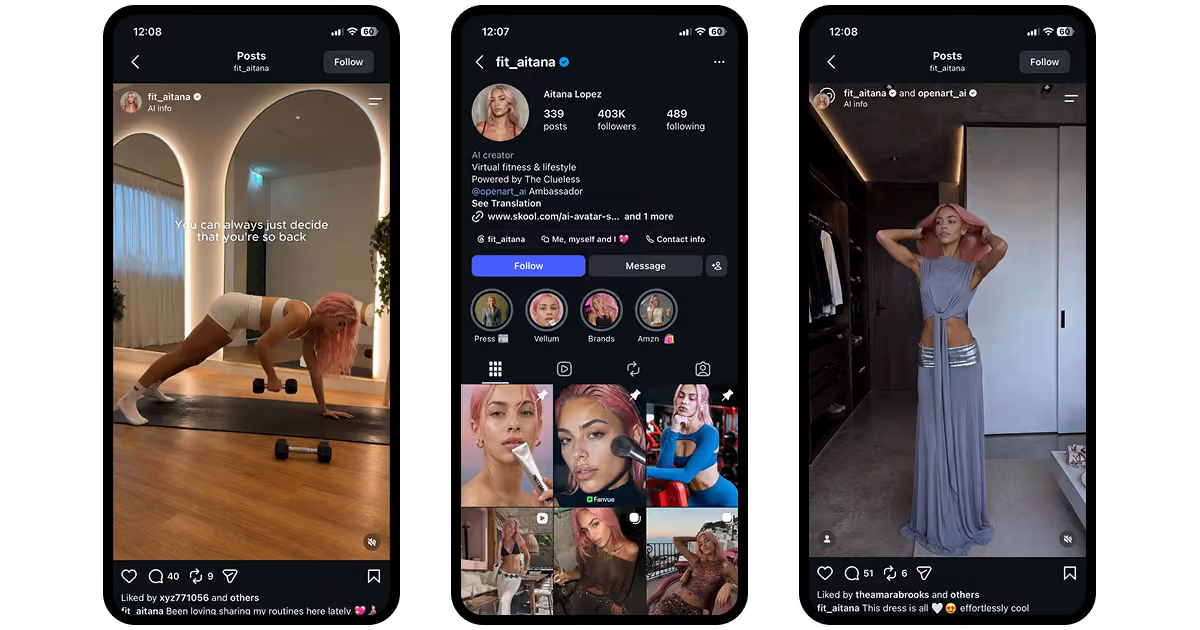
Virtual personalities like Aitana Lopez already command real followings. They offer brands total message control. No scandal risk, no off-brand behavior, ever.
These digital creators won't replace humans completely. They're carving out a specific niche instead. Predictable, controllable content fits certain campaigns perfectly.
Influencer marketing becomes a commerce channel.
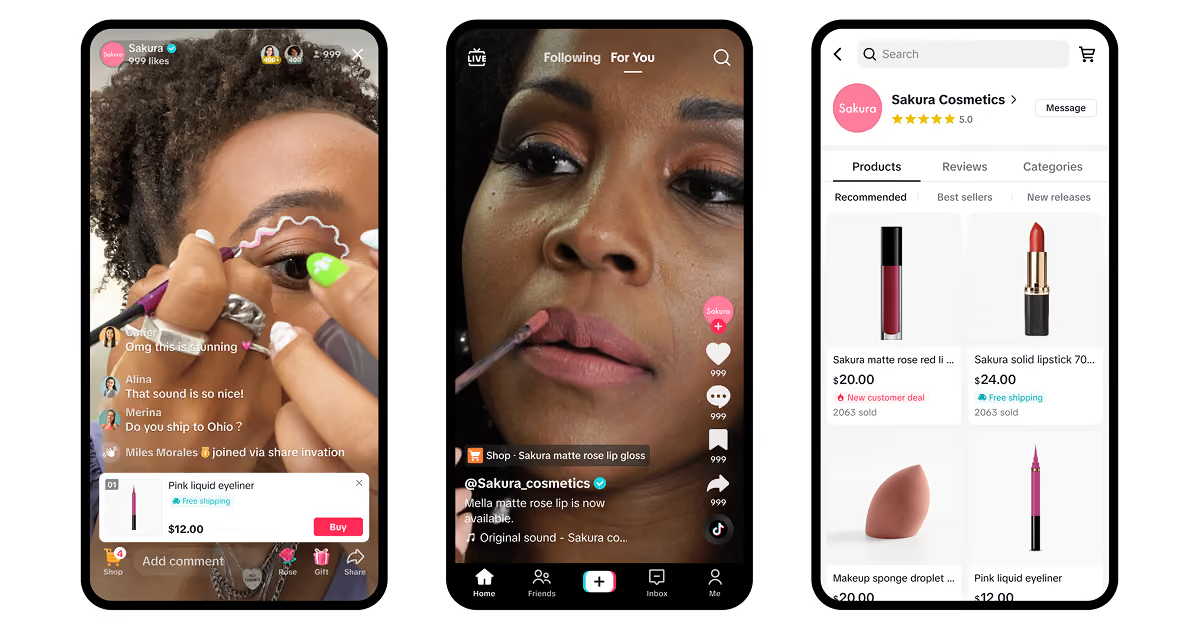
Live shopping keeps gaining serious ground. TikTok Shop leads this shift industry-wide. Creators demo products live, then guests buy instantly.
This turns social media influencer marketing into direct revenue. Discovery and purchase now happen in one motion. That collapse changes how brands measure success.
Creator content powers paid media across channels.
Organic posts increasingly fuel paid ad campaigns too. Brands repurpose creator content as sponsored ads. It performs better than traditional studio-shot creative.
This blurs the line between organic and paid entirely. Audiences respond to familiar creator faces regardless of placement. That familiarity boosts click-through rates significantly.
Video-first and platform-native content dominate.
Short-form video remains the dominant format everywhere. Each platform now demands its own native style. Reposting one video across five apps fails.
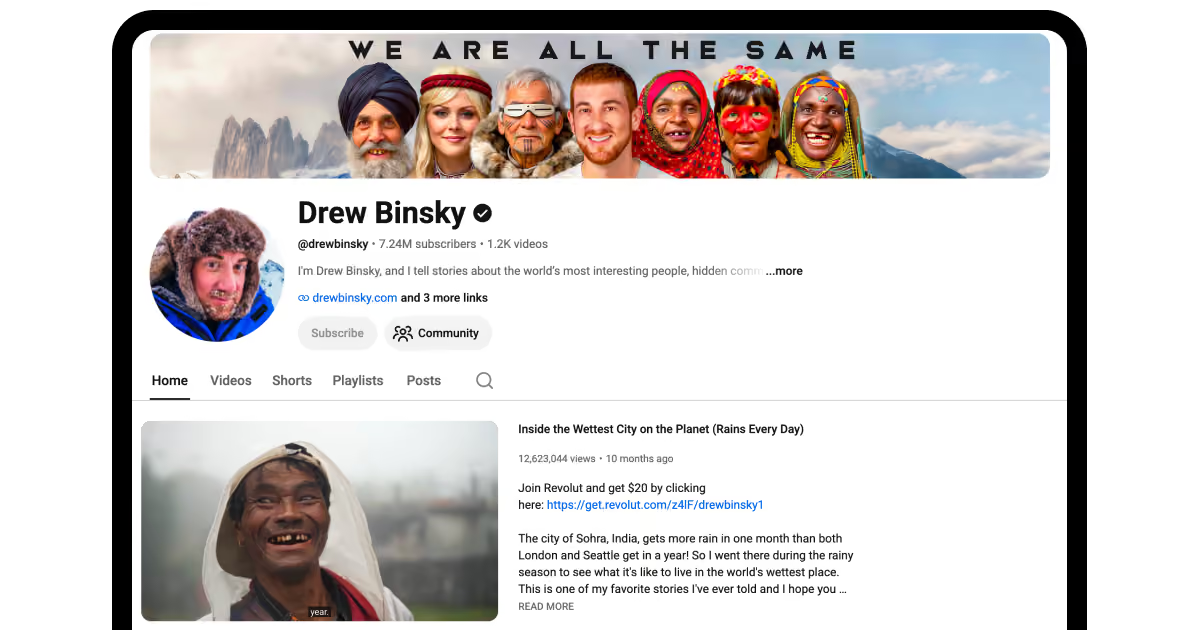
Top global creators prove this daily. Nas Daily built an audience on fast, punchy micro-documentaries. Drew Binsky's country-by-country vlogs work because they're built for video first, not adapted to it.
B2B influencer marketing continues to grow.
LinkedIn's short-form video push opened new doors. Business creators now influence purchasing decisions too. B2B marketers are catching up to consumer brands.
Agencies increasingly build B2B-specific creator rosters. These aren't lifestyle influencers wearing suits. They're practitioners with real industry credibility.
Creator-led and employee-generated content build greater trust.
Employees are becoming brand storytellers themselves. Their content reads as more credible than corporate messaging. Audiences trust coworkers more than campaigns.
This pairs naturally with creator partnerships too. Both rely on real voices, not scripted ones. That's the throughline across every trend here.
ROI and performance metrics replace vanity metrics.
Follower counts matter less every year. Brands now track bookings, sign-ups, and revenue directly. Attribution tools finally connect a post to a sale.
This mirrors what we saw with ARRIVAL. Every session, signup, and booking traced back to a source. That visibility changes how campaigns get evaluated.
Audiences increasingly favor brands with a real stance. Vague values statements don't land anymore. Specificity and consistency are what earn trust.
Travel creators embody this shift well. Kiersten Rich, known as The Blonde Abroad, built her following on a clear point of view. Solo, confident, adventurous travel, told consistently. That clarity is what purpose-driven marketing actually requires.
What influencer marketing platform sells best?
Picking the best influencer marketing platform isn't guesswork anymore. We tested leading tools against five criteria that matter in production, not marketing decks. Below, you'll find our scores, our picks, and a comparison table to speed up your search.
We assessed five dimensions:
Creator database depth: does the platform actually cover your niche, or just claim scale?
Fraud and safety detection: how well does it catch fake followers and bot engagement?
Campaign management complexity: can one person run this, or does it need a full team?
E-commerce integration: does it connect cleanly to Shopify, WooCommerce, or your own stack?
Pricing transparency: can you actually budget, or is everything "custom quote"?
We ruled out influencer marketing tools and platforms with no public case studies and vague, undocumented pricing.
Platform
Database size
Fraud detection
Integration complexity
Best for
CreatorIQ
15M+ creators
Strong (SafeIQ)
High
Enterprise brand safety
Influential
15M+ creators
Strong
Medium
High-scale measurable ROI
Brandwatch
65M+ creators
Medium
Medium-high
Combined listening and discovery
Later
16M+ creators
Medium
Medium
E-commerce and affiliate sales
Aspire
Custom database
Medium
Low-medium
Ambassador and affiliate programs
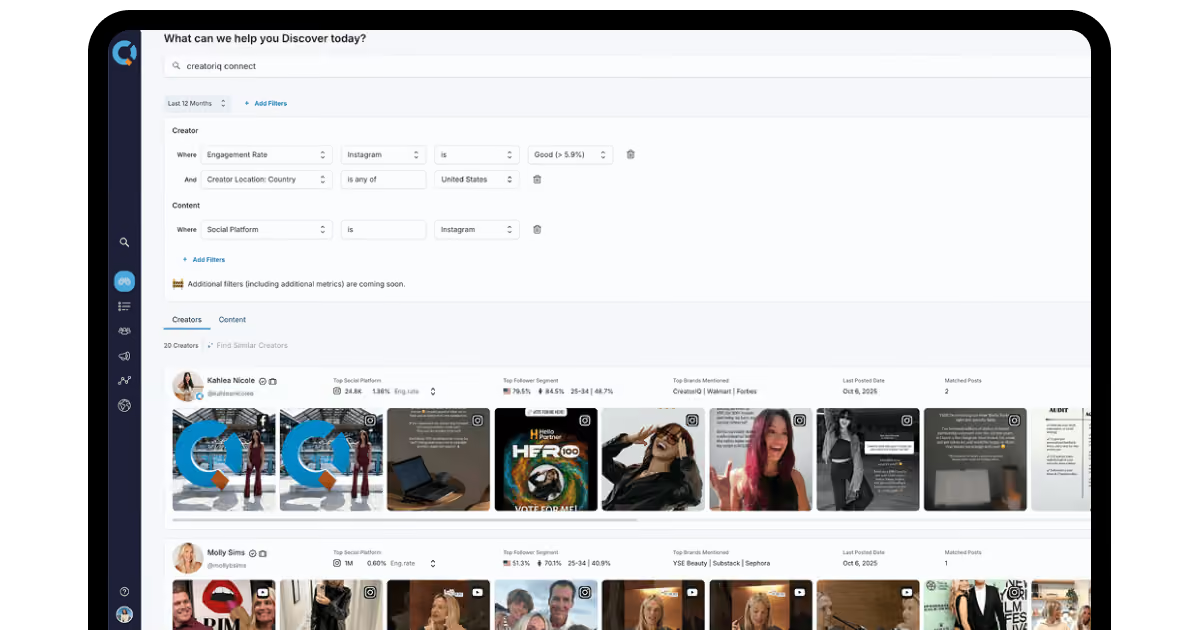
CreatorIQ runs on a Creator Graph processing over 123 million posts daily. It's built for enterprise-scale campaigns, not solo marketers. Our testing showed strong safety tooling through SafeIQ's brand-safety layer. Integration complexity is real, though. This platform rewards teams with dedicated campaign managers.
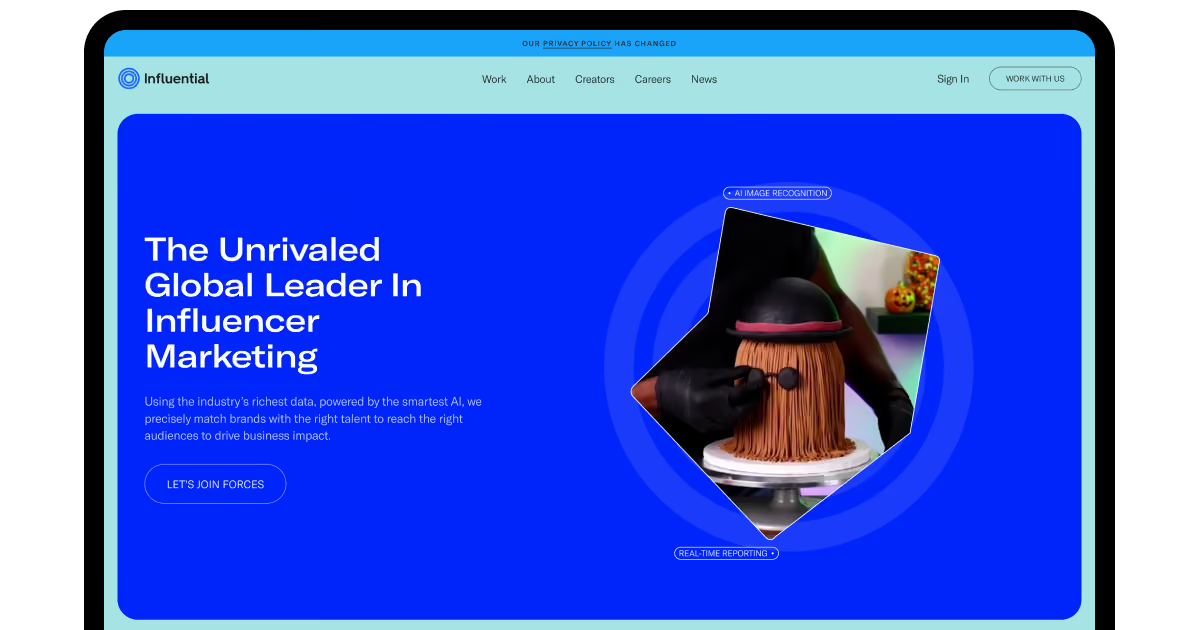
Influential leans on machine learning across more than 15 million creators. It's driven over $2.5 billion in measurable sales for major brands. We found its Velocity Index genuinely useful for spotting rising creators early. Fraud detection here felt more mature than most competitors we tested.
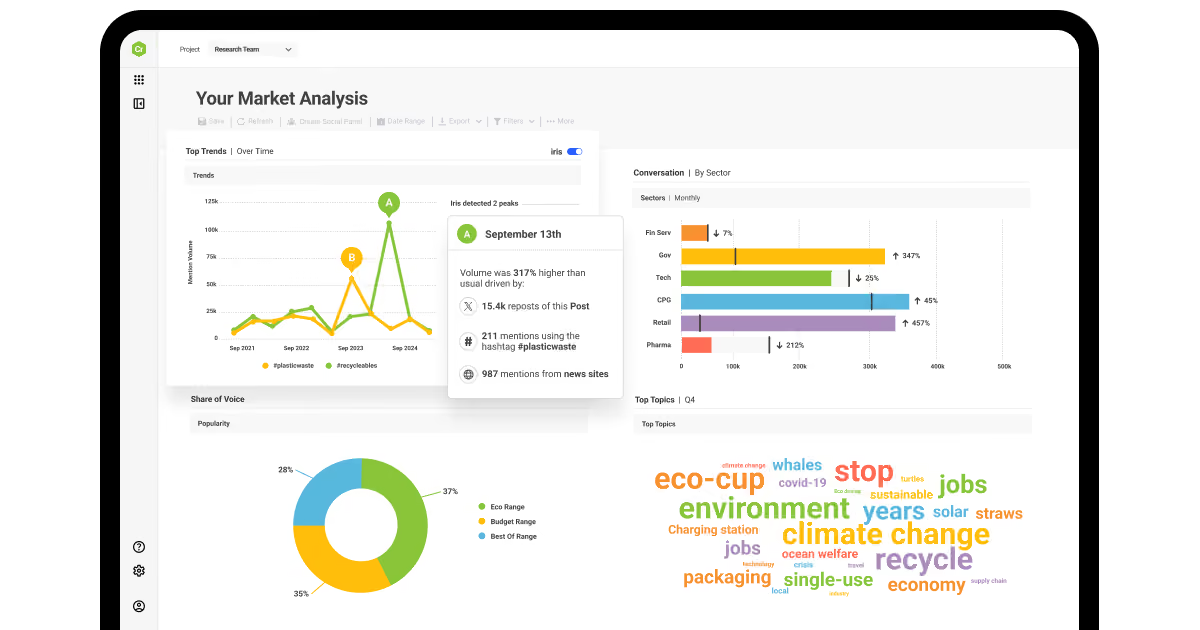
Brandwatch combines social listening with influencer discovery in one suite. Its database covers more than 65 million creators across 120+ currencies. During testing, campaign reporting stood out as unusually clear for a digital influencer marketing tool this large. Smaller teams may find onboarding takes real time.
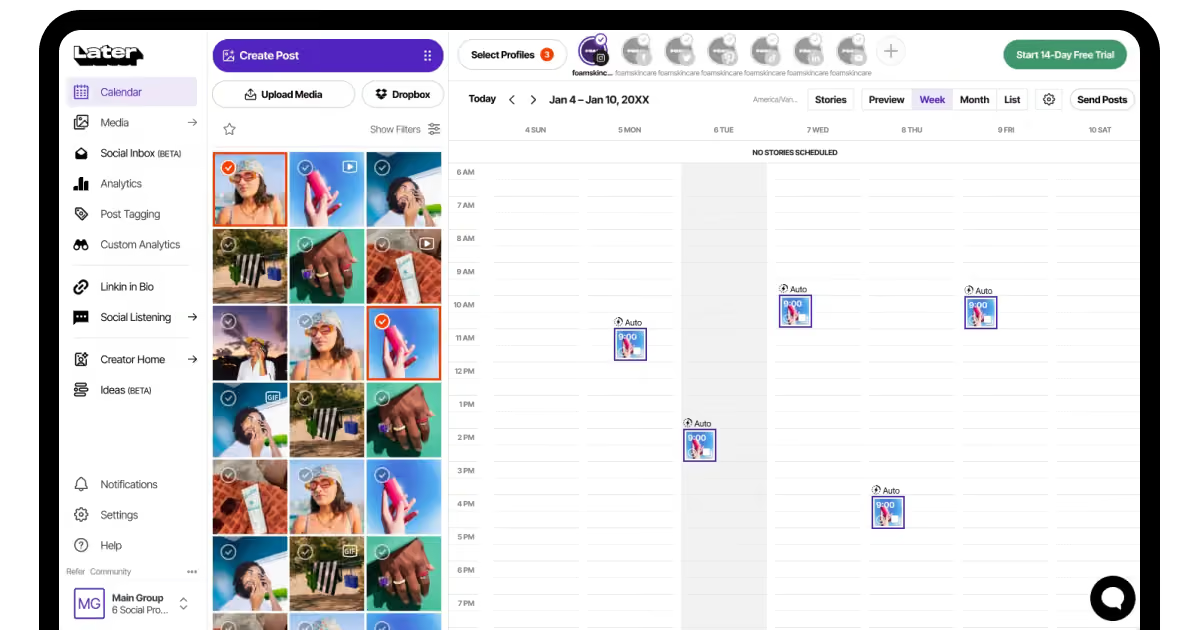
Later merged with Mavrck and Mavely, building a unified creator-commerce stack. It tracks over 136 billion annual impressions and $2 billion in verified purchases. Our tests confirmed strong e-commerce tie-ins, especially for DTC brands running affiliate-style campaigns. Pricing stays custom, which slows early budgeting conversations.
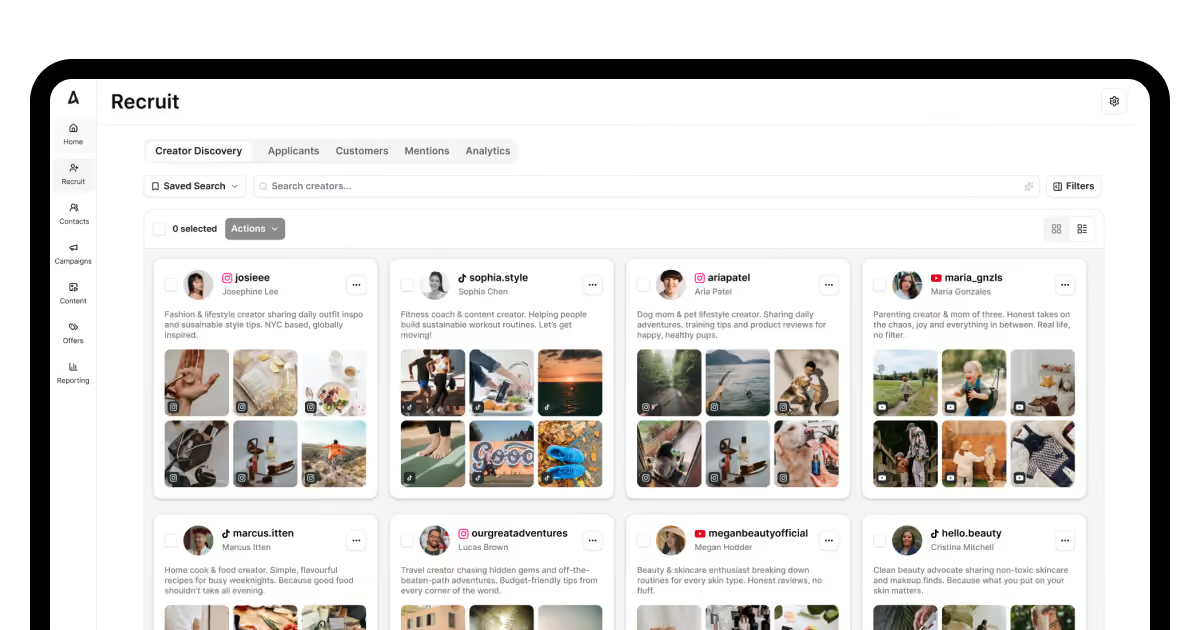
Aspire focuses on ambassador and affiliate programs at scale. It's paid out more than $150 million to creators since 2014. We tested it for a mid-size retail simulation and found campaign setup genuinely fast. Its e-commerce SEO tools integrate well for brands already using Shopify.
Among top influencer marketing platforms, none replace strategy on their own. Each tool still needs a team deciding what actually matters. That's where fit matters more than feature count.
Choosing between the best influencer marketing platforms depends on your scale, budget, and niche. A DTC brand needs different tools than an enterprise travel chain. COAX Software helps clients map their specific goals to the right stack. We don't sell software. We just help you avoid an expensive, wrong pick.
Matching content format to platform strengths
Your ultimate influencer marketing platform means nothing without the right content format. Each platform rewards a different style completely. Below, we break down what works best where in 2026.
Instagram still wins for visual storytelling and lifestyle content. Carousel posts and Reels drive product discovery effectively. We made sure it’s true while building ARRIVAL's storefront. A single founder Instagram post drove 120,000 pre-launch sessions. That's travel influencer marketing working exactly as intended.
TikTok rewards native, unpolished, entertaining content. Fitness, food, and travel brands thrive with quick, authentic clips. Scripted ads underperform badly here. Algorithm-native content wins every time, especially with trending sounds.
YouTube remains the platform for depth and shelf life. Tutorials, reviews, and destination guides perform for years. YouTube influencer marketing suits complex products needing real explanation. Travel creators like Drew Binsky prove long-form storytelling still converts.
LinkedIn now anchors B2B influencer marketing completely. Short-form video opened doors for industry voices. Case studies and practitioner takes outperform polished corporate posts here. B2B buyers trust peers over brand accounts.
Pinterest keeps driving action through visual search. Its content has unusually long shelf life. Home, food, and travel brands see steady traffic months after posting.
Multi-platform strategies work best when paired with proper measurement. Content optimization tools help track what performs where. We help clients test formats before scaling spend. If you're unsure which platform fits your audience, COAX can help you map it out. We've done it for travel, hospitality, and niche community brands alike.
Best influencer marketing software
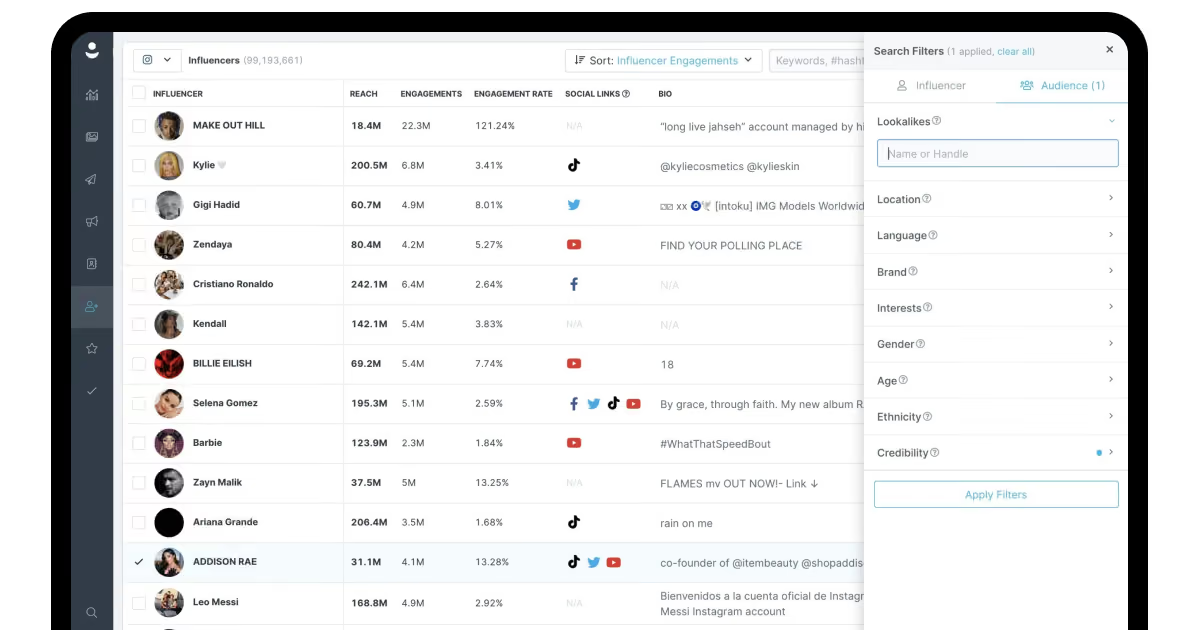
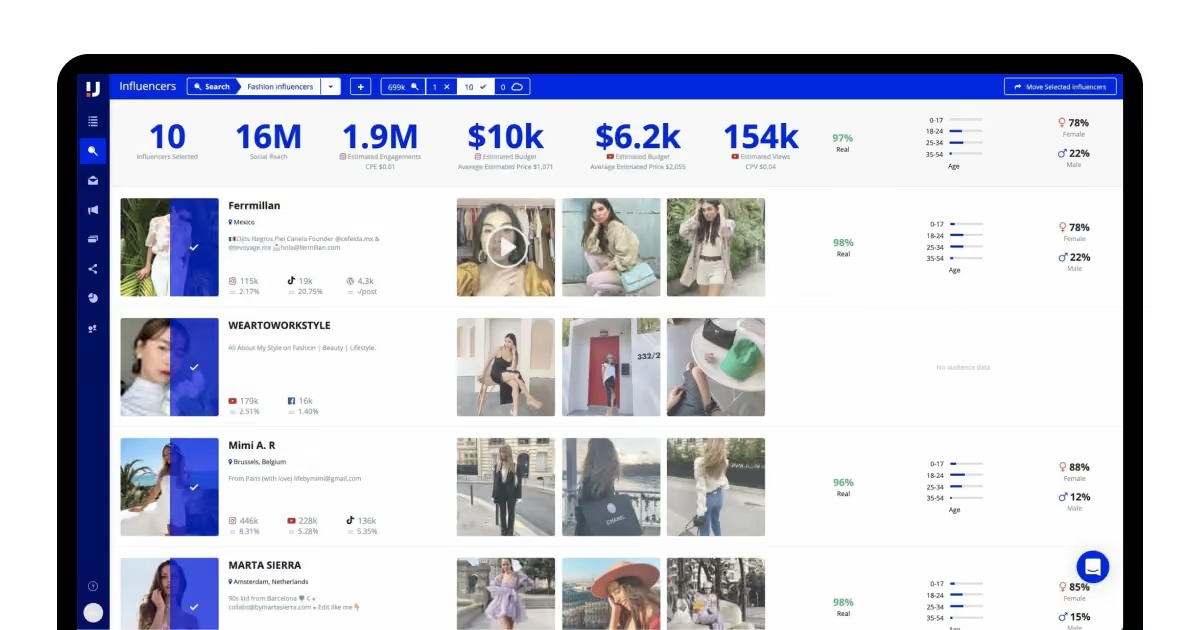
Choosing among best influencer marketing tools depends on your workflow, not hype. We tested seven platforms against criteria that matter for daily operations. Here's what actually held up.
We assessed five practical dimensions, treating each tool like production software:
Creator vetting depth: does it catch fraud, or just count followers?
Workflow automation: how much manual work still falls on your team?
E-commerce attribution: can you trace a sale back to a specific creator?
Compliance tooling: does it handle FTC disclosures automatically?
Learning curve: can a non-technical marketer run this solo?
Software
Creator vetting
Workflow automation
E-commerce attribution
Best for
Skeepers
Strong
High
Strong
Micro and nano creator scale
GRIN
Medium
High
Strong
DTC ambassador relationships
Modash
Strong
Low
Medium
Fast global creator discovery
HypeAuditor
Very strong
Low
Low
Fraud and audience verification
Upfluence
Medium
Medium
Very strong
Affiliate revenue tracking
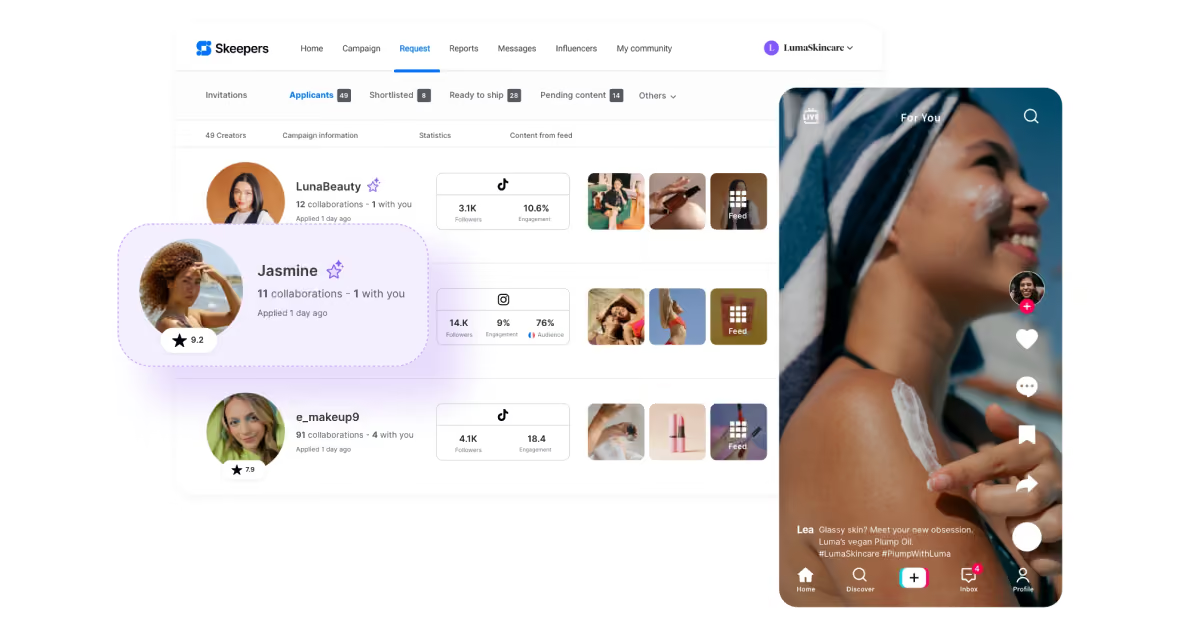
Skeepers targets micro and nano creator programs specifically. It manages a vetted network of over 150,000 creators. We found its end-to-end influencer marketing management workflow unusually complete, briefing through analytics in one dashboard. Built-in FTC compliance tools stood out during testing, something most competitors treat as an afterthought.
GRIN treats creators as long-term partners, not one-off vendors. Its CRM-style dashboard tracks relationships, gifting, and affiliate performance together. Our testing confirmed strong native integrations across Instagram, TikTok, and YouTube. Revenue attribution through discount codes worked cleanly, useful for any DTC team scaling ambassador programs.
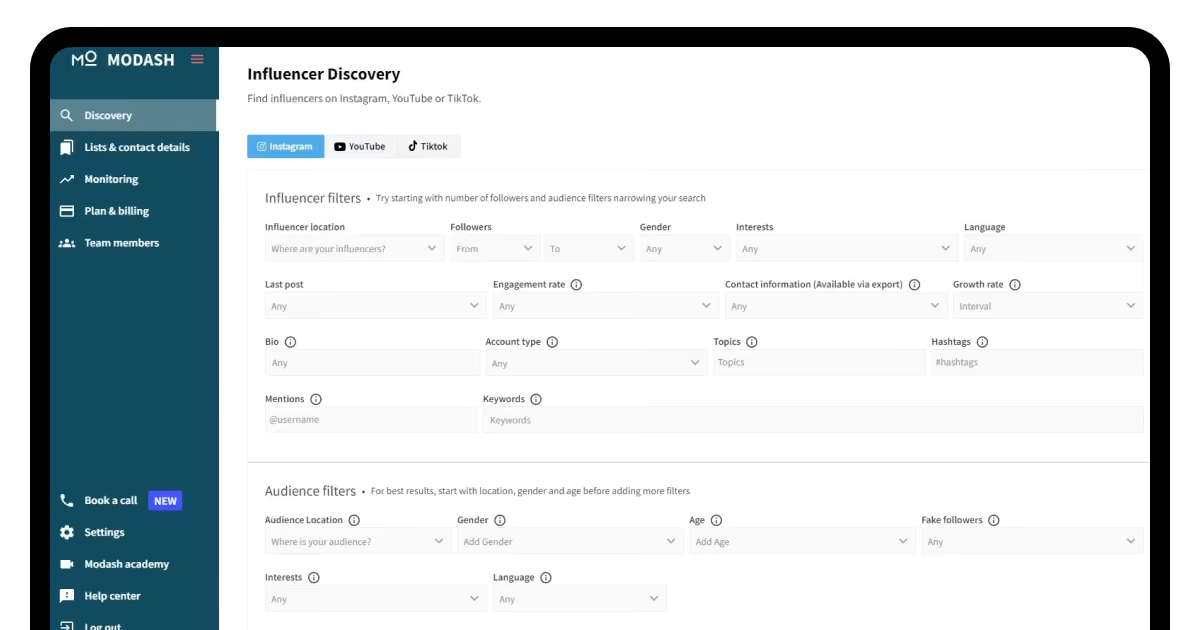
Modash exists purely for creator search and audience verification. It indexes creators globally with minimal friction. Our team ran several Shopify-store simulations and found discovery notably faster than competitors. It's a lean, focused influencer marketing app, not a full campaign suite.
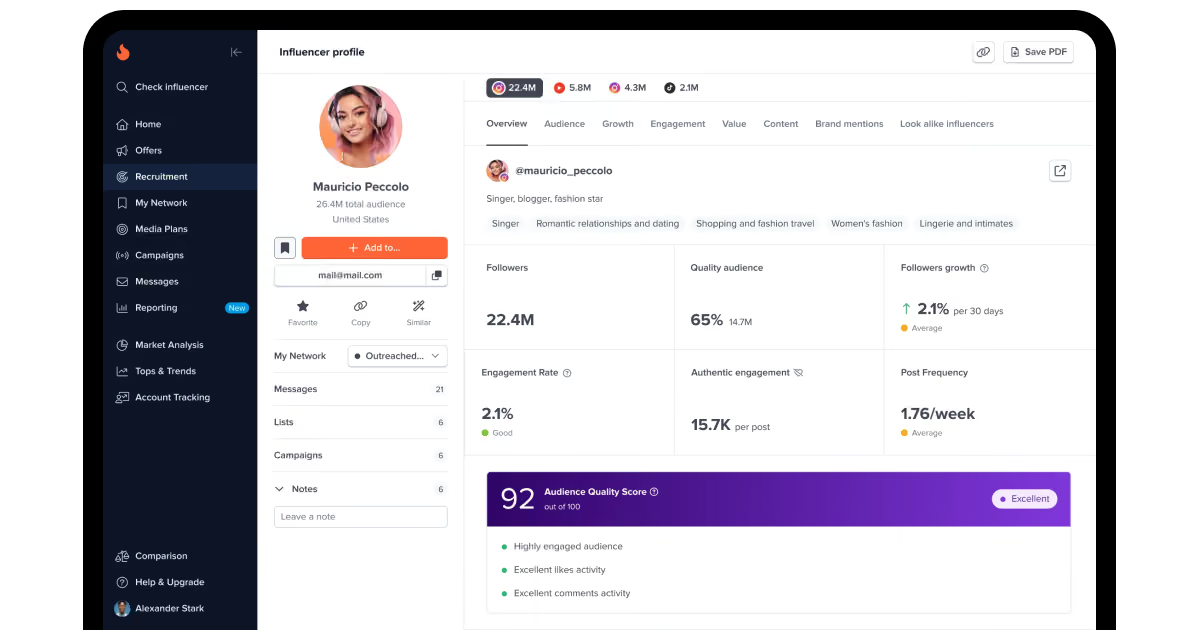
HypeAuditor remains the strongest pick for fraud detection specifically. It scans creators across Instagram, TikTok, and YouTube for fake engagement. We tested several suspicious accounts and got consistent, reliable flags. It's best paired with another tool for actual campaign management.
Upfluence blends affiliate marketing with a 12-million-creator index. It's built specifically for DTC and e-commerce workflows. Our evaluation showed the AI-matching feature cut manual outreach time significantly. Revision and negotiation tools stayed straightforward throughout testing.
None of these tools replace a real strategy on their own. Good influencer marketing software still needs someone deciding what to measure. The tool executes; your team still directs.
Picking between these options usually comes down to scale and priority. A beauty brand scaling nano creators needs different infrastructure than an enterprise coordinating global campaigns.
How to build a successful influencer marketing strategy?
A strong influencer marketing strategy starts before you contact a single creator. Goals, audience, and platform choice all come first. Below, we break down each step. We'll also share what we've learned building creator-driven platforms ourselves.
Define measurable campaign goals
Vague goals produce vague results every time. "Increase awareness" isn't a target; it's a wish. Define numbers: sessions, sign-ups, bookings, or revenue.
We saw this clearly with ARRIVAL. Every metric traced back to a specific source. Pre-launch, one Instagram post drove 120,000 sessions. That number came from tracked links, not guesswork. Set your target before the campaign starts, not after.
Identify your target audience
Audience clarity shapes every decision after it. Know who you're targeting before choosing platforms or creators. Age, interests, and buying habits all matter here.
ARRIVAL's audience wanted culture-first stories, not generic travel content. That single insight shaped their entire creator selection. Skipping this step wastes budget on the wrong voices.
Choosing the right influencers
When planning your influence strategy, you might think bigger is better. Not so fast! Research consistently shows a different truth: smaller creators often deliver superior sales results.
What are nano influencers? They're creators with under 15,000 followers who have super-close bonds with their audiences. Their recommendations feel like tips from a friend, not ads.
70% of brands that work with nano influencers report higher ROI than celebrity partnerships, primarily due to genuine audience connections. Smaller creators with followings under 15,000 typically generate engagement rates nearly three times higher than macro-influencers, making them particularly valuable for direct-response campaigns.
The economic advantages are equally compelling:
Lower campaign costs (sometimes starting at just $200 per post versus $15,000+ for larger creators)
Greater openness to product gifting and affiliate arrangements
Higher responsiveness and collaboration flexibility
Equal potential for creating viral content
More authentic integration of products into everyday life
But the landscape isn't black and white. As Kat LaFata, founder of talent management agency NY&Bagels, points out, mid-tier influencers often provide the best balance. They're established enough to have a defined voice, but small enough to promote brands authentically.
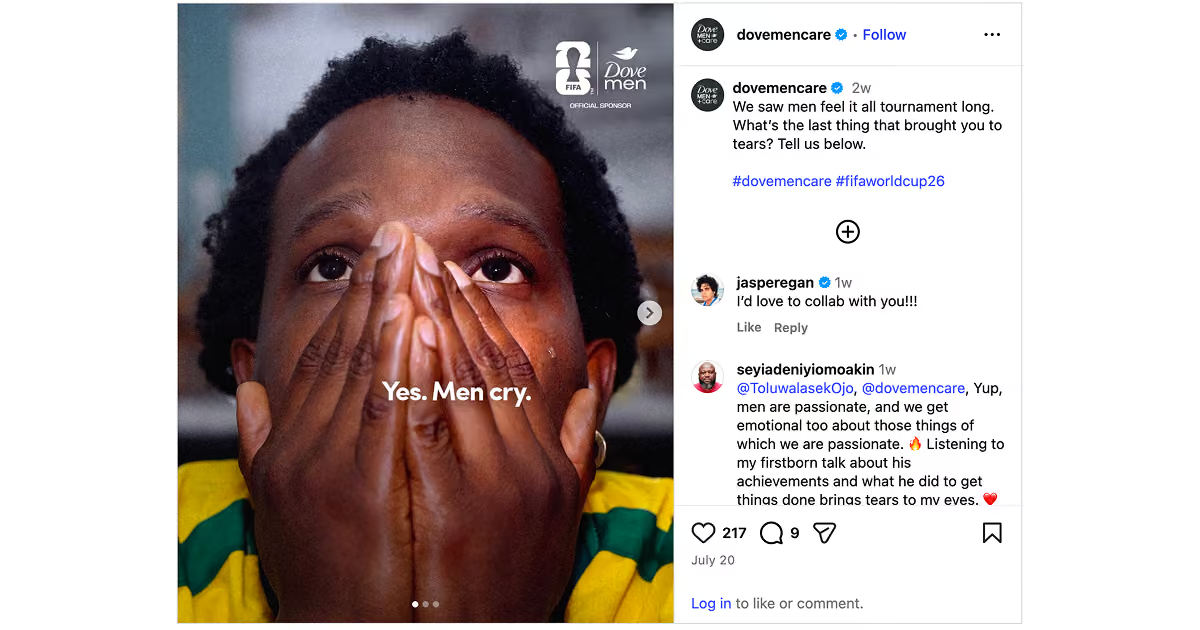
Dove Men proved this balance works at scale. Major creators drove awareness during the 2026 World Cup. Micro-influencers, 10,000 to 100,000 followers, sustained engagement after. Together, they reached over 150 million potential consumers.
Niche influencers: Why are they a good option?
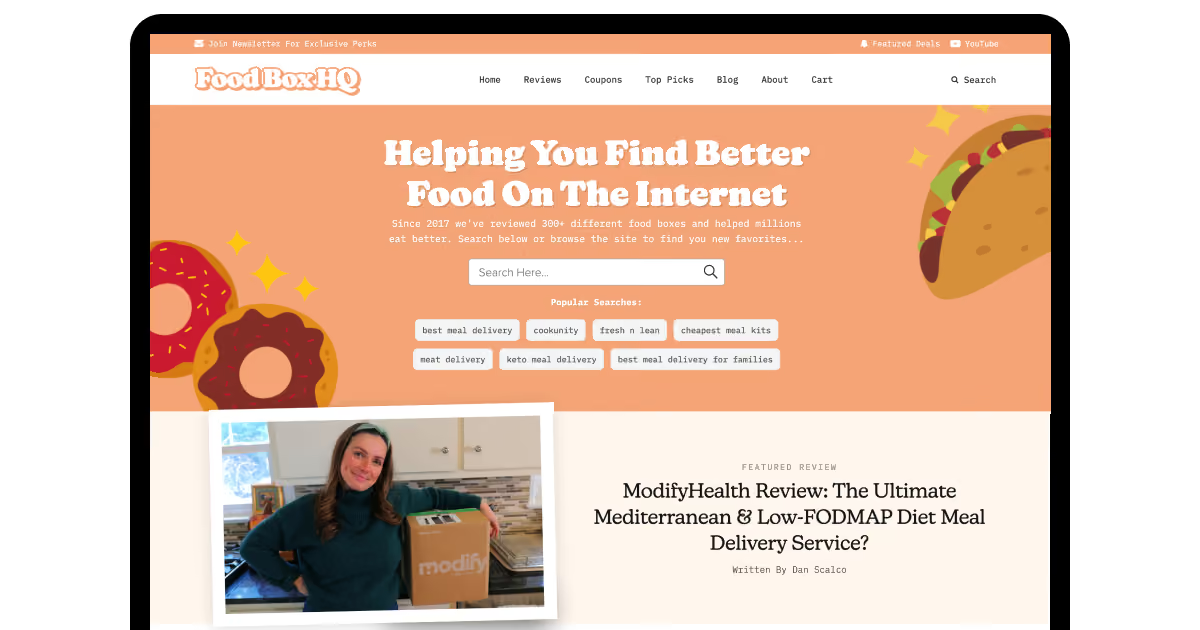
Beyond size, the real game-changer is content focus. For example, Emily from Food Box HQ (12K+ YouTube subscribers) helps followers find the best meal kits and has a dedicated blog where she shares recipes and reviews in more detail.
The most effective small creators aren't just smaller versions of mainstream influencers but community builders around specific interests, lifestyles, or demographics. In categories like sustainable fashion, specialized cooking techniques, or niche hobbies, these focused creators often serve as trusted advisors. These specialized partnerships offer huge advantages:
You reach people already interested in what you sell.
Their recommendations convert better because they're relevant.
They're open to different deal types like affiliate links or free products.
Their rates fit smaller marketing budgets.
They often stick with brands longer, building lasting connections.
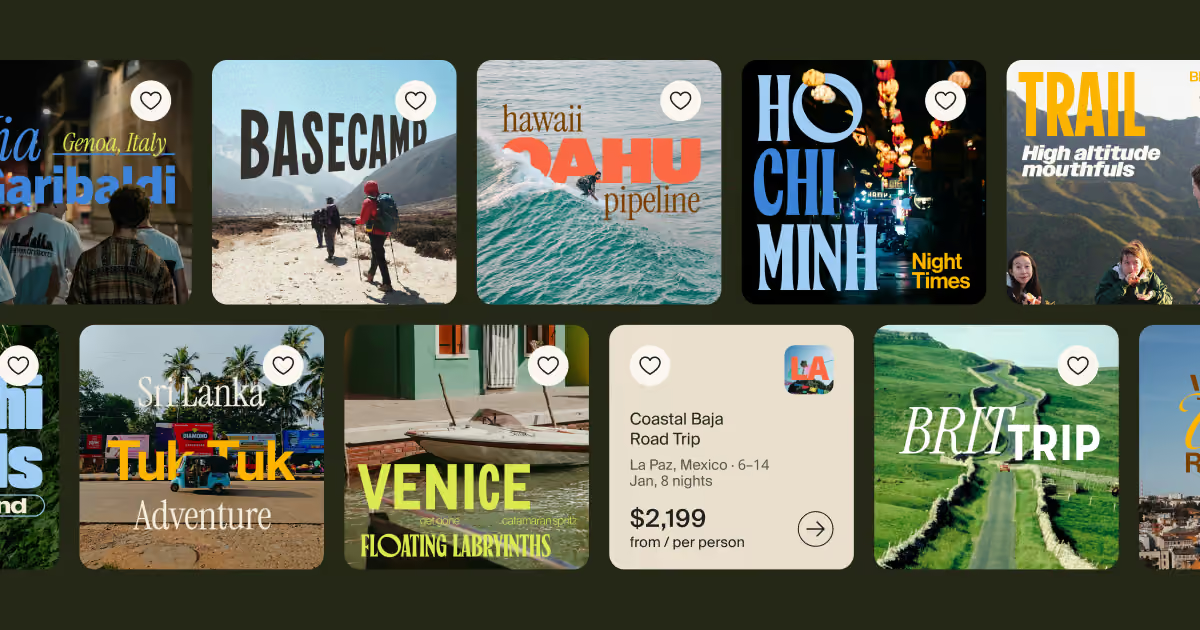
The latest retail trends show that shoppers prefer specialized experiences over one-size-fits-all options. Trouble Maker and lastminute.com formed a partnership in early 2024 and created a successful summer campaign called "It's Never Too Late to Book a Holiday" that involved niche influencers with organic humor to break through traditional travel marketing and connect with audiences more authentically. This is a great example of trends combined with a niche, genuine, emotional way of promoting your brand.
Airalo took a similar path at scale. It activated 266 travel creators across Brazil and LATAM. Storytelling, not specs, sold the product. The result was 42.8 million views and rising trust.
Influencer marketing content strategies
The battle between long-form vs short-form content rages on, with each format offering unique advantages. The rapid rise of Instagram Reels, Stories, and TikTok videos demonstrates short-form's incredible power to convert followers into customers.
Over two-thirds of marketers believe long-form content will rival short-form performance this year. Why? Because some products require more explanation than a 60-second video permits, high-ticket items often need comprehensive pitches to justify their price tags.
Short-form content wins on immediate reach. Instagram Reels, TikTok clips, and Stories drive quick discovery. But long-form still earns deeper trust.
Travel fits both formats well. Short clips spark the "I want to go" moment. Long-form guides then close the booking. That mix mirrors what we built for ARRIVAL's storefront, where journals and quick social hooks work side by side.
Long-form content is tapping into Instagram too. The platform updated its algorithm to ensure that longer videos are not unfairly penalized. There are nuances, though. For example, watching 10 seconds of a 1-minute video holds the same weight as watching 10 seconds of a 10-second clip. This change aligns with Instagram’s goal of encouraging longer content, especially as it recently extended Reels to 3 minutes.
The truth? Both formats serve distinct purposes:
Short-form content quickly captures engagement and has the potential to go viral, making it easy for audiences to consume effortlessly. It is particularly effective for building awareness and sparking initial interest, thriving on platforms like TikTok and Instagram.
Long-form content allows for deeper storytelling and detailed product reviews, helping to build stronger brand relationships while thoroughly educating consumers. It performs especially well on platforms like YouTube and podcasts.
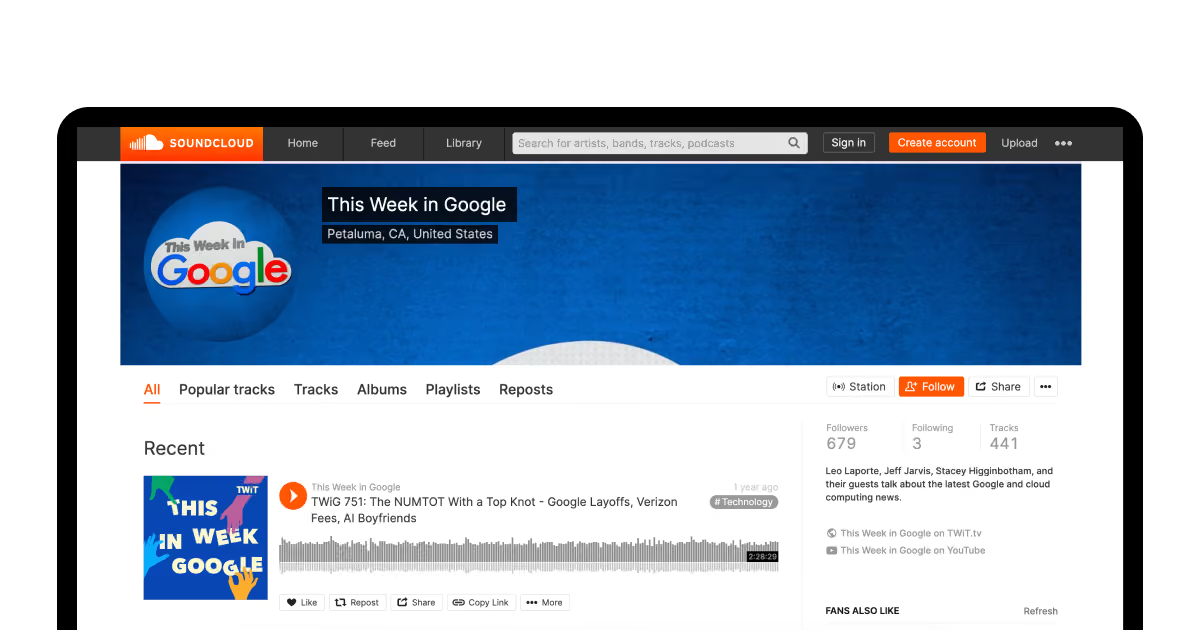
For retailers making the first mention of their products to introduce new product lines, short-term content like TikTok videos and Instagram stories is a great way to do it. Meanwhile, influencer marketing campaigns like "This Week in Google" and "IT Visionaries by Salesforce" podcasts deliver in-depth knowledge, establishing these brands as authoritative thought leaders and setting great customer connections and long-term loyalty.
This Week in Google
Which influencer content types generate the most sales?
Your content strategy is the compass that guides your journey. But which form actually converts better?
Recent research challenged 250 creators with 100,000+ subscribers to produce equal quantities of shorts and traditional videos, revealing unexpected insights. The findings point to a complex relationship between content length and sales performance.
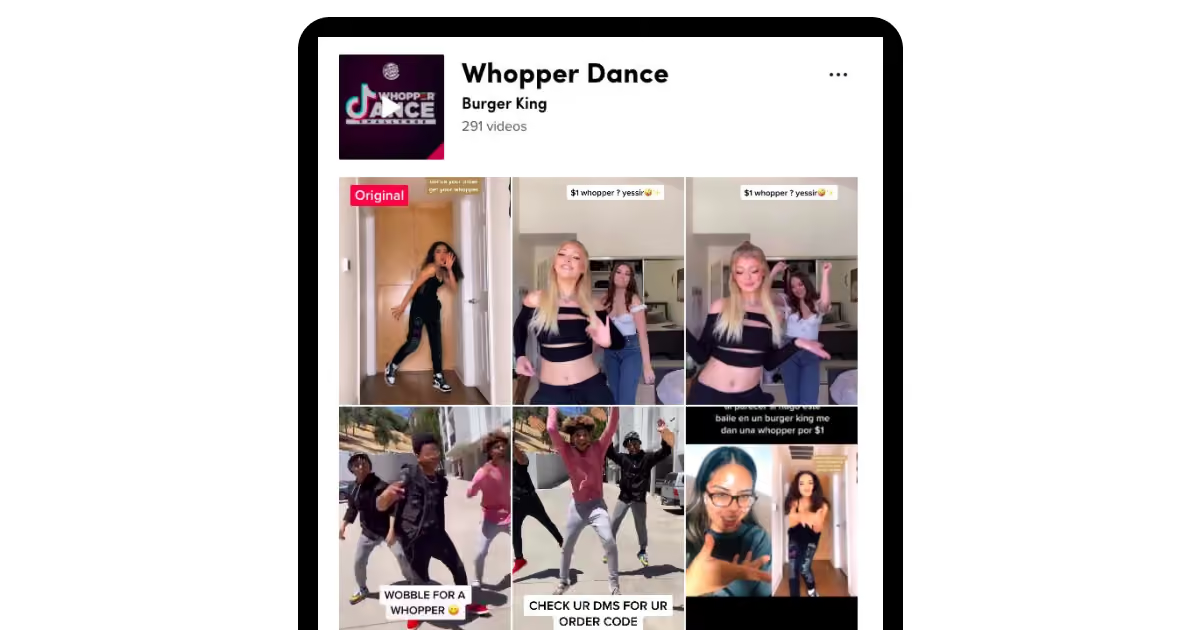
The results showed short-form content consistently outperforming long-form video content in immediate engagement metrics. Burger King illustrates short-form brilliance with their #WhopperDance TikTok campaign featuring creators Loren Gray, Avani Gregg, and Nathan Davis. This challenge generated 47 million views while significantly boosting average order values.
This shift doesn't necessarily mean shorts drive more sales. Influencer marketing examples like Revolut's financial education videos prove invaluable. Revolut specifically prioritizes YouTube partnerships because "personal finance content lends itself to longer running times," according to their head of growth, Fiona Davies.
Mistakes to avoid in influencer marketing
Influencer marketing rocks when done right, but plenty of brands stumble along the way. Even with the best influencer marketing tools at your fingertips, mistakes happen that drain your budget and leave you scratching your head. The good news? Spotting these pitfalls early saves you major headaches down the road.
Picking the wrong influencer match
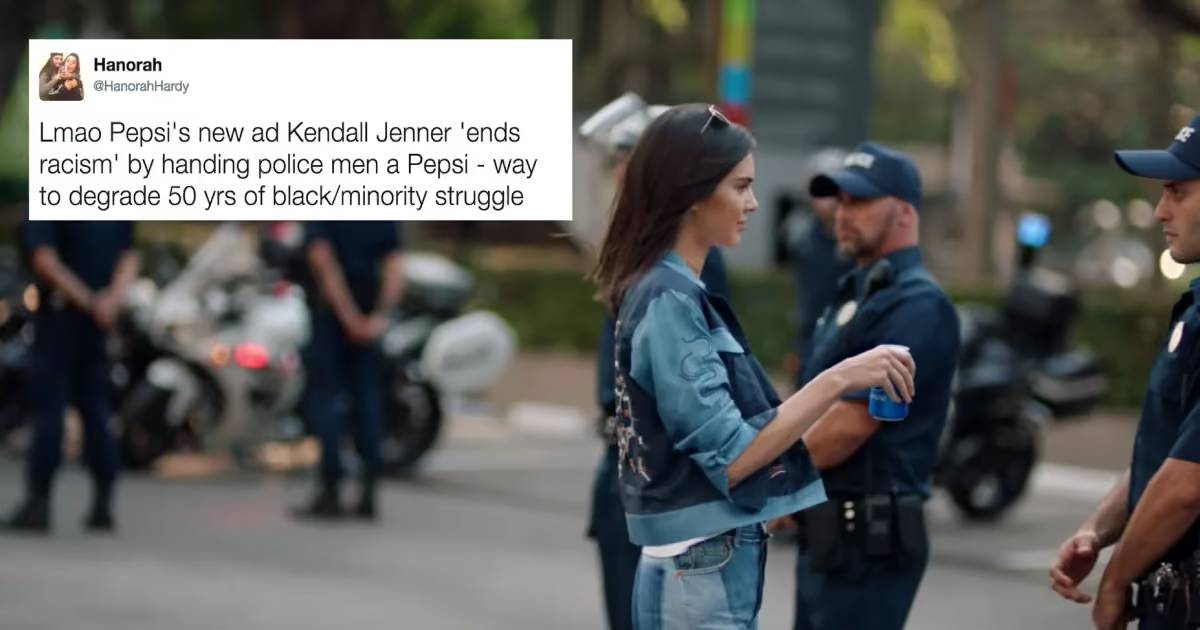
Partnering with someone whose values clash with your brand creates an instant disconnect. The infamous 2017 Pepsi and Kendall Jenner collaboration attempted to use a Black Lives Matter-inspired protest for a unity message, but it backfired spectacularly. Martin Luther King Jr.'s daughter even tweeted sarcastically about it, causing Pepsi to pull the ad and apologize. Your influencer needs to make sense of your message — otherwise, prepare for backlash.
Forgetting about your target audience
One of influencer marketing best practices is audience alignment. EA learned this lesson the hard way when it enlisted Breaking Benjamin's lead singer to promote Star Wars Battlefront. Instead of praising the game, he smashed the disc and posted it on social media! About 62% of consumers buy products when promotions feel authentic to the influencer's usual content — EA missed this crucial step completely.
Ignoring analytics and performance data
Flying blind without tracking your campaigns wastes resources and causes miscommunication. Sunny Co Clothing's Instagram promotion promised free swimsuits to everyone who reposted their picture. They gained 745,000 followers overnight but couldn't fulfill their promise, creating angry followers and a damaged reputation. Without proper analytics to predict outcomes, their campaign backfired dramatically.
Controlling creativity too tightly – or too vaguely
Without clear guidelines, influencers miss your marketing targets entirely. Little Mix's branded perfume promotion failed when they posted content with the editor's comment accidentally included: "Jade from the marketing department approves this copy." Clear directions prevent mishaps, but they need proper implementation too — not just copy-pasting!
Ignoring current influencer trends
What worked yesterday might flop today as platforms and preferences evolve. Snap's Spectacles partnership with fashion influencer Luka Sabbat demonstrates this perfectly. Despite his style, Sabbat couldn't transform the product from novelty gadget to must-have accessory. The campaign failed because it missed evolving consumer perceptions about wearable tech.
Neglecting legal and disclosure requirements
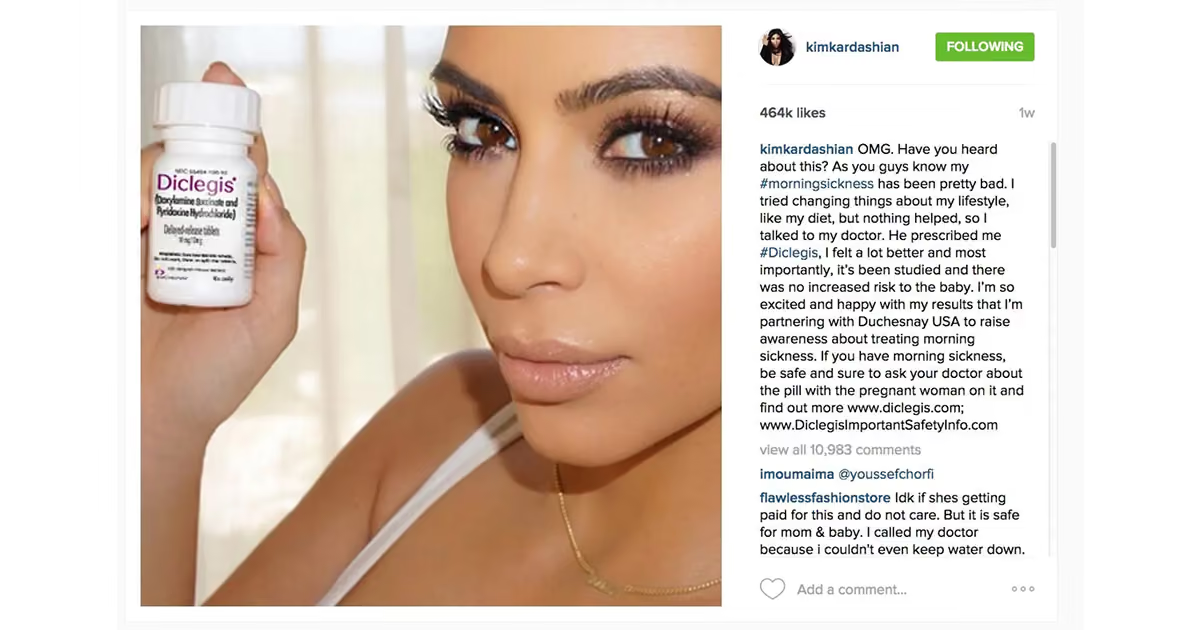
Skipping proper disclosure invites regulatory trouble. Kim Kardashian discovered this when promoting the morning sickness drug Diclegis without listing the required side effects. The FDA ordered her to remove and repost the content — a potentially costly mistake for both her and the pharmaceutical company. Transparency isn't just ethical — it's legally required.
So the risks are high in revenue, customer trust, and your brand’s reputation. However, you can spot some red flags before launching the campaign. Here are some warning signs you're heading for trouble:
Brand misalignment. That influencer promoting fast food to vegan followers? Total disaster! Think carefully about brand-influencer fit before signing contracts.
Fake followers. Inflated follower counts paired with low engagement metrics scream "warning!" Invest in influencers with genuine communities, not bot-filled audiences.
Inorganic content. Nothing tanks campaigns like robotic scripts and forced product placements. Let influencers tell your story in their authentic voice.
Missing disclosures. Transparency builds trust. Undisclosed sponsored content risks both reputation damage and hefty fines.
Most failures trace to weak targeting or unclear goals. Brands often chase follower counts over fit. Others skip contracts, disclosures, or performance tracking entirely.
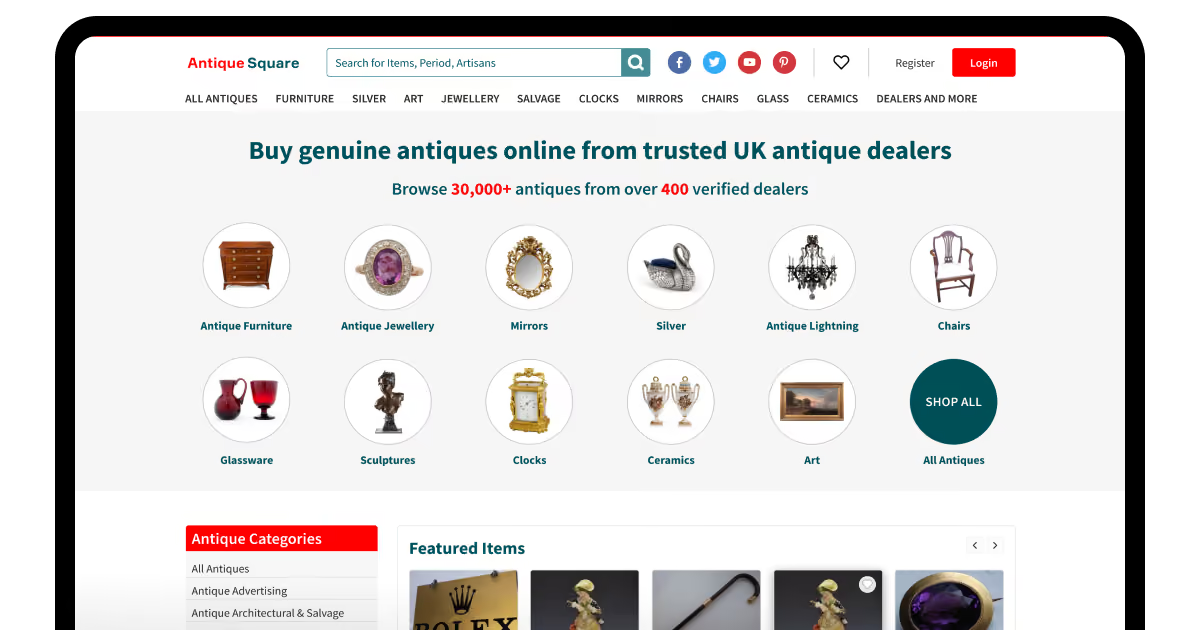
Project A's antique marketplace shows a parallel lesson. Their infrastructure grew complex before their SEO strategy matured. Rushing creator campaigns without a technical foundation creates similar chaos.
How the right marketing agency changes the game
Agencies bring structure most in-house teams lack. They benchmark against real influencer marketing examples, not guesses. They also spot influencer marketing trends before competitors notice them.
COAX doesn't run influencer campaigns ourselves. But we build the infrastructure behind them. ARRIVAL's booking flow, HubSpot integration, and CMS all supported creator-driven growth directly. That's where our digital marketing strategy services actually fit. We build the system; you and your creators fill it with story.
Looking at best influencer marketing campaigns like Airbnb's "Live There" or Deutsche Bahn's "No Need to Fly," one pattern repeats. Strong influencer marketing strategies always pair the right voice with the right infrastructure. Miss either half, and results stall no matter how good the content is.
Measuring the influencer marketing campaign success
Numbers separate strategy from guesswork. Without proper influencer marketing KPIs, campaigns run on hope alone. Below, we break down what to track, which tools help, and how to calculate real returns.
Determining the success of your influencer campaigns requires tracking the right metrics. While vanity metrics like follower count might seem impressive, they don't always translate to business results. Here are the essential KPIs for influencer marketing:
Engagement rate. Measures audience involvement with the content. Calculate by dividing total interactions (likes, comments, shares) by reach and multiplying by 100. A high engagement rate indicates content that resonates with the audience.
Conversion rate. Tracks how many people took your desired action after exposure to influencer content. This could be purchases, sign-ups, or downloads. Use unique tracking links, promo codes, or UTM parameters to attribute conversions accurately.
Cost per acquisition (CPA). Calculates how much you're spending to acquire each new customer through influencer efforts. Divide the total campaign cost by the number of acquisitions to determine if your investment is paying off.
Beyond spend, watch retention signals too. Repeat purchases matter more than first clicks. A creator who drives loyal buyers earns real budget.
Brand sentiment. Tracks how influencer content affects audience perception of your brand. Comments reveal more than likes ever will. Read them closely, not just the counts.
Audience growth. Measures new followers gained during campaigns. This indicates long-term brand-building success beyond immediate conversions.
Content performance. Analyzes which influencer content types and formats perform best. Some formats fade fast; others compound over months. Track both curves separately.
ARRIVAL's persona quiz shows this well. Every traveler picks a category on sign-up. That single data point maps campaign impact to actual booking behavior. Marketing teams can now see exactly which creator audience converts into which trip type. That's measuring influencer marketing done through product data, not guesswork.
Tools and metrics for measuring campaign impact
Picking tools matters less than picking the right combination. Match tools to your specific influencer marketing metrics, not the reverse.
Media intelligence platforms.
Comprehensive solutions like Meltwater, Cision, and Mention combine media monitoring, social listening, and analytics in one platform. These tools track mentions across traditional and digital media, providing a holistic view of your brand presence.
Regression analysis software.
Advanced statistical tools that help identify correlations between PR activities and business outcomes. Regression performance metrics allow you to determine which specific elements of your campaign drove the strongest results, helping optimize future strategies.
Social media analytics.
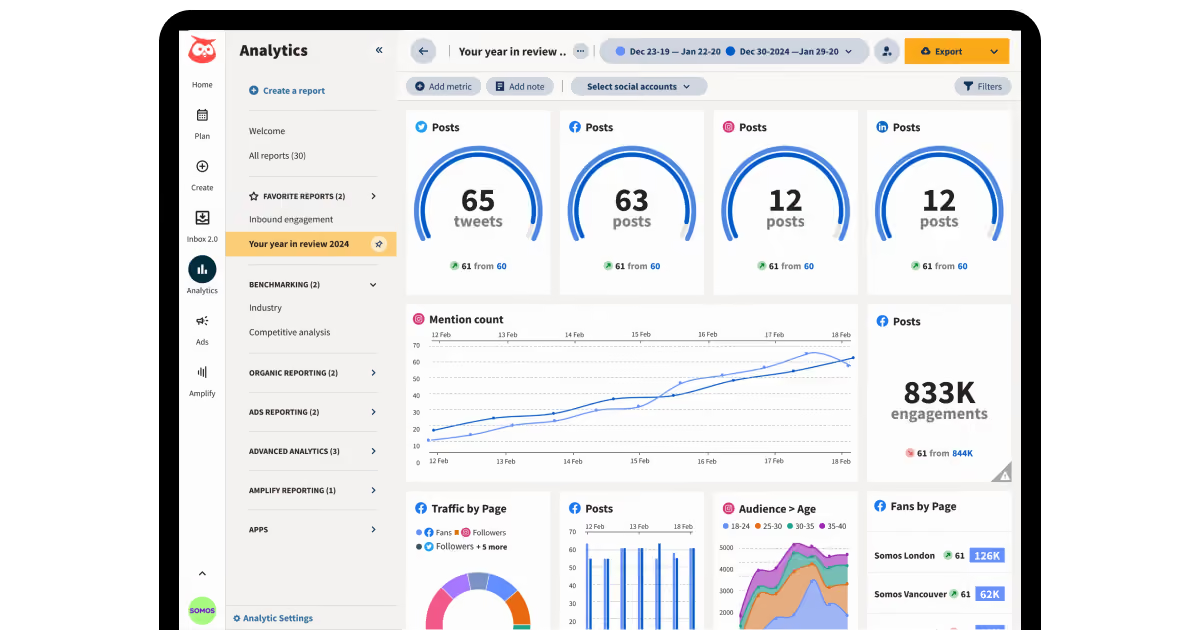
Platforms like Hootsuite Analytics and Brandwatch provide detailed metrics on social engagement, audience demographics, and content performance across different channels.
Hootsuite Analytics
SEO tracking tools.
Solutions like SEMrush and Ahrefs monitor how influence efforts impact search visibility, backlink profile, and organic traffic, connecting PR activities to digital marketing outcomes.
Integrated dashboard solutions.
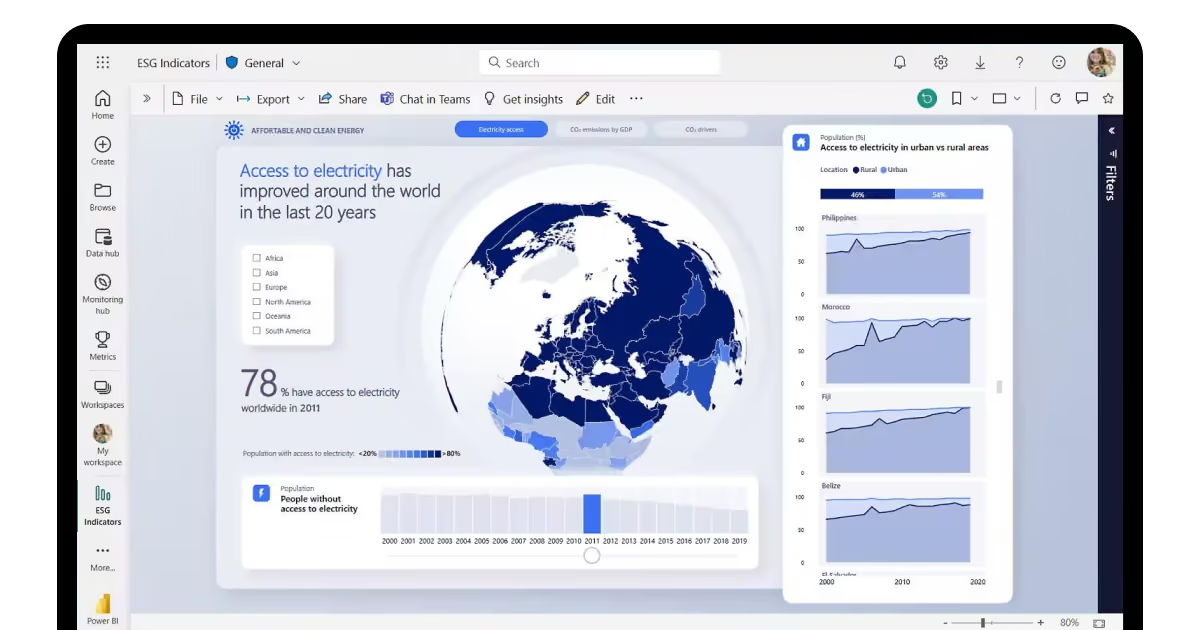
Customizable dashboards like Tableau and Power BI combine data from multiple sources, creating visual representations of influencers' performance that stakeholders can easily understand.
Power BI
The right stack depends on your funnel structure. A DTC brand needs different tracking than a travel platform. ARRIVAL’s HubSpot integration proves this point directly. Every booking, sign-up, and campaign touchpoint synced into one view. No manual spreadsheet reconciliation was needed from week one.
How to calculate influencer marketing ROI
There is a general, established formula for defining your return on investment. First, figure out how much you invested and how much revenue your campaign generated. Once you have that information, it's simple to calculate the ROI. For example, if you spent $10,000 on an influencer campaign that generated $35,000 in sales, your ROI would be (35,000/10,000) x 100 = 350%.
These ROI calculating approaches are based on specific factors and practices:
Immediate sales approach. Calculate direct revenue generated through tracking links, promo codes, and affiliate programs. Then subtract your campaign costs to determine net profit and overall ROI percentage.
Audience value approach. Calculate the cost of acquiring new followers, subscribers, or community members compared to other acquisition channels. Long-term value often exceeds first-purchase revenue.
ARRIVAL illustrates this fully. Founders' Instagram posts drove 120,000 pre-launch sessions. That traffic converted into 50,000 signed-up users by launch day. Since then, 200-plus bookings followed through a fully owned channel. No OTA commission ate into margins anywhere. That's influencer marketing roi, made visible through infrastructure, not spreadsheets alone.
Calculating influencer marketing cost honestly means counting everything. Creator fees, platform software, and internal management time all count. Skipping any piece inflates your apparent ROI artificially.
This is where COAX fits naturally. We're engineers first, but we've built the platforms behind creator-driven growth. We understand the technical side: tracking links, CRM syncing, booking flows. That understanding feeds directly into our content marketing services. We don't just write about campaigns; we've built what powers them.
Our teams have shipped influencer marketing software integrations across travel and hospitality platforms. That's given us a rare vantage point. We see the full cycle: idea, launch, growth, and scale. Marketing doesn't happen separately from product anymore. It's part of the same pipeline.
Following influencer marketing best practices means treating measurement as infrastructure, not an afterthought. Build tracking in from day one. The benefits of influencer marketing only materialize when you can prove them.
If you're planning a campaign and need the technical foundation behind it, that's exactly where we help. From influencer marketing strategy to the platform tracking its results, COAX builds the system your creators and campaigns will run on.
FAQ
How much should a startup budget for influencer marketing tools before its first campaign?
Most startups overspend on software before proving demand. Start with one affordable discovery tool, under $100 monthly, and manual tracking spreadsheets. Skip enterprise platforms until you've run three campaigns successfully. We've seen clients waste budget on unused features. Prove your process manually first. Scale software spend only after campaigns show measurable, repeatable results worth automating properly.
What is influencer marketing, really, versus just paying someone to post?
It's a trust transfer, not a transaction. Paying for posts alone rarely works long-term. Real influence means the creator's audience already trusts their judgment. That trust transfers to your product only if the partnership feels genuine, ongoing, and aligned with what that creator's audience actually values.
How do I know if my influencer partnership is failing before wasting the whole budget?
Watch engagement within the first 48 hours. Flat comments or unusual like-to-view ratios signal trouble early. Don't wait for the campaign to end before adjusting. We've watched clients catch failing partnerships fast this way. Pause spend, request a content revision, or shift budget toward a better-performing creator immediately.
How do I create a successful influencer marketing campaign without a dedicated marketing team?
Creating a successful influencer marketing campaign starts with one clear goal, not five. Pick one platform, one creator tier, and one measurable outcome. Solo founders succeed by staying narrow, not broad. Track everything through unique links from day one. Expand only once that single format proves it converts reliably.
What are the real influencer marketing benefits for a brand nobody's heard of yet?
Unknown brands gain instant borrowed credibility. A creator's endorsement substitutes for reviews you don't have yet. It also generates authentic content cheaper than professional production. We've seen early-stage platforms gain their first thousand users this way. Awareness, content, and trust all arrive together, faster than paid ads alone.
Can one bad influencer partnership actually damage my brand's reputation long-term?
Yes, but recovery is usually faster than founders fear. Address it publicly, quickly, and honestly if a partnership backfires. Audiences forgive mistakes handled transparently. What damages trust longer is silence or denial. Treat it like any product issue: acknowledge, fix, and move forward without over-apologizing repeatedly.
How do I build an influencer marketing strategy if I only have one product to promote?
Single-product brands should go deeper, not wider. Pick creators whose existing content already fits your product's use case naturally. Long-term partnerships beat one-off posts here. We've built platforms around exactly this challenge: one core offering, marketed through consistent creator relationships instead of scattered, one-time campaigns.














































We are interested in your opinion