


























































Makeover Stack
An internal tender management platform for a large-scale North American retail corporation

Construction
The team
6
Full-stack developer
Backend developer
Frontend developer
QA engineer
Business analyst
Project manager
Timeline:
Phase 1 - Internal platform, RFP core flow Sep - Nov
Phase 2 - Multistore RFP Apr - Jul
Phase 3 - Capacity Tracker - Jul - Nov
Phase 4 - Construction RFP (used for larger construction programmes, often across many stores and provinces, where detailed materials, labour are required) - Nov - Apr
Share:
Customer profile
Our client, Makeover Stock, is one of the world's largest home improvement retailers, operating thousands of stores across North America and employing hundreds of thousands of people. At that scale, even routine operations, such as store renovations, infrastructure upgrades, or equipment replacements, become complex, multi-party coordination challenges.
The company runs a dedicated internal department responsible for sourcing and managing contractors across a constant pipeline of store improvement projects. Every project starts the same way: a Request for Proposal goes out, contractors respond, bids are evaluated, and someone wins. However, when you multiply that by hundreds of stores and dozens of active projects at any given time, the process demands a specific system built for it.
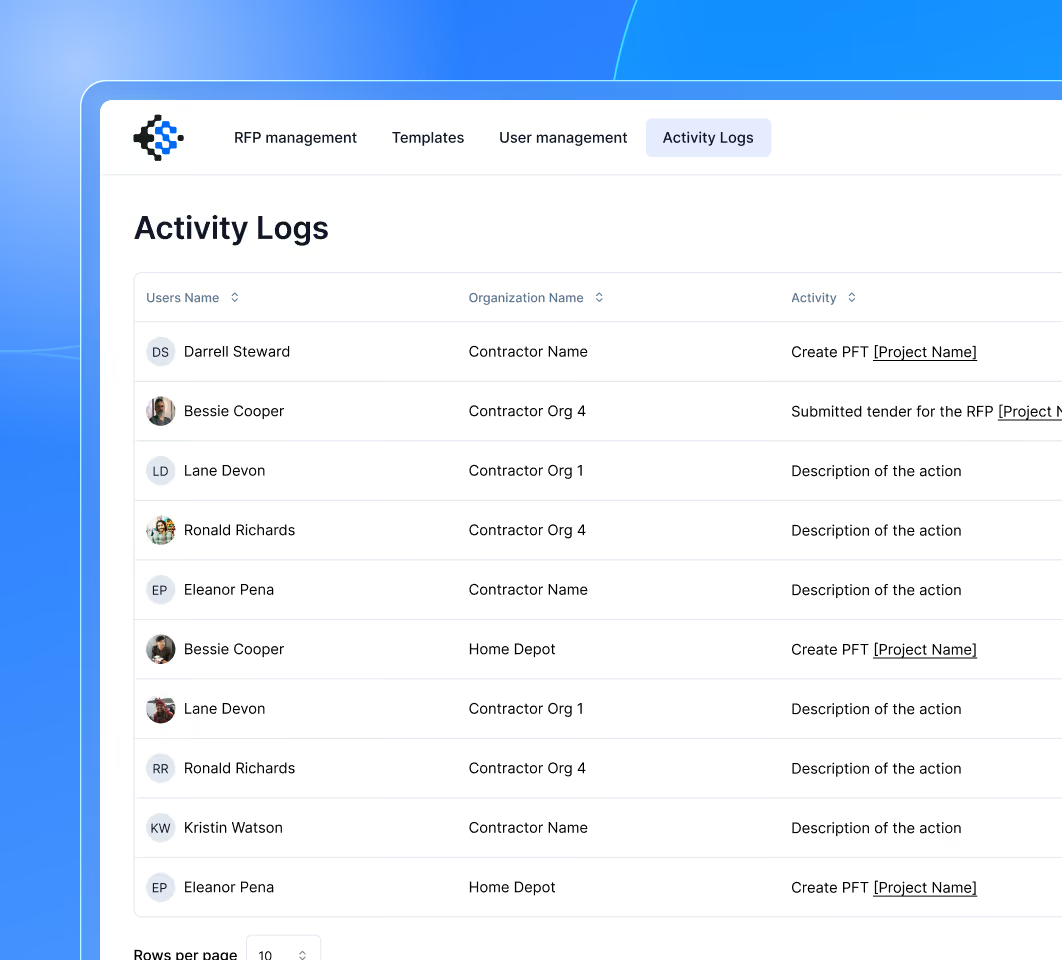
Before this platform existed, the RFP process was running on spreadsheets. Each project manager maintained their own files, their own formats, and their own logic. Makeover Stock's teams were proficient with these tools and had built detailed tracking across projects. Despite their proficiency, the process itself was inconsistent, hard to audit, and, most critically, insecure. Bid data was shared through the same files, email threads, and ad hoc workarounds.
With all these moving parts, it was evident that the client needed to improve this process with a single, controlled system.
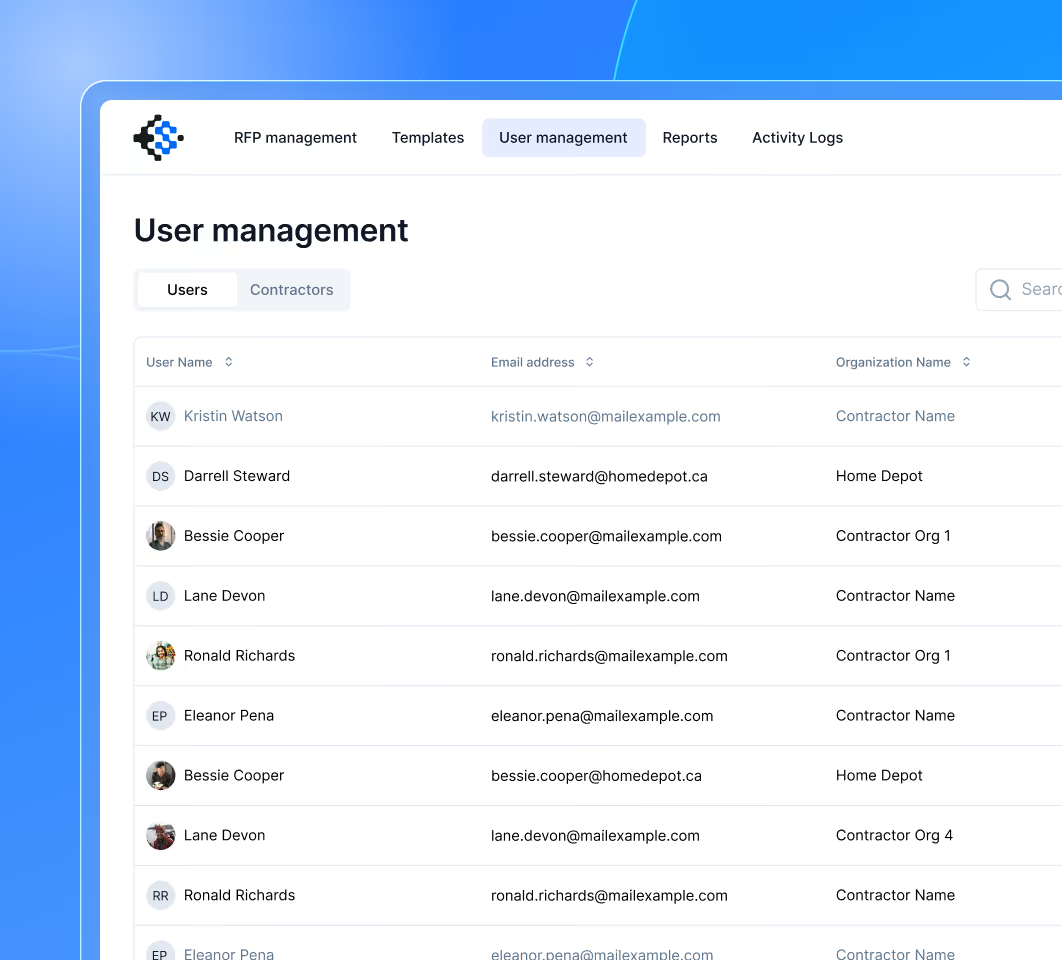
The complexity was that the platform needed to serve two very different user types. On the one side, there should have been Makeover Stock's internal project managers. On the other side were the external contractors with access by invitation, with entirely different views of the same data. It needed to enforce strict information separation so that no contractor could ever see another's bid. It needed to support a structured approval hierarchy, where bids flow upward through review levels before any award decision is made.
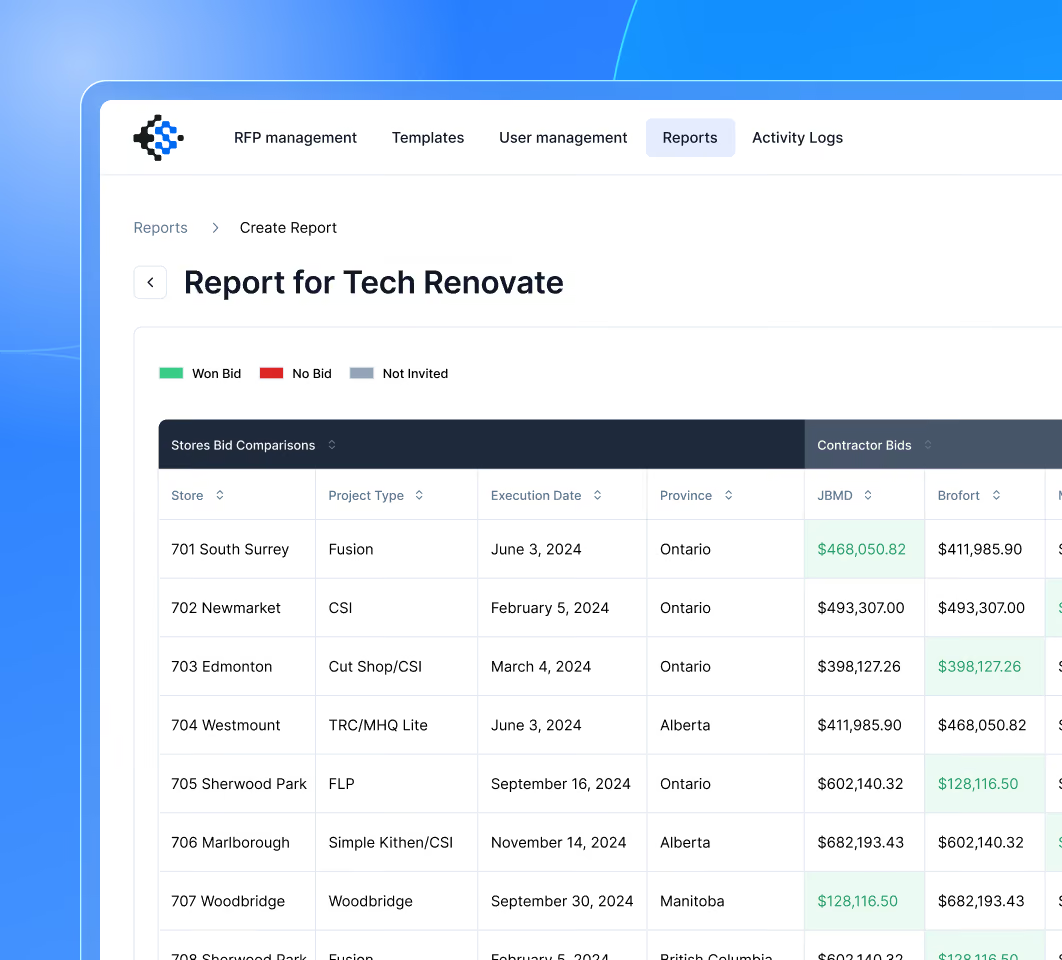
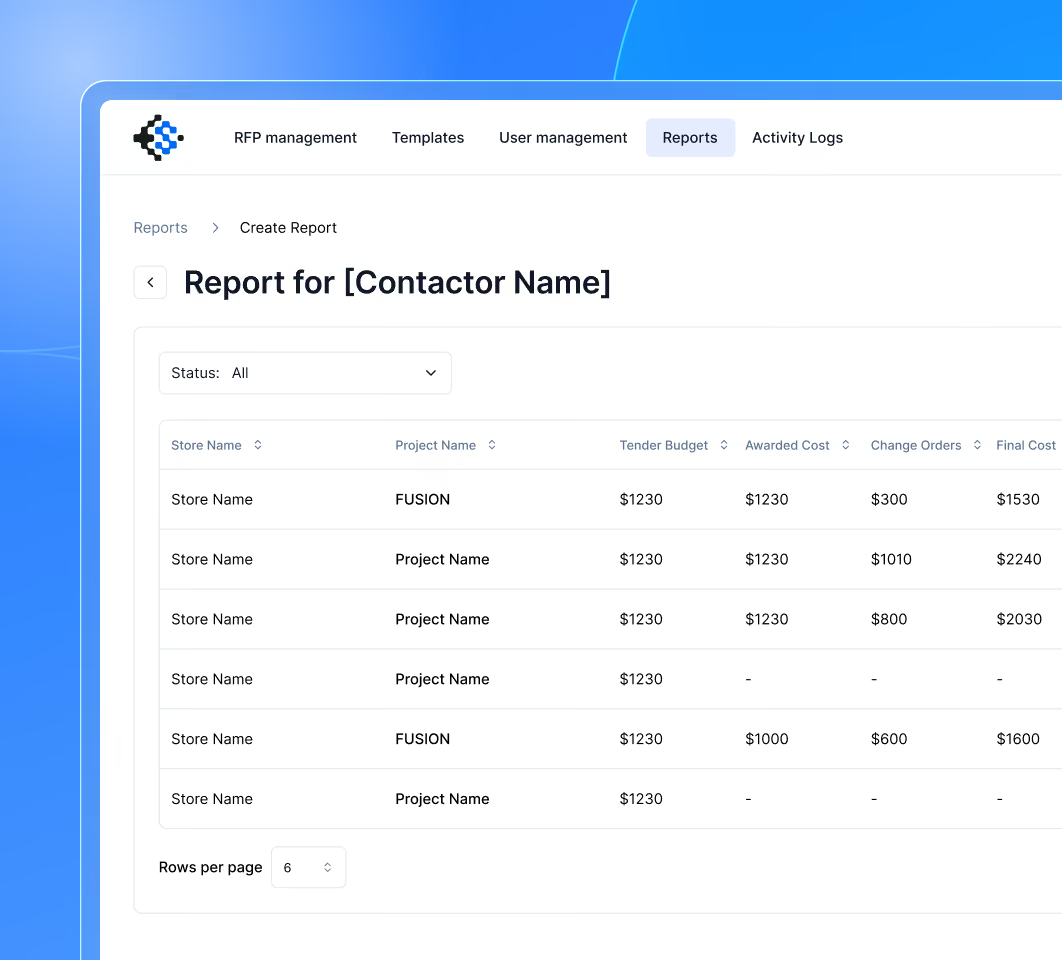
And it needed to generate the kind of reporting that a finance-conscious organization at this scale actually requires: per-project breakdowns, contractor performance histories, comparative bid analysis, and a full fiscal-year heatmap across stores and regions.
Layered on top was a strict confidentiality requirement. This is a closed, invite-only system. It does not appear in search results. Contractors cannot find or request access on their own. Every user, on both sides of the platform, enters only because Makeover Stock puts them there.
The platform was built on Node.js with a React.js frontend, designed around the RFP lifecycle from creation to award. Access is controlled at every layer, as the corporation's internal team and the external contractors they invite exist in separate environments, each seeing only what their role permits. No contractor sees another, and no bid data crosses organizational lines.
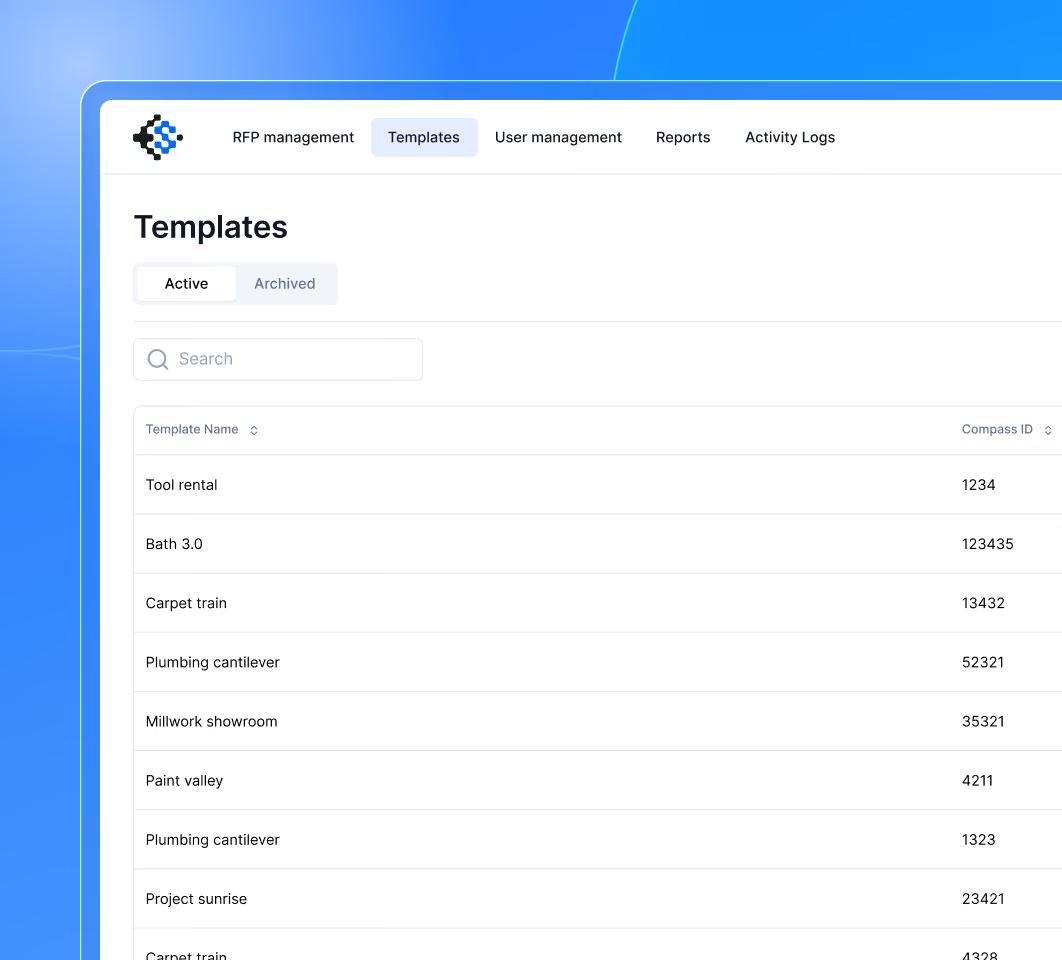
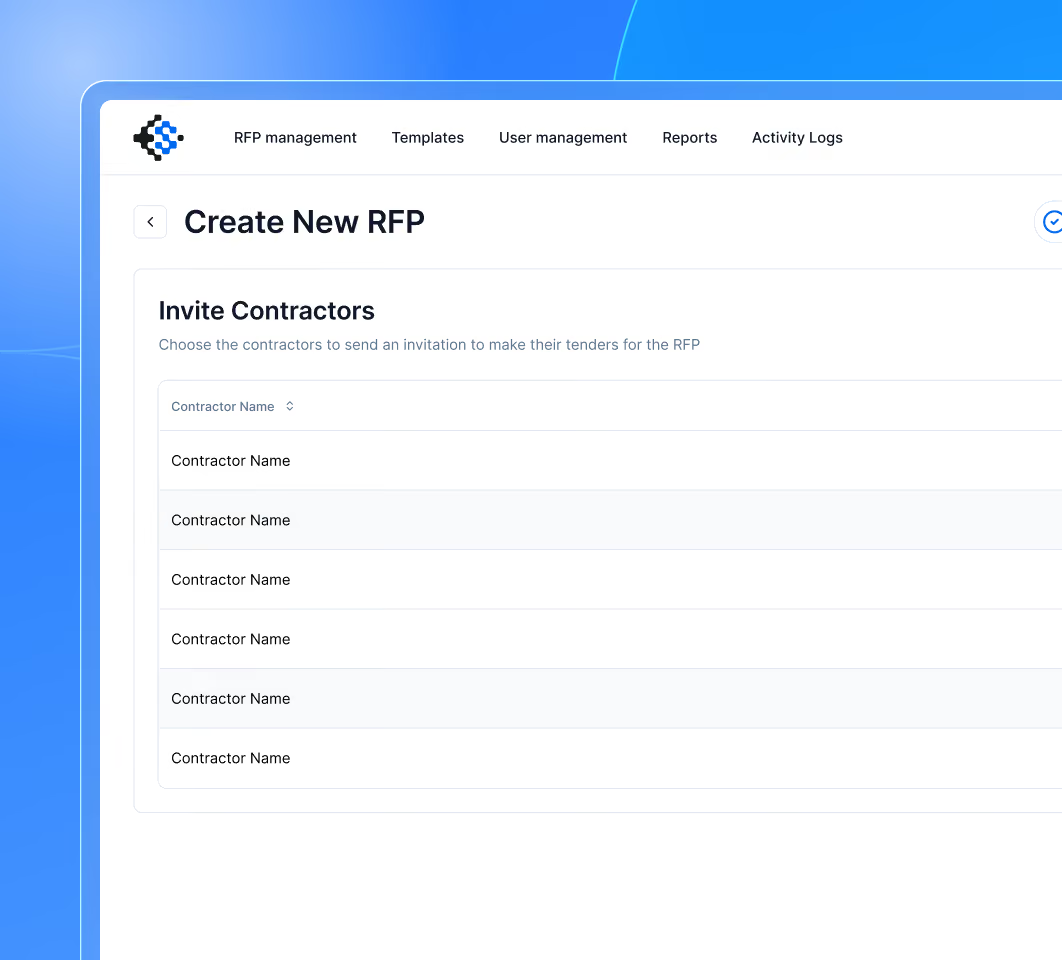
Project managers create RFPs against reusable initiative templates: predefined task sets mapped to common project types. They modify the scope for the specific location, invite the relevant contractors, and publish. Everything from that point is tracked inside the platform. Contractors, who can only enter the system by invitation, see the projects they've been included in, price each initiative, attach documentation, and submit. Bids flow through a tiered internal review before an award decision is made.
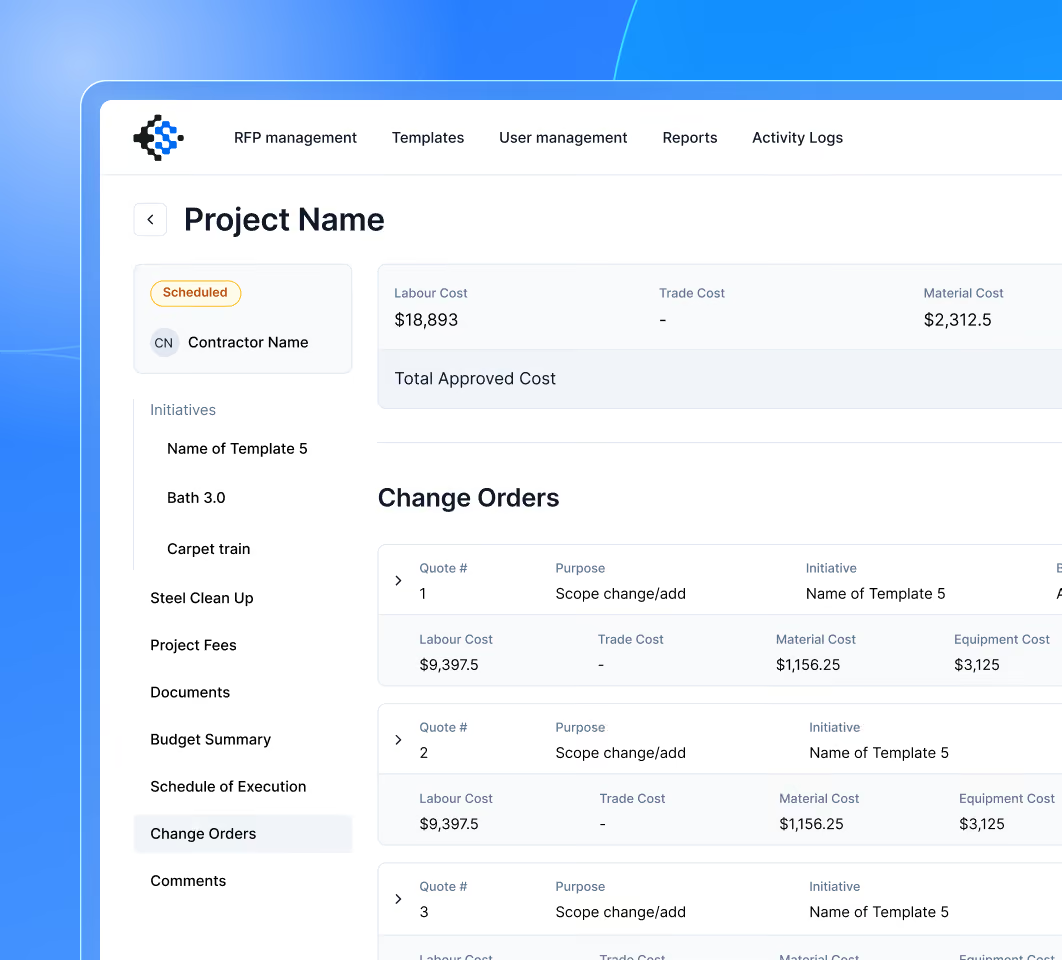
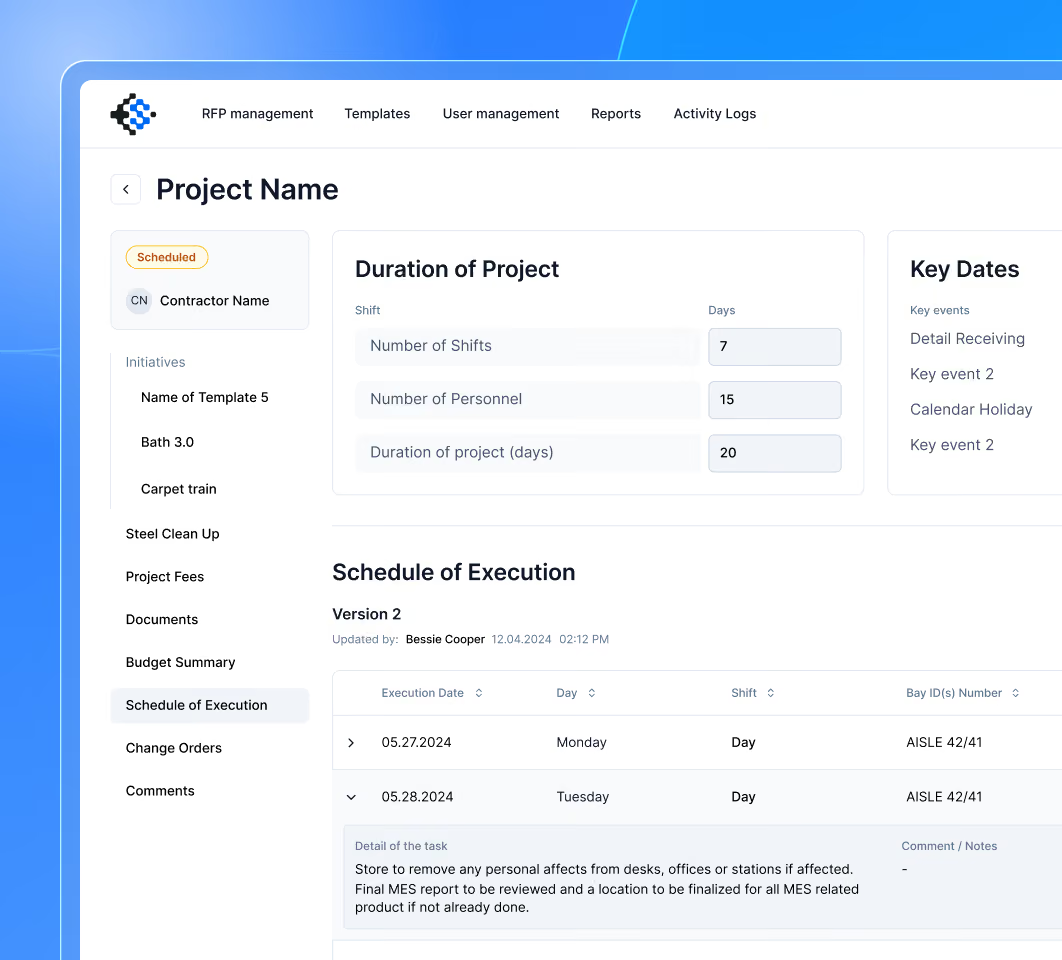
Post-award, the winning contractor uploads a Schedule of Execution and, if scope or costs shift during delivery, submits a Change Order for the client's approval. The full paper trail lives in one place.
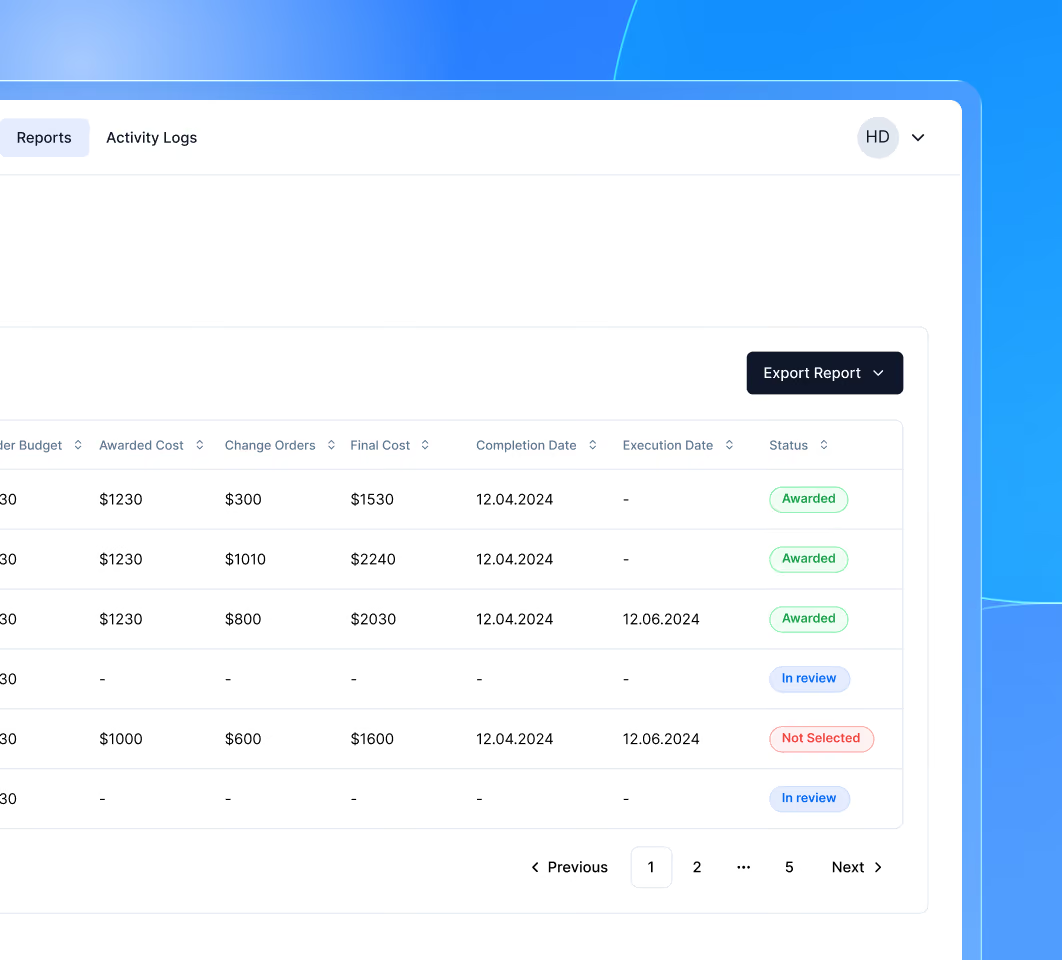
Reporting was built to match the operational scale. Per-project and per-contractor views give the team an on-demand picture of bids, outcomes, and spend. The flagship is the Project Heatmap: a fiscal-year summary across all locations, projects, and contractors that makes it possible to evaluate not just individual bids, but the full pattern of who shows up, what they charge, and how they perform over time.
Phase 2 is moved this further. Multistore RFP now manages projects spanning multiple locations at once, with volume discount logic for contractors bidding on larger scopes. Construction RFP extends this further for large-scale construction programmes spanning many stores and provinces, adding construction-specific steps, including detailed materials tracking and related features. The Capacity Tracker is also live, providing an end-to-end solution for managing and tracking contractor availability, including user management, capacity data entry and visualization, forecasting, and geolocation of project activities. Dedicated charts show available versus planned capacity per contractor, alongside a map displaying project work locations, contractors, and their capacity in context.

User roles
Client’s project manager
Creates RFP projects, selects initiative templates, invites contractor organizations, reviews submitted bids, and escalates completed reviews to senior leadership. Manages the full project lifecycle from scoping through award. Reviews and approves or declines Change Orders submitted post-award.
Department lead
Receives escalated tenders for final evaluation. Compares bids across contractors using the platform's reporting and heatmap tools, and makes award decisions.
Contractor organization admin
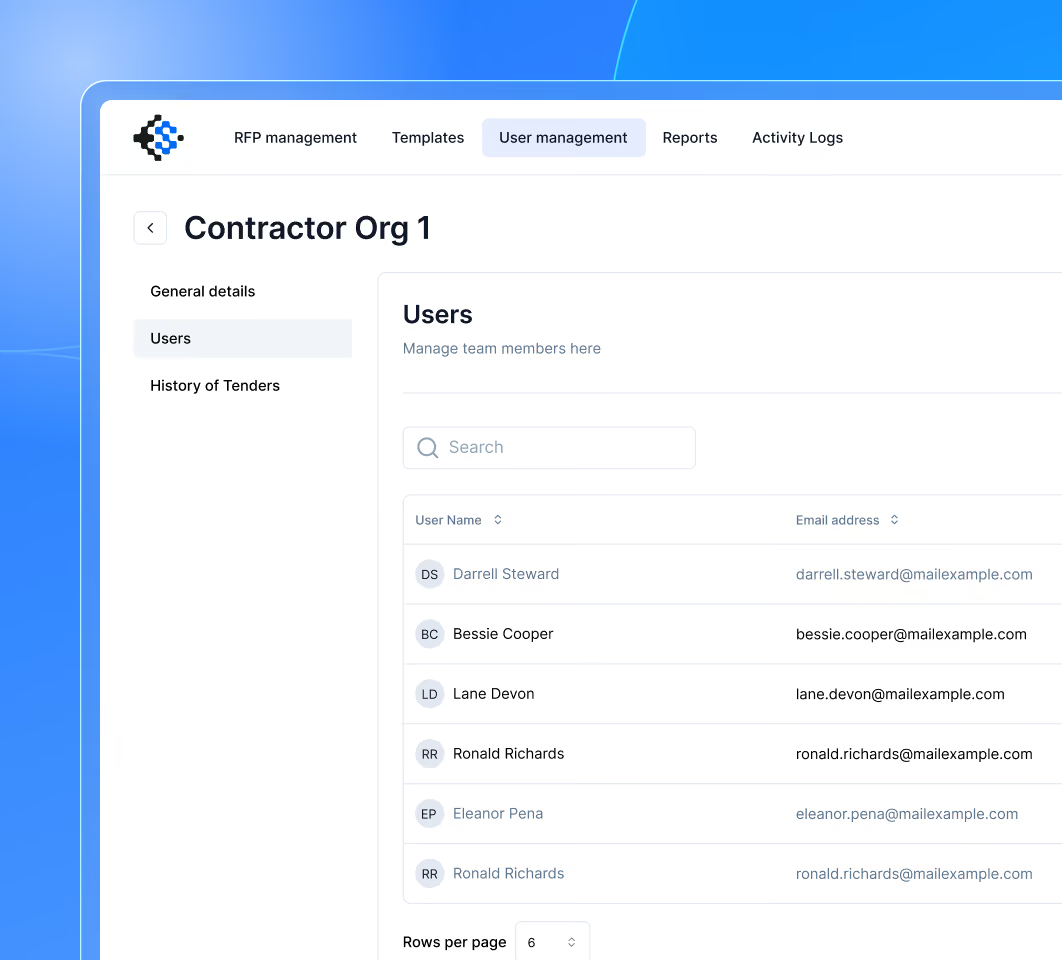
Manages their organization's users within the platform. Reviews RFP invitations, configures bid submissions across all initiatives, attaches supporting documentation, and submits tenders for evaluation. Uploads the Schedule of Execution after award and submits Change Orders if scope or cost changes arise during delivery.
Key features

Business outcomes
The platform replaced a process that ran entirely on spreadsheets with a single system of record for every RFP Makeover Stock manages. The security problem, the one that made confidential bid data visible across competing contractors, is gone by design. Contractor organizations exist in isolation from each other. There is no surface through which one contractor's pricing reaches another
For the internal team, operations improved significantly. Every project now has a consistent structure, a traceable history, and a clear approval path. The time spent reconciling spreadsheets, chasing updates, and manually coordinating between project managers and leadership has been replaced by a workflow that the platform handles. Reporting that previously required manual assembly now generates on demand.
The Project Heatmap consolidates the fiscal-year view of contractor behavior across the store network into the same system where bids are submitted, reviewed, and awarded. What required separate spreadsheet work is now generated directly from live platform data, eliminating the reconciliation step and ensuring the picture leadership reviews is always current.
Why partner with COAX?

Flexibility & adaptability
Our team understands the importance of flexibility in the construction industry, which is why we work around your schedule to provide services at a time that's convenient for you.

Skilled and dedicated team
The COAX team consists of pioneering industry experts and experienced professionals who meet high proficiency standards. We stick to our ethos and are dedicated to delivering high-quality solutions that can lead the future of digital solutions.

Ongoing support
We're committed to providing excellent support throughout the entire project lifecycle. That's why we don't just focus on our technical specialists but also pay close attention to the professional skills of our project managers to ensure seamless cooperation.

Security and confidentiality
At COAX Software, we take data privacy and security very seriously. We sign a non-disclosure agreement (NDA) and guarantee to keep all project information safe and establish trust.

Growth-focused approach
In the construction industry, businesses need to constantly adapt and grow. That's why we don't just develop custom software solutions, we implement cutting-edge tools that help your business and technology scale for long-term success.

Agile methodology
At COAX Software, we value transparency and efficiency. That's why we follow a truly agile approach when providing IT services for construction companies. We aim to remain flexible and responsive to your needs at all times to ensure project success.
What we’ll do next?
1
Contact you within 24 hours
2
Clarify your expectations, business objectives, and project requirements
3
Develop and accept a proposal
4
After that, we can start our partnership