



































Glossary of travel, logistics, and transportation software terms
Simple definitions of all terms you might find in the articles by COAX Software
Real-time monitoring (risk)
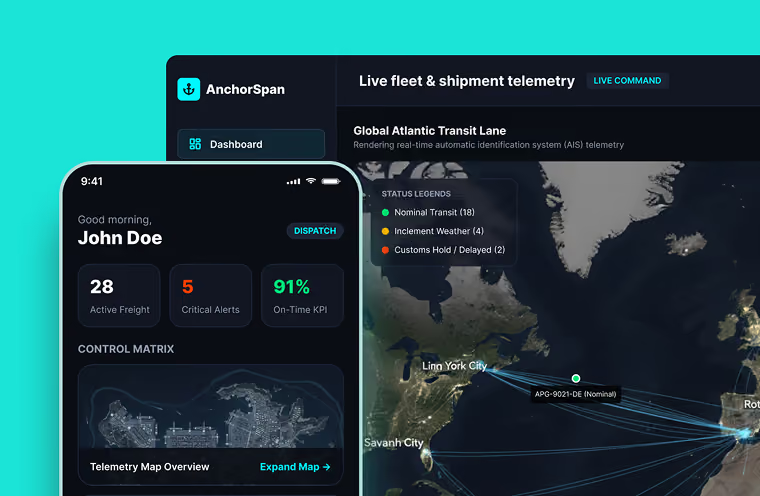
Continuous tracking of shipments, suppliers, and routes is updated as events happen rather than on a daily batch cycle; a five-minute lag is enough for a small delay to become a missed handoff.
Remote fleet diagnostics
Continuous engine, battery, and fault-code reporting pulled directly from OBD-II or hardwired telematics units, forming the foundation of remote fleet management.
Remote fleet management
Overseeing vehicles from anywhere in real time using GPS, telematics, and cloud dashboards, replacing onsite presence and manual radio coordination with continuous connected data.
Response and mitigation
The stage of a risk workflow where a platform ranks alternate suppliers, routes, or timelines by cost and delivery impact for a human to approve.
Returns and after-sales automation
Bots that authorize returns, update inventory, process refunds, and generate shipping labels, leaving people to handle only the unstructured conversations that need judgment.
Risk scoring
Weighting each detected event by likelihood and business-specific impact, so a minor delay on a low-volume route scores differently than the same delay on a high-margin lane.
Robotic process automation (RPA)
Software that mimics human clicks - logging into systems, copying data, and triggering actions - to execute fixed, repetitive rules without requiring backend code changes.
RPA ROI formula
(Total Benefits − Total Costs) / Total Costs × 100; payback on a robotic process automation investment typically lands between 12 and 18 months.
Scalability under load
Whether an automation or intelligence platform holds its performance when transaction volume triples overnight, rather than degrading past a certain threshold.
Scenario simulation
Testing disruption before it happens (modeling the downstream impact of a supplier outage or port closure across an entire order book) rather than only responding after the fact.
Signal capture
The first stage of a risk-management workflow is pulling raw data from suppliers, weather feeds, ports, freight trackers, and unstructured sources like news alerts before any scoring occurs.