



















































Contact us

About us

Scholarship

FAQ

Careers

Product Strategy

Product management

Product Management

Product management

Product Discovery

Product discovery

Product UI/UX Design

Product UI UX design

Revenue Leakage Detection And Prevention

Revenue leakage detection and prevention

CRO (Conversion Rate Optimization)

CRO conversion rate optimization

User Journey Optimization

User journey optimization

Accessibility Audit

Accessibility audit

Product Engineering

Solution engineering service

Software Audit & Consulting

Software audit consulting

Platform Development

Platform development

Quality Engineering

Quality engineering

Third-party Software Integration

Third party software integration

Cloud & DevOps Services

Cloud and DevOps services

SaaS Platform Development

SaaS platform development

ERP Software Development

Product Growth

Product growth

Digital Strategy

Digital strategy

SEO/GEO Services

SEO GEO services

Content Marketing

Content marketing

Marketing Analytics

Marketing analytics

Webflow & Low-code Solutions

Webflow and low code solutions

Agentic AI Development

Agentic engineering

Vibe Coding Cleanup

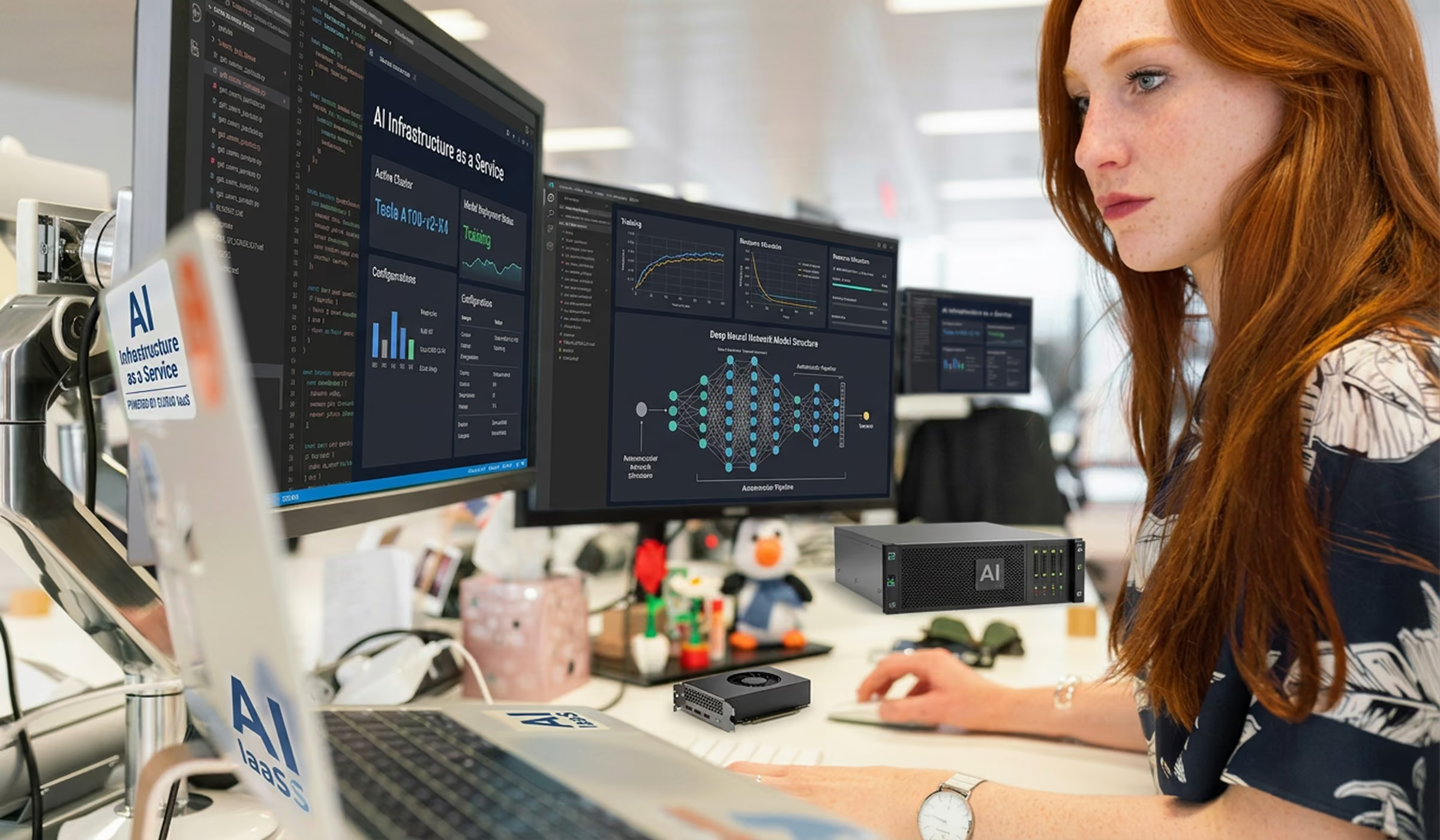
AI Infrastructure As A Service

AI infrastructure as a service

Data Engineering

Data engineering

Operational AI & Consulting

Operational AI and consulting

Have Ideas?
Contact Us

Revenue leakage detection

AI-powered Tripian integration

Travel API integrations

Website security audit

Conversion rate optimization

Have Ideas?
Contact Us

AI Trip Planning (Tripian)

AI Agents for Travel & Hospitality

AI Agents for Fleet Operations

AI Search Visibility (GEO)

Have Ideas?
Contact Us

Travel and hospitality software development

Travel API integration

Travel booking software development

Hotel management software development

Travel mobile app development

Travel website development and design

Transportation and logistics software development

Delivery management solution development

Fleet management software development

Custom inventory management software development

TMS software development

Dynamic route optimization solution development

Vehicle monitoring system development

Supply chain software development

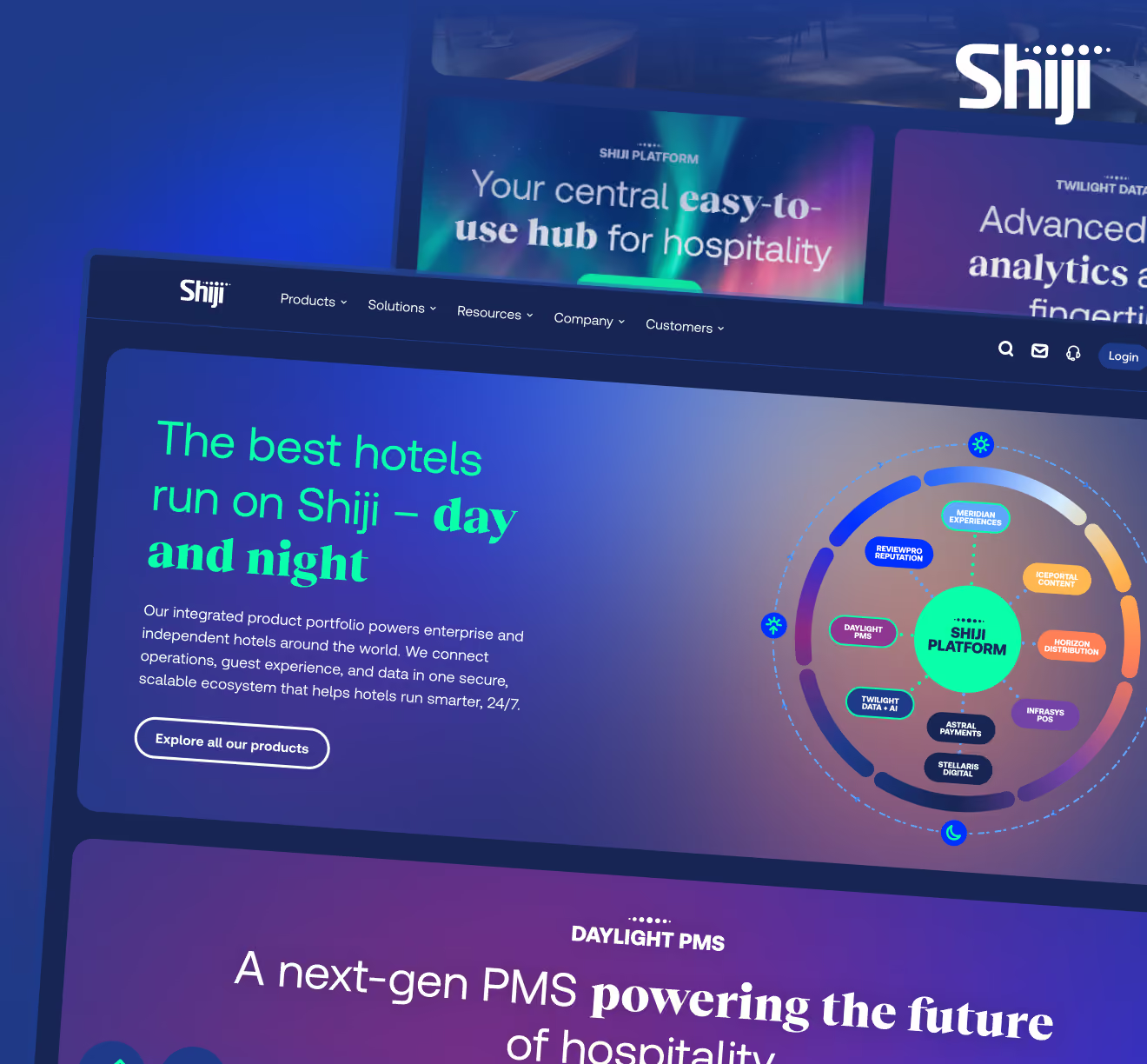
Shiji — Custom Webflow for a global hospitality provider

Coach and minibus hiring service with quote system

See all

An online travel booking platform for Australia's most viral content creators

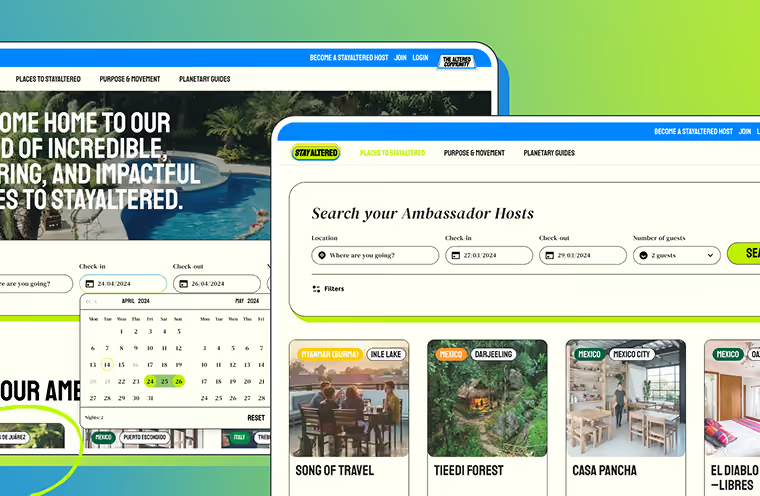
Booking platform for community-based tourism

See all

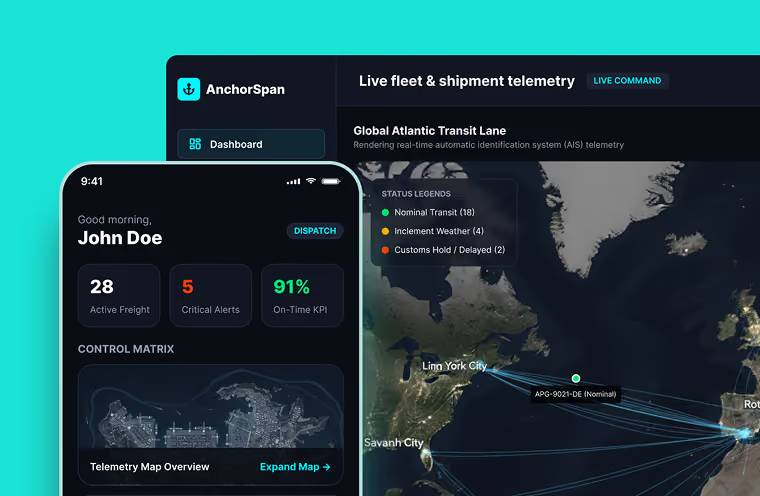
AnchorSpan — system for warehouse, port, and delivery visibility

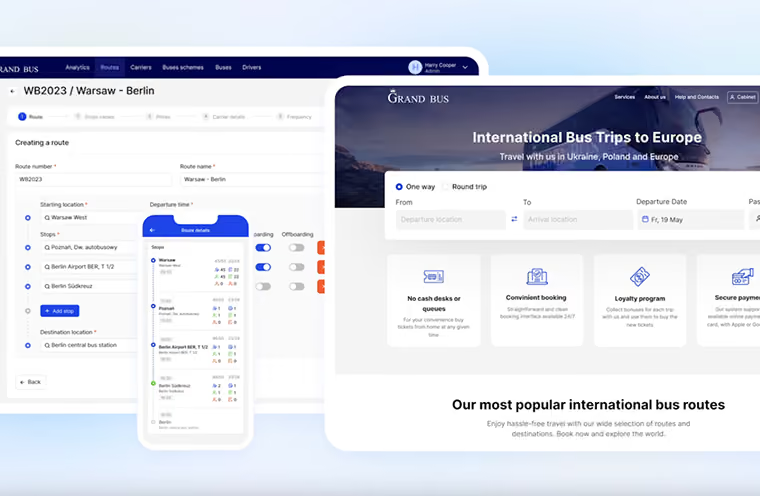
BSTK  Grandbus — bus ticket booking platform

See all

Tour operator's guide to preventing cancellations

10 fast no-dev conversion fixes for travel & transportation websites

All e-books & white papers

Logistics

Employee transportation software: Features, benefits, and best solutions

Logistics

A complete guide to warehouse slotting optimization

Check our blog

Services

Cloud cost optimization

Cloud cost optimization services

Cut cloud waste without cutting performance. Cloud bills creep up until someone finally checks them. You’re struggling to scale. Or do you just need a reliable cloud cost optimization partner? We right-size resources, tune autoscaling, and cut idle spend across AWS, Azure, and Firebase.

Industry leaders we work with

Krytter logoLocation Live logoShiji logoArrival logoDriven connect logoStayaltered logoRoad rally logoRoadster logo

Challenges we solve

You manage multiple cloud environments

You run AWS, Azure, and Firebase side by side. Nobody owns the full cost picture across providers. Each console reports usage differently, so nothing lines up.

Cloud costs keep increasing every month

Your bill grows every month with no clear cause. Without cloud cost optimization, small overages compound fast. By quarter's end, nobody remembers what justified the increase.

You don't know where your cloud budget is going

You can't say where the budget actually goes. Tagging gaps hide which team or feature drives cost. Proper FinOps management would connect spend to ownership.

Engineering teams spend too much time managing infrastructure

Every hour spent tuning instances is an hour not spent building. FinOps cost optimization should have a dedicated process, not your best engineer's spare time.

Our cloud cost optimization services

Cloud infrastructure assessment

Most teams buy more capacity before checking what they use. We audit every workload, region, and reserved instance first. As your cloud cost optimization partner, we start with your actual usage data. That's how we found that the EKS clusters driving a logistics client's predictive ETA engine were running at half capacity. You get a real baseline, not a guess dressed up as a plan.

Resource rightsizing

Oversized instances quietly burn budget every single hour. We match compute, memory, and storage to real traffic patterns. Our cloud infrastructure cost optimization work has cut idle spend on production AWS workloads without touching uptime. Rightsizing isn't a one-time fix, so we set thresholds that flag drift automatically.

Autoscaling configuration

Static capacity plans break the moment traffic spikes or drops. We tune autoscaling rules against actual demand curves. That's what kept a transit platform's GPS tracking stable across 500 vehicles updating every ten seconds. You stop paying for headroom you don't need most of the day. Autoscaling done right pays for itself within the first billing cycle.

Cost monitoring and reporting

Nobody catches a cost spike they can't see. We build dashboards that tie spend directly to services, teams, and features. Our cloud computing cost optimization engagements include tagging cleanup, so every dollar traces back to an owner. One client's finance team went from a monthly scramble to a five-minute check.

FinOps implementation

Cost control fails when engineering and finance work from different numbers. We build FinOps practices that give both teams one shared source of truth. That framework backs the AWS cost optimization work behind our AI and analytics deployments. Budgets get set collaboratively, not handed down after the bill arrives.

Multi-cloud cost optimization

Running AWS, Azure, and Firebase side by side multiplies blind spots fast. We normalize cost data across providers so you see one picture, not three. Our engineers work across all three platforms daily, not just the one they're certified in. That cross-cloud fluency is what lets us consolidate one client's stack and lift signups.

Our cloud cost optimization methodology

T.R.I.M
framework

Track (0-30 days)

We pull usage and billing data across every environment first. AWS, Azure, and Firebase spend gets mapped to real workloads, not guesses.

Rightsize (30-60 days)

Oversized instances get matched to actual traffic patterns. We adjust compute, storage, and reserved capacity against demand curves you've already generated.

Implement (60-90 days)

Recommendations turn into autoscaling rules, tagging policies, and automated guardrails. Changes roll out in stages, so nothing breaks production.

Monitor (continuous)

Dashboards track spend against thresholds you set, with alerts before overages happen. This is where cloud cost management stops being a project and starts being a habit.

Our cloud cost optimization framework

Cloud infrastructure review

We pull raw billing exports straight from your provider consoles. Every instance, bucket, and reserved plan gets logged in one sheet. No sampling, no estimates. We look at everything currently running.

Resource utilization analysis

CPU, memory, and I/O metrics get pulled over a 30-day window. We flag anything sitting below 20 percent utilization. Those numbers become the evidence behind every recommendation that follows.

Architecture assessment

We trace how services actually talk to each other. Redundant paths, orphaned load balancers, and stale endpoints surface here. For AWS cloud cost optimization services, we also check reserved instance coverage against real usage patterns.

Cost allocation review

Tags get checked against actual ownership records. Untagged resources get traced back through deployment logs. This step turns a vague bill into a spreadsheet your finance team can actually read.

Optimization opportunities

Every finding gets scored by savings size and rollout risk. Low-risk fixes go first. For Google Cloud cost optimization, for instance, that often means committed use discounts before anything more disruptive.

Governance assessment

We check who can provision what, and under which limits. Missing budget alerts and approval gates get documented. Cloud cost optimization for enterprises usually breaks down here, at the policy layer, not the infrastructure.

What you'll receive with our cloud FinOps services

Executive summary

One page, written for whoever signs off on budget. No infrastructure jargon. Just the number, the timeline, and what it takes to get there.

Technical assessment

This is the full FinOps audit: every workload, every region, every reserved instance we found. Engineers get the raw detail here, not a summary.

Prioritized optimization roadmap

We rank fixes by savings and effort. Quick wins come first. Anything touching production gets flagged for review before it moves.

Estimated cost-saving opportunities

Real numbers, not ranges pulled from industry averages. Each line item traces back to a specific resource you're already paying for.

Optimization backlog

A ready-to-execute list your team can pick up immediately, or hand to us. For cloud native cost optimization, this backlog often becomes the first sprint.

How our cloud cost optimization framework works

We map every resource across your cloud accounts — compute, storage, networking, and reserved capacity. You get a complete inventory of what's actually running, not just what's on the bill.

We compare spend against real utilization over a 30-day window, provider by provider. You get a clear picture of where money is going versus where it's actually needed.

We flag idle resources, oversized instances, and coverage gaps in reserved or committed plans. You get a concrete list of what's driving waste, not vague warnings.

Each issue gets scored by potential savings and rollout risk before anything is recommended. You get a prioritized view of what to fix first versus what can wait.

Findings are compiled into a single document your team and finance can both read. You get clear numbers, owners, and next steps, no raw exports to decode.

We walk through the report with you and confirm which fixes move forward. You get alignment on the plan before any changes touch production.

Our tech stack

Amazon EC2

Amazon S3

AWS Cost Explorer

AWS Trusted Advisor

Azure Cost Management

Google Cloud Billing
Kubernetes
Terraform
AWS CDK

CloudHealth

Datadog

AWS Compute Optimizer

Not just FinOps consulting services. We fix what’s costing.

Why costs grow

What we’ll do

Over-provisioned instances. EC2, VMs, and Compute Engine sit sized for peak load that rarely hits.

We right-size against actual usage data, not projected capacity.

Idle resources. Unused volumes, orphaned IPs, and forgotten snapshots continue to be billed.

We audit every resource and cut what's not being used.

Unoptimized commitments. Savings Plans and Reserved Instances don't match real workload patterns.

We realign commitments to usage, not guesswork.

Underused Kubernetes clusters. Pods run well below allocated capacity.

We tune requests, limits, and autoscaling against real load.

Always-on dev and test. Non-production environments run 24/7 for no reason.

We schedule automatic shutdowns outside working hours.

Idle AI and GPU clusters. Expensive compute sits active outside training windows.

We scope GPU usage to actual training and inference jobs.

No cost ownership. Spend isn't tied to any team or feature.

We fix tagging so every dollar traces back to an owner.

Trusted by our clients

Cloud cost optimization in action

See all projects

Our related services

Solutions MVP development

Go to the service page

Third-party software integration

Go to the service page

Cloud development services

Go to the service page

FAQ

Most clients see line-item changes within the first billing cycle after rightsizing ships. Idle resources get cut immediately; autoscaling and reserved-instance realignment take a few weeks longer to fully register. For one logistics client, EKS rightsizing alone cut idle spend before the second invoice arrived. Full savings, including governance and monitoring, usually stabilize within 60 to 90 days.

Azure and AWS need different tooling, but the underlying approach doesn't change. We pull data from Azure Cost Management instead of Cost Explorer, then apply the same rightsizing, tagging, and autoscaling logic. Reserved Instances become Azure Reservations; the savings math shifts slightly. Multi-cloud clients often run both playbooks in parallel, with one shared dashboard tracking spend across providers.

An audit is a snapshot; ongoing services keep working after the report lands. Our engagement includes continuous monitoring, alerting, and quarterly reviews, not a one-time PDF. That's the difference between cloud cost and performance optimization and a static assessment. Drift happens the moment nobody's watching, so dashboards stay live, and thresholds trigger automatically as usage shifts.

Hiring dedicated FinOps engineers takes months and adds permanent headcount for a problem that ebbs after the first quarter. Consulting gets you rightsizing, tagging, and governance built fast, then hands off a system your existing team runs. We've taken engagements from discovery to deployed automation in under 90 days, without adding a single full-time hire.

It's not always custom software. Most engagements wrap existing tools, like Cost Explorer, Kubecost, and Terraform, into one automated workflow tuned to your environment. Custom tooling only gets built when off-the-shelf options can't handle your specific stack, like multi-jurisdiction billing or unusual reservation structures. Either way, you end up with dashboards and alerts your team actually uses daily.

GPU and AI clusters are usually the biggest single line item, and the easiest to waste. We scope compute to actual training and inference windows, not always-on availability. For one client, idle GPU time outside scheduled training runs accounted for nearly a third of monthly spend. Scheduling, autoscaling, and spot-instance strategies typically cut that waste within weeks.

No. We work with read-only access the entire time, so nothing in production changes during the review itself. You get a full report: usage patterns, waste, and prioritized fixes, before any change gets made. Implementation only starts once you approve the roadmap, and even then, changes roll out in stages with rollback plans ready at every step.


Insights from the COAX blog

Check our blog

Travel

Top 10 travel app development companies in 2026

September 30, 2026

Go to the blog post page

Logistics

Smart warehouse guide: Key technologies, features, and best practices

September 28, 2026

Go to the blog post page

Logistics

Employee transportation software: Features, benefits, and best solutions

September 18, 2026

Go to the blog post page

Logistics

A complete guide to warehouse slotting optimization

September 17, 2026

Go to the blog post page

Travel

Short-term rental software: A complete guide to choosing the right tools

September 16, 2026

Go to the blog post page

Logistics

What is fleet telematics? Turn vehicle data into better fleet decisions

September 14, 2026

Go to the blog post page

Travel

Why do you need a cloud hotel management system?

September 11, 2026

Go to the blog post page

Logistics

Warehouse control systems explained: Workflow, features, and solutions

September 10, 2026

Go to the blog post page

Travel

We tested the 10 best tour operator software solutions, so you don’t have to. Here’s what we found.

September 9, 2026

Go to the blog post page

Logistics

What is 3PL warehouse management software, and how does it work?

September 7, 2026

Go to the blog post page

What we’ll do next?

  • 1

    Contact you within 24 hours

  • 2

    Clarify your expectations, business objectives, and project requirements

  • 3

    Develop and accept a proposal

  • 4

    After that, we can start our partnership

Serhii Danyliuk

Head of Strategic Partnerships