Automating data pipelines in machine learning and DevOps is a complex process that requires you to go through several key steps:
Create an inventory of your data sources, their locations, and how they will be accessed.
Select orchestration tools to perform workflow orchestration on.
Design the workflow architecture by decomposing each step in the process into modular components and creating dependencies.
Write the logic to process the data, and observe pipeline performance.
Configure error handling by implementing retry logic, alerts, and recovery decisions.
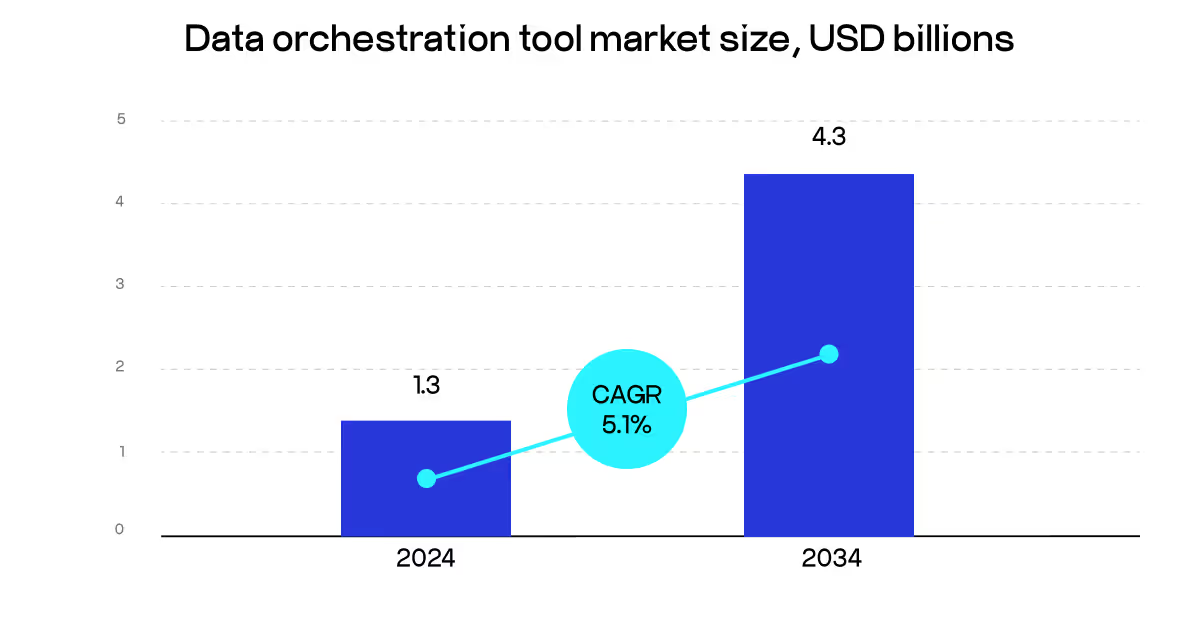
The importance of data orchestration in modern systems cannot be overstated, with the global market heading towards reaching USD 4.3 billion by 2034. In this article, we define the components, use cases, best data pipeline software, and a step-by-step process to follow.
What is data orchestration?
In essence, data pipeline orchestration is the process of automated planning, execution, and orchestration of tasks in data workflows. As to the main components that make it, task dependency management, scheduling, failure management, and complete logging are some of the aspects noted by Muvva.
Good orchestration will ensure that tasks are executed in the order you want and with respect to dependencies, allowing for the reduced likelihood of failures or delays. This organized, all-around approach is the first thing to be established when it comes to creating reliable, scalable data processing in modern-day business.
Key terms you should know
To understand the broader phenomenon of data orchestration meaning, you need to know the meaning of several main terms that complete its workflows.
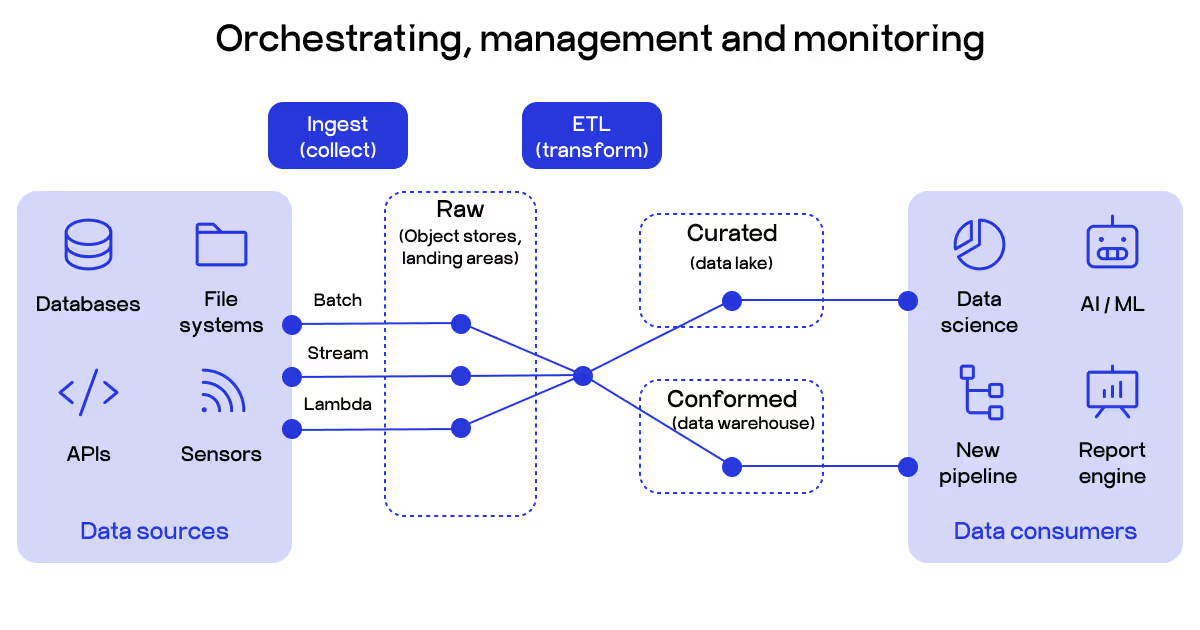
A data pipeline encompasses the full journey of taking data from source systems to repositories through sequential steps of ingestion, transformation, and storage. Modern data pipelines are capable of supporting both real-time streaming and batch processing in order to prepare data for analytical purposes, according to Koppolu et al.
Data pipeline orchestration refers specifically to the scheduling, execution, and orchestration of tasks in data workflows, but is also responsible for managing dependencies, failure handling, and logging. As described by Muvva, when implementing dynamic orchestration, the orchestrator sequences the activities during execution using a central controller that observes the overall execution quality.
Extracting data from external sources, transforming it to satisfy operational needs, and then loading it into target systems like databases or data warehouses is known as ETL (Extract, Transform, Load). Verma states that this particular pipeline type focuses on combining data from multiple sources, and efficient orchestration makes sure that tasks run in the right order while honoring dependencies to reduce failures.
Data integration creates unified, consistent datasets from multiple, disparate sources to give a consolidated view for analysis. Data integration reduces the effort to define analysis in a platform-agnostic way and use semantics for composing analysis, which lowers the barriers to collaborative analytics.
The first step of the pipeline is data ingestion, during which raw data is gathered, imported, and moved into storage systems from a variety of sources, such as databases, APIs, and streaming platforms. While providing paths for current data warehouses, cloud-enabled platforms simplify the analysis of raw data ingested into data lakes.
Now that the key terms of data workflow orchestration are defined, let’s move on to the main components of this process.
Key components of data pipeline orchestration
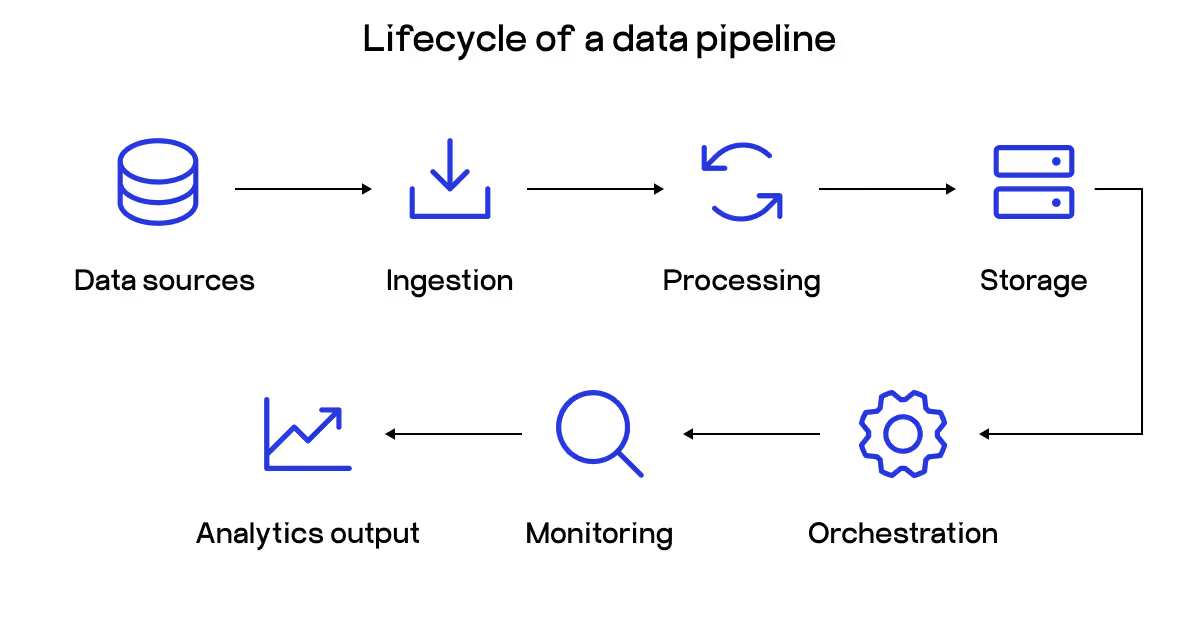
There are several main stages of pipeline orchestration, each of which is interdependent and complementary to the previous one. Let’s start with the data sources.
As Mudadla states, the data source is the point of origin where information begins its movement. These data sources can be databases, logs, APIs, flat files, or streaming systems. The data from these sources can be structured, semi-structured, or unstructured, and is loaded into the pipeline system from these sources.
The data ingestion component acquires data from the source systems and loads data into the pipeline for processing. This can be through batch-type processing (with periodic loads), real-time streaming of the source's data, or a hybrid method of batch and real-time techniques.
Data processing is when data is prepared for analysis or storage. It is cleaned, enhanced, and formatted after ingestion. Filtering irrelevant data, combining datasets, and carrying out required calculations are examples of processing activities.
By changing data types, filling in missing values, and generating derived fields, the transformation converts raw data into formats that can be used by applications further down the line. This part guarantees that the data satisfies the target systems' structural and quality requirements.
Data that has been processed is saved to destination systems such as data lakes, data warehousing, NoSQL databases, or other cloud data storage. The type of storage depends upon the organization’s needs and how the data is going to be used.
Orchestration data controls information movement through steps in the pipeline, ensuring proper interaction and order in each step. Orchestration is the central control piece ensuring workflow and task dependencies follow through the process.
Monitoring and logging are connected. While logging generates event records for debugging and optimization, continuous monitoring data pipelines quickly detect problems. These features aid in preserving operational dependability and offer insight into pipeline performance.
Robust pipelines include administrator notifications, error logging for analysis, and error management via retry logic. In the event of a data processing failure, these mechanisms guarantee pipeline resilience.
Pipeline security focuses on the encryption of sensitive data, access controls, and data protection stabilization. Compliance measures ensure that data pipelines satisfy industry standards and organize governance.
At this moment, you might be confused by the abundance of terms and components — so let’s break down the key differences between these main phenomena.
Difference between data orchestration, ETL, data integration, and data ingestion
When comparing data orchestration vs ETL, data integration, and data ingestion, we should focus on several aspects where they differ greatly.
Aspect
Data orchestration
ETL
Data integration
Data ingestion
Scope
End-to-end workflow management
Extract, transform, load process
Source combination
Data collection
Function
Coordinates data movement
Prepares data for warehousing
Unifies disparate sources
Captures raw data
Processing
Real-time and batch
Primarily batch
Varies by implementation
Real-time or batch
Timing
Continuous coordination
Scheduled intervals
Flexible
Continuous or periodic
Data types
All formats
Mostly structured
Various types
Any format
Control
Centralized management
Sequential steps
Integration focus
Capture focus
Scope. Data orchestration administers and orchestrates a collective workflow across various systems and stages, while ETL specifically refines data for extraction, transformation, and loading into a target system, such as warehouses. Also, data integration converges data from disparate sources into a comprehensive dataset, and data ingestion collects and imports raw data from source systems into a usable environment.
Primary function. Data orchestration allows for the management of data movement, transformation, and processing stages of the pipeline. ETL orchestration, according to Chu, pulls data from different sources and prepares it for analysis and reporting. Meanwhile, data integration merges a collection of different data sources into a view for consolidated analysis, and data ingestion collects and moves raw data from points of origin into systems for processing.
Processing method. Data orchestration manages batch processing with automated scheduling as well as real-time streaming, claims Gill. Chu points out that scheduled batch processing at predetermined intervals is how ETL usually works, which could cause data delays. At the same time, various techniques can be used for data integration, depending on the needs and features of the source. Finally, both periodic batch transfers and continuous real-time streams are supported by data ingestion.
Timing. Data flow orchestration provides real-time workflow coordination along with ongoing monitoring and modification capabilities. According to Chu, there may be delays in obtaining the most recent data because ETL processing is typically carried out according to a set schedule. The timing of data integration varies according to business requirements and implementation strategy. As for streaming sources, data ingestion can run continuously, while for batch collections, it can run sporadically.
Data handling. Gill notes that data orchestration flexibly manages structured, semi-structured, and unstructured data across an array of ecosystems. Meanwhile, as Chu emphasizes, ETL focuses on structured data and standardizes it into predefined formats before it enters the warehouse from several different sources. Data integration deals with the various types of data while producing standardization. At the same time, data ingestion is a broader term for the well-meaning process of capturing raw data in any format from a range of source types.
Control and coordination. Data center orchestration enables central control, with full awareness of the execution quality across dependent tasks, while ETL leverages a more linear work process with dependencies defined at each phase. Chu notes that data integration intends to bring together sources while ensuring high accessibility of the data within an organization. Data ingestion is less focused on safe and reliable processing of raw data, but without coordinating that process as part of a downstream objective.
With the basics defined, we need to focus on the main question: when is data orchestration beneficial for your specific case and company?
When do you need data orchestration?
The application of orchestration solutions and workflows is especially important and useful if your team has the following business processes and requirements established.
Business intelligence
When combining data from various sources for business intelligence, orchestration is a great case, claims Hariharan. Social media and market data must be synchronized with internal data from transactional systems, CRM platforms, and operational databases. While preserving data consistency and quality, data orchestration makes sure these various sources are retrieved, converted, and loaded into data warehouses at predetermined intervals. Workflows for data preparation, validation, and report generation are all managed by the orchestration frameworks.
Decision-makers can obtain timely and accurate insights from unified datasets instead of dispersed information silos, which supports competitive analysis and strategic planning.
Marketing and customer analytics
Balarabe et al. discuss the importance of the decision to orchestrate data when using big data analytics to analyze marketing outcomes. Marketing groups need orchestration in their processes, which brings together customer transactional data, social media interaction, web analytics, and the rest of CRM data to allow them to conduct personalization and segmentation.
The orchestration process handles the ingestion of data from varied touchpoints in real time, applies logic to transform it into customer profiles, and coordinates the implementation of predictive models to optimize marketing campaigns. Research identifies significant ROI for marketers, improving it by 36%, optimizing resource allocation by 34%, and increasing customer engagement by 30% for targeted strategies that utilize the robust customer profiling.
Fraud detection and risk management
As THE BRICK LEARNING's analysis highlights, real-time fraud detection often calls for complex data orchestration to process transactions at millisecond speeds. In addition to applying rule-based logic and machine learning models concurrently, the orchestration system must coordinate the ingestion of streaming data from transaction sources such as Event Hub or Kafka, enrich incoming transactions with user profiles, and store behavioral data in Delta tables.
Their framework states that the orchestration layer coordinates downstream notifications to security teams or automated blocking systems, controls stream-to-static joins between real-time events and reference datasets, and immediately generates alerts when anomalies are found.
Predictive maintenance
Bemarkar et al. from BMC and AWS show the complex orchestration needed for predictive maintenance systems that coordinate obtaining IoT sensor data and data analytics through machine learning workflows. In the context of the trucking industry, their solution orchestrates:
Data collection from vehicle-mounted sensors through Amazon Kinesis
Aggregation with business system data related to customers and warranty plans
Execution of machine learning orchestration algorithms using Apache Spark on Amazon EMR clusters.
Coordination of downstream actions such as notifying drivers and scheduling maintenance. The orchestration framework provided by Control-M manages dependencies such as aggregating data and preparing the data for algorithm, machine learning execution, and automated workflows that respond downstream to the model results. The coordinated solution reduced dwell time by 40% by demonstrating how proper orchestration of workflows for predictive maintenance can convert raw sensor data into delivery actions to prevent failures in service.
Supply chain optimization
By coordinating workflows across supplier databases, logistics platforms, inventory management systems, and demand forecasting models, data orchestration facilitates supply chain optimization, as claims Koppolu et al.. Both batch processing for historical analysis and real-time streaming for dynamic routing decisions must be managed by the data orchestration architecture.
After coordinating the extraction of data from point-of-sale terminals, transportation tracking APIs, and warehouse management systems, it plans transformation procedures that standardize formats from various sources. The framework controls the interdependencies among workflows for inventory replenishment, supplier order generation, and demand prediction jobs.
Integrating healthcare data and patient care
Orchestration becomes critical in healthcare environments where patient care relies on coordinating information from electronic health records, medical imaging systems, lab results, pharmacy databases, and insurance claim systems and where the orchestration framework must ensure compliance with HIPAA regulations while coordinating real-time patient monitoring data.
According to the principles put forth by Verma, care data warehouses require orchestration that processes scheduled batch updates from non-peak times, and delivers real-time data integration when needed. Orchestration allows providers access to patient histories from a disaggregated record set, uses clinical decision support systems, and orchestrates population health analytic programs that identify disease trends, treatment effectiveness etc.
Financial planning and regulatory reporting
Financial companies need data pipeline software to manage complex cross-system reporting that involves aggregating datasets from trading systems, risk management systems, customer accounts, and market data connectors. The orchestration layer manages dependencies between the extraction of data from core banking systems, transformation for accounting and reporting rules and standards, and loading report datasets into a data warehouse.
Based on Hariharan's study, financial data orchestrations need to maintain audit trails, accommodate multiple reporting formats for different regulatory bodies, and coordinate real-time risk calculations with scheduled batch processing to produce monthly financial statements. This framework should ensure that data lineage are traced and maintained for regulatory examinations.
How does data orchestration work?
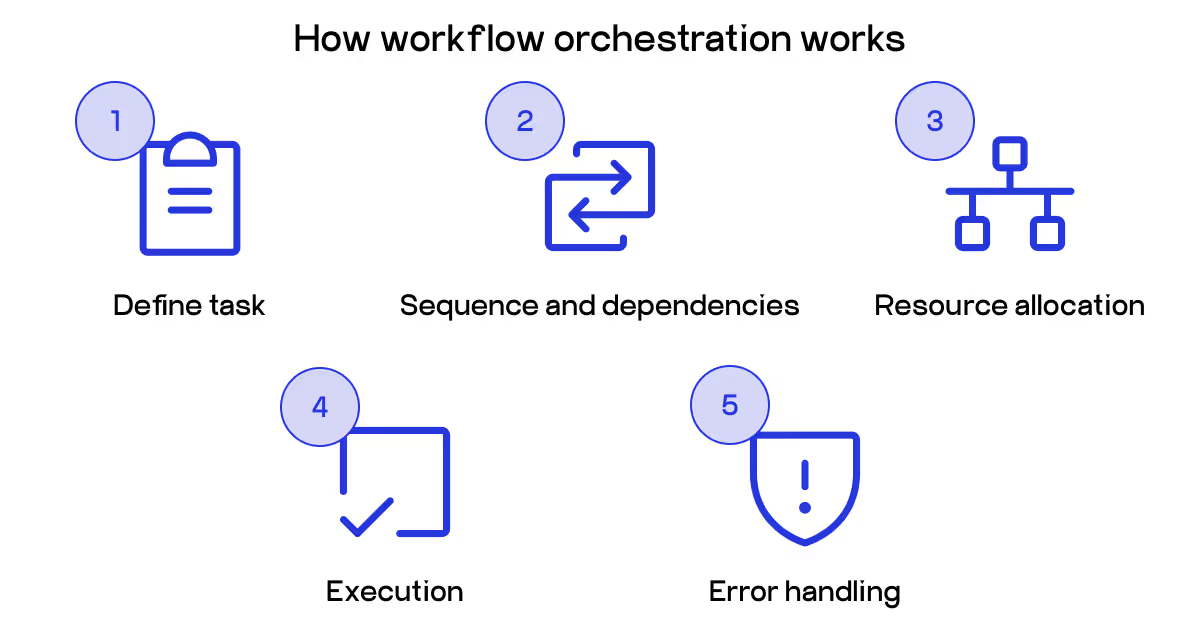
The overall workflow for orchestrating your pipelines consists of five main stages. Let’s review each of them in detail.
Workflow definition and setup
The essence of data orchestration is simply a plan of action in a logical sequence, that identifies what computations must take place to transition from a set of unprocessed data to something that can be acted upon. Engineering teams usually first establish what data operations are complex, and decompose this into smaller steps, or units of work, that can operate independently, and/or can be tracked separately.
For instance, a workflow related to customer analytics may involve the following steps:
Extract raw customer files from a distributed collection of records (customer relationship management (CRM) platforms, transactional record databases, log files from product usage, etc.).
Apply data quality rules to remove duplicates, replace null values, and enforce consistent layout.
Join multiple data sources together and add calculated metrics like geographic identifiers or customer value-to-date.
Store the transformed data into a common warehouse for a user / end-user to query.
Make the joined data available to analytical platforms for operational reporting.
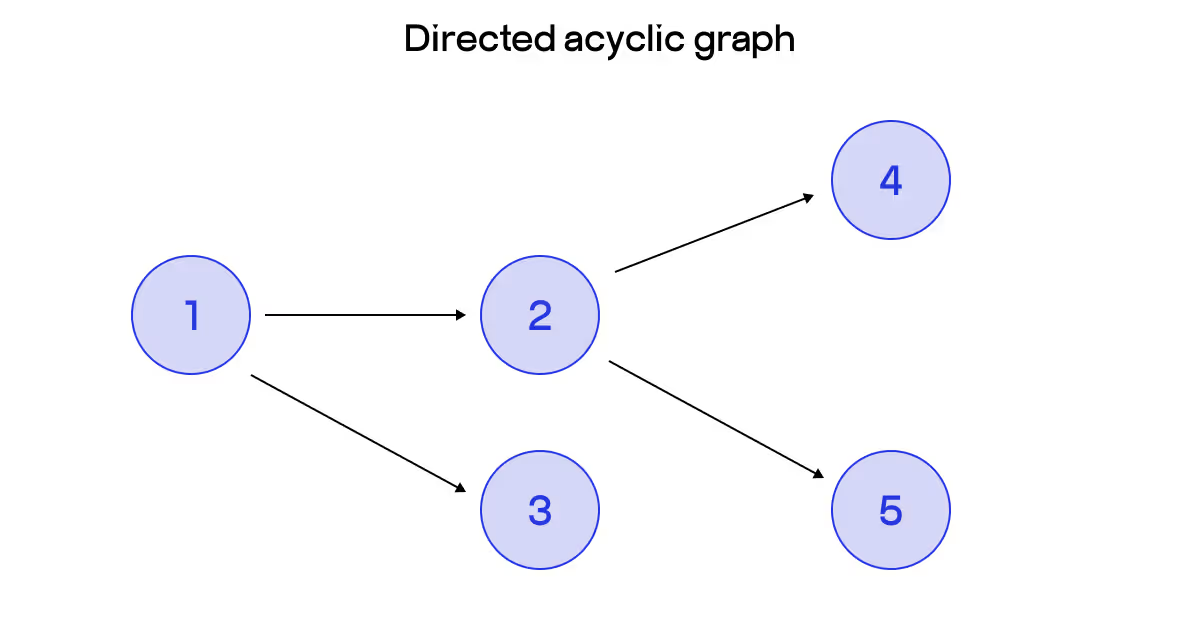
The Directed Acyclic Graphs (DAGs) used to structure these workflows ensure that execution flows stay directional without generating cycles, avoiding situations in which tasks rely on one another. Both code-based DAG definitions (usually in Python) and graphical interfaces are supported by data orchestration platforms. DAG structures guarantee that tasks run either sequentially or in parallel based on predefined dependencies, with each task configurable through options like retry counts and timeout parameters, according to Miriyala's research.
Scheduling and trigger setup
The next step is to set up activation mechanisms that control the timing of execution after establishing the workflow structure. Every activation creates a unique workflow run with a unique lineage and execution state.
Event-driven triggers dynamically respond to changes in the system or the arrival of data. For example, in the architecture demonstrated by López et al., trigger-based orchestration allows workflows to respond to new data and run actions in real-time. When new customer export files appear in object storage, the automated data pipelines immediately run the processing job instead of waiting for the next scheduled pipeline run.
On-demand triggers are a manual mechanism for executing workflows for ad-hoc execution, testing scenarios, or unusual cases where immediate processing is required outside of normal schedules.
Event-driven and on-demand triggers are not mutually exclusive and can actually operate together. In a hybrid architecture, the workflow can maintain both the scheduled trigger of running daily and event-driven workflows when new data is available.
Dependency management
Carefully coordinating task dependencies across the pipeline is necessary for orchestration. Every step in your analytics workflow depends on the successful completion of the previous steps.
Both sequential and concurrent execution patterns are supported by process orchestration tools, which enable the explicit definition of these interdependencies. Extracting CRM records and querying product databases in the customer analytics example are separate processes that can run concurrently, cutting down on pipeline time overall. However, before moving forward with the enrichment phase, both extraction tasks must be finished.
Miriyala observes that any workflow orchestration engine based on a DAG should maintain an execution state for each task (waiting, ready, running, success, failure) based on its dependencies. The scheduler is then designed to evaluate the DAG periodically to be able to engage notifications about changes in state based on its dependencies and other defined strategies. This dependency layer prevents downstream tasks from triggering until the upstream tasks succeed. It will also block out transformation and loading tasks if it knows the extraction failed, preventing the migration of incomplete data through the pipeline.
Monitoring
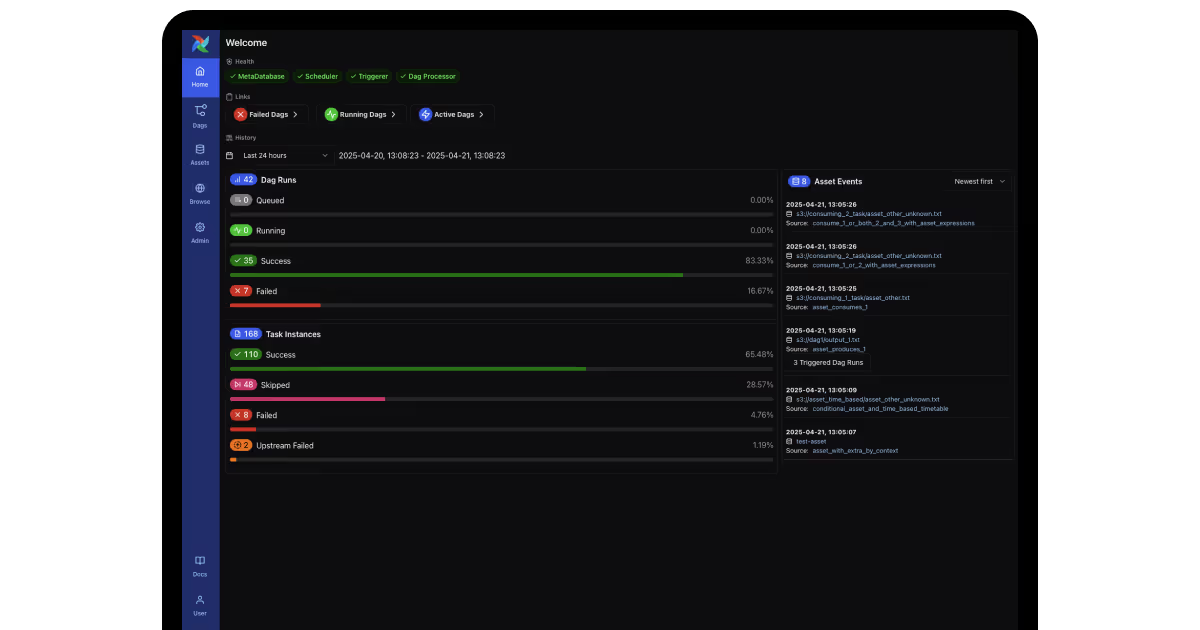
It is vital to keep an eye on workflow execution to ensure pipeline reliability. Orchestration platforms offer fine-grained telemetry with data pipeline metrics such as task completion status, execution time, and failure positions as they arise.
Your data pipeline monitoring dashboard will show:
Success or failure state for each pipeline component.
Runtime metrics for each operation.
Performance bottlenecks or degradation patterns.
For example, if the Salesforce API goes down, the extraction task would change to a failed state, along with the diagnostic error messages from the execution logs. If your transformation logic that typically runs in two minutes now runs in twenty minutes, this is a symptom of other issues that need to be resolved, such as unexpected changes in data volume or checking the potential for costly operations in edge cases in your transformation code.
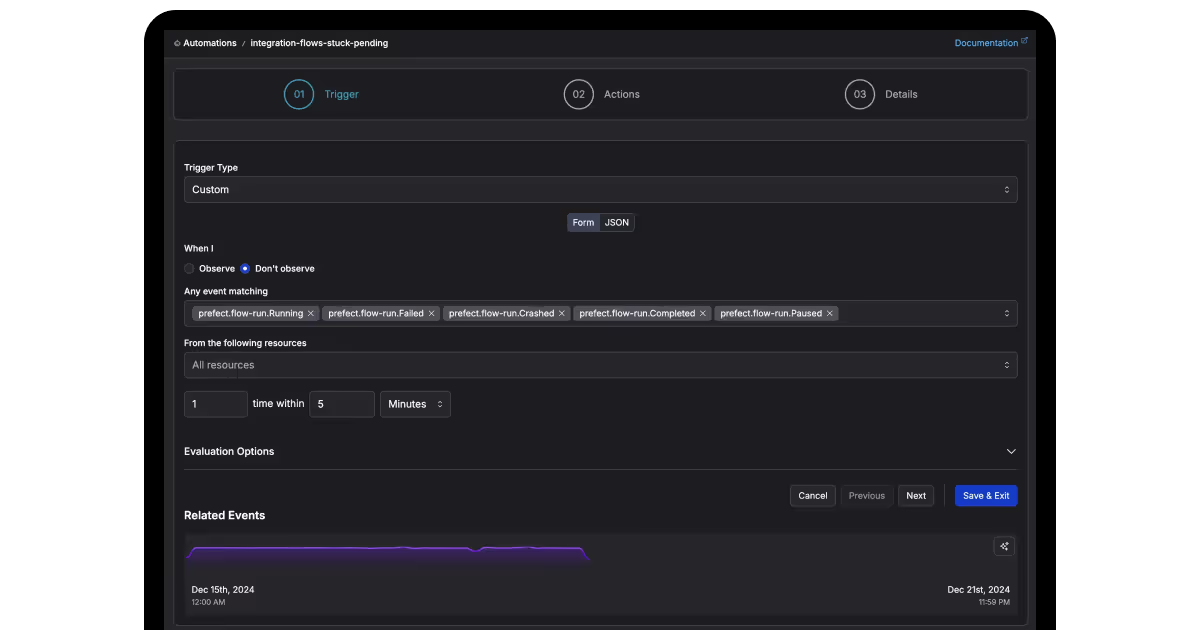
Monitoring architectures can incorporate proactive alerting mechanisms, as shown in the work of Mouine and Saied on event-driven cloud and edge IoT systems. You could set up alerts such as "trigger a PagerDuty alert if transformation duration exceeds ten minutes" or "send a Slack message when any task fails." This makes it possible to react quickly before downstream users notice problems with the quality of the data on their dashboards.
Error handling and recovery
Every production pipeline does break because something might go wrong: network disconnection, API limits, unstable infrastructure, and poor data quality all stand in the way of running as expected. Orchestration solutions should, however, still plan out a failure response strategy when defined exhaustion thresholds are reached.
Your platform can specify graduated recovery strategies:
Retry the enrichment operation three times using an exponential backoff.
Notify the engineering team via email if the transformation fails and pause dependent workflows.
When the business intelligence database comes back online, automatically backfill missing data.
By preserving the intermediate workflow state, checkpointing keeps you from having to start over after failures. According to Horning, backward recovery to known-good states is made possible by the automatic preservation of restart information. Each layer can independently recover from failures without reprocessing previous stages. This reduces the time and resources required to recover from a failure, especially in long-running data pipelines.
Implementing data orchestration
It's difficult to build a data orchestration process — for example, an API orchestration framework requires you to manage errors, handle data flow, sequence calls, and transform formats. To build a step-by-step process correctly, go through the following steps.
Catalog your sources
The first step is to assemble a detailed list of all the data sources tfhat will participate in application workflow orchestration. This will require you to collaborate with stakeholders, application owners, and infrastructure teams to map out the overall data landscape. Importantly, you will need to record the location (on-premise servers, cloud storage, or SaaS service), the mechanism of access (REST APIs, database connections, or file transfer), the data format for each source, and the refresh frequency.
For example, to use customer analytics as an example, your inventory may include a REST API Salesforce CRM account with OAuth authentication, a PostgreSQL product database that requires VPN access, Google Analytics 4 web analytics data that can export as BigQuery tables, and customer support tickets that reside in Zenodo as CSV exports.
In research by Dahibhate regarding enterprise data orchestration as a service with Azure Data Factory, businesses with high data ingestion requirements must also account for performance characteristics and rate limiting of source systems. If your API provides a maximum utilization of 100 requests per minute, this may impose a design constraint directly into your pipeline.
Choose the infrastructure and orchestration tools
At the next stage, you need to select cloud automation and orchestration tools based on team experience, current infrastructure, and technical requirements. For instance, commercial platforms like Azure Data Factory offer managed services with integrated monitoring and enterprise support, lowering operational overhead, while open-source solutions like Apache Airflow offer the most flexibility and community support.
With a deep expertise and years of proven experience in DevOps, machine learning, and AI software development, COAX carefully examines your data sources and architectures to choose the most appropriate automation and orchestration tools to establish your data processes.
Formulate and define workflow architecture
Once you've articulated your data orchestration needs, establish clear and simple workflow architecture definitions that outline the sequence of tasks, dependencies, and execution logic. Unbundle complex data activities into modular, reusable units of work that can be tested and maintained independently. To do this, develop individual tasks for each extract source, distinct transformative operations and separate load operations for each target system.
The explicit dependency relationship between tasks should be clearly defined based on your orchestration platform's constructs. Additionally, you can identify parallel execution opportunities and add conditional operators in situations. For instance, you can put "only run enrichment if I retrieved at least 1000 rows from extraction" or "do not load if transformation indicates data quality issues."
For every task, set up operational parameters. These can be resource allocation, retry policies with exponential backoff, and timeout values. Make sure every component is loosely coupled with clearly defined inputs and outputs, adhering to Dahibhate's guidelines.
Combine pipeline logic and set monitoring
Write the data processing code itself that runs in each task of your workflow. Writing code is mostly the implementation phase of the application. It transforms business requirements or business logic into runnable applications of some type. These can be Python scripts, SQL queries, or configuration files related to data-movement tools. For extraction tasks, write code to authenticate to source systems, take care of pagination for larger result sets, and implement incremental loading strategies that only process records that have changed.
Next, coordinate these interrelated tasks. These are managing scheduling, monitoring, and error handling. To finish the process, establish the metrics that we discussed in the previous section for data pipeline management. This is where skilled engineering teams from COAX can be beneficial. We establish a complete environment for orchestrating, monitoring, and sustaining reliability in your whole data operation. Also, we perform monitoring and error handling to prevent data leaks without disrupting your operations.
Tools and platforms that can help
After we have defined the processes and steps, let’s outline the data orchestration software to perform them with. Each of the described options has its strengths and weaknesses, and caters to specific tasks and teams.
Platform
Key features
Pricing
Best for
Prefect
Python-based Flows, hybrid execution, ML pipeline support, Airflow migration path
Free (open-source), from $100/month (cloud)
Organizations building machine learning pipelines
Luigi
Python module, automatic dependencies, web UI, Hadoop/Spark integration
Prefect provides a set of open-source data pipeline and workflow management tools that allow teams to define workflows as Python code rather than using traditional DAGs. Flows run hybrid, whether in the cloud or on-premises, easily integrate with popular systems like Kubernetes and cloud providers, and can even observe Airflow DAGs for easy migration. Prefect is best suited for organizations building and managing machine learning pipelines.
Prefect
Spotify created the open-source Luigi Python module, which focuses on handling interdependent tasks with web UI for pipeline visualization and automatic dependency handling. It’s lightweight, extensible with Python packages, and integrates with Hadoop, Spark, and AWS. However, it is best suited for teams that require simple task orchestration without the complexity of larger frameworks.
Apache Airflow is a sophisticated open-source data orchestration platform that programmatically allows the creation, scheduling, and monitoring of workflows that have complex dependencies. It provides dynamic pipeline configuration, an extensive landscape of plugins for customization based on operators, role-based access control, and all of the monitoring runs from a rich UI. Collectively, these features make Apache Airflow the ideal orchestration tool for companies that need orchestrations of complex pipelines for large-scale, data-driven operations.
Apache Airflow
Google Cloud Composer is a fully managed service for workflow orchestration that is built on Apache Airflow and tightly integrated with other Google Cloud services. It takes away the responsibility of managing an infrastructure, offers a "lift-and-shift" approach to scaling deployments, provides advanced monitoring, and incorporates the security and compliance capabilities of Google Cloud to provide enterprise-grade Airflow with none of the operational burden.
With automatic schema discovery, a visual ETL editor, and integration across AWS services, AWS Glue is a fully managed, serverless ETL orchestration tool that can handle batch and streaming data. For AWS-centric enterprises looking for robust data integration without server management, it is perfect because of its machine learning integration, automatic code generation, and ability to scale resources.
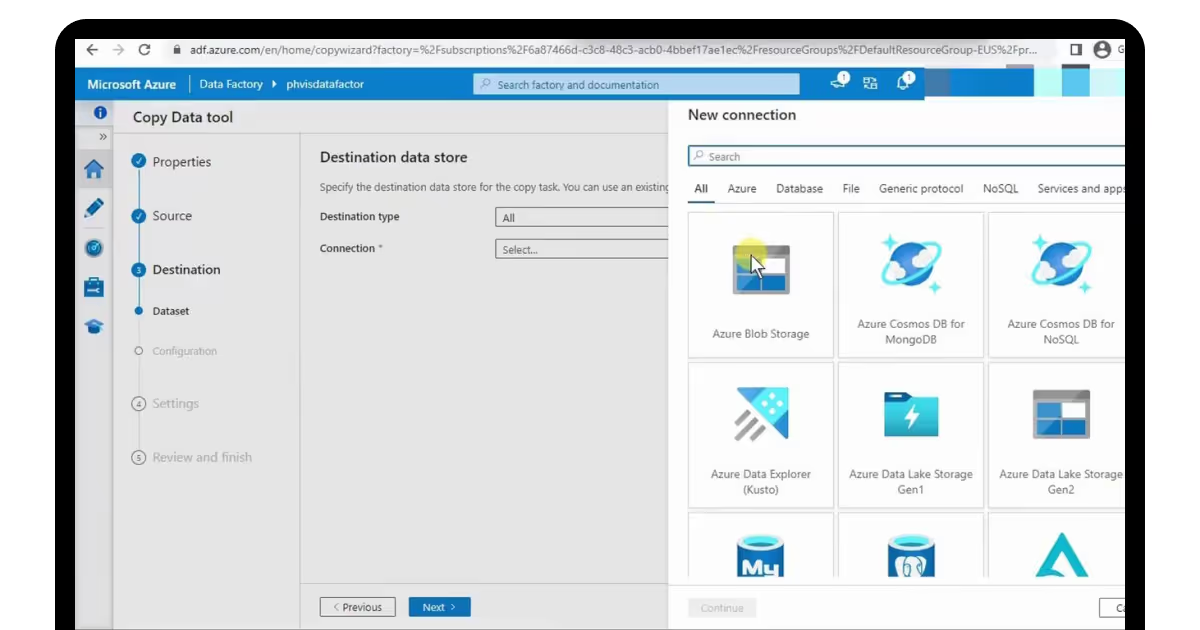
Azure Data Factory is Microsoft's cloud-based data integration solution, providing an easy-to-use visual design tool for building workflows with over 100 connectors for cloud and on-premises data sources. Integration with existing SSIS packages can provide a simpler migration to the cloud, along with capabilities to create custom code using C#, Python, or NET. It also has a Workflow Orchestration Manager for Apache Airflow DAGs, making it more appropriate for companies in the Azure ecosystem.
Azure Data Factory
SAP Data Intelligence is an enterprise data pipeline software that can manage the entire data lifecycle from data acquisition to development and orchestration, with more advanced processing capabilities using Python, R, TensorFlow, and Spark. This platform integrates data with business processes, while including integrated ML and AI features. Additionally, it supports multiple clouds and on-premise environments, making it ideal for large enterprises that require sophisticated analytic options.
The Databricks Lakehouse Platform includes Databricks Workflow, with workflow orchestration tools for creating multi-step pipelines that support Python, SQL, Scala, and R. It’s a choice for companies that are already using Databricks and require unified orchestration across their data engineering and machine learning workflows because it offers Git integration for version control, multiple scheduling options, and collaborative features through shared notebooks.
Fivetran is a cloud-based data integration service that automates ETL processes with limited configuration, while also providing a standardized interface to facilitate easy deployment and automated data synchronizations. The service simply moves sourced data to a cloud warehouse. Fivetran is best for organizations that want simple and automated data integration processes.
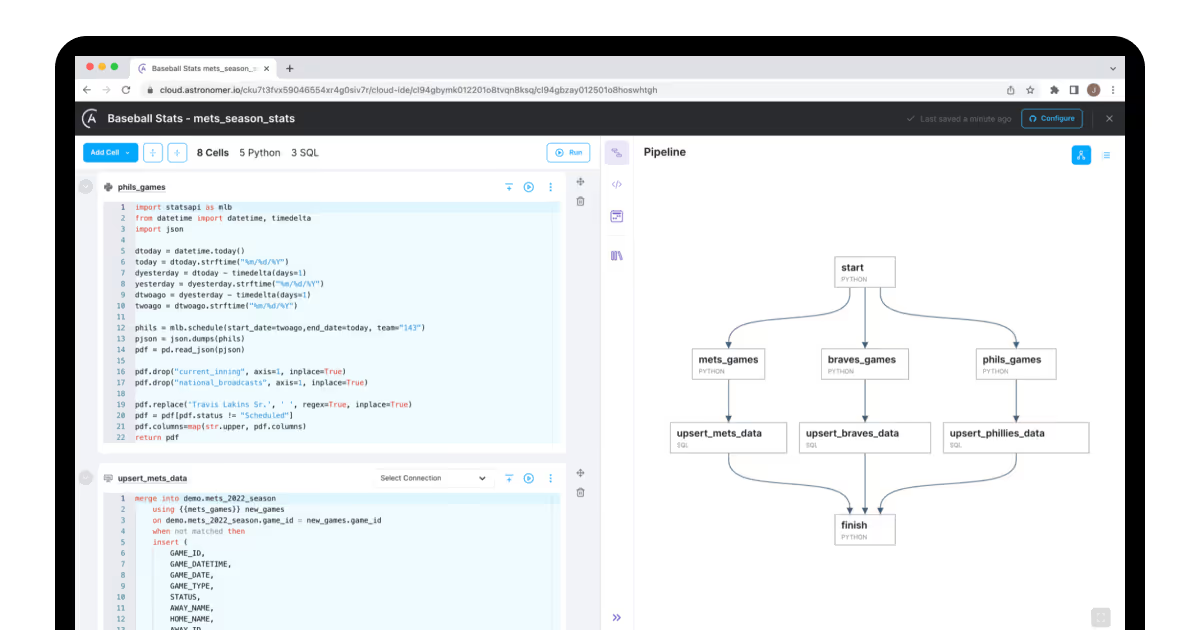
Astronomer is a managed service that runs Apache Airflow in a more focused manner and at scale. It provides a set of automation orchestration tools that also use cloud-native features like monitoring, version control, and deployment methods. The solution supports OpenLineage and is especially appealing for teams that want a cloud-native, managed and focused version of Airflow without operational overhead.
Astronomer
Dagster relies on a data-centric approach to orchestration using first-class data assets. It includes an extensive catalog of your data assets with metadata and provenance, maintains recommendations for transforming assets in production, and provides isolated execution environments. Along with over 40 integration libraries, it works well in financial services, health care, and retail spaces.
Commercial data orchestration tools frequently result in vendor lock-in, which increases the cost and duration of migration. Another issue is the cost — for instance, in Google Cloud Composer, Azure Data Factory, and AWS Glue, usage-based pricing can increase suddenly. While proprietary features in SAP and Databricks limit flexibility by creating dependencies, managed services lessen control over the infrastructure.
In order to avoid vendor lock-in, COAX creates a unique custom API integration that links orchestration tools with various data sources. Using containerized architectures and open standards, we create platform-neutral, modular solutions that offer complete control and smooth environment-to-environment adaptability.
How to choose
Choosing your ultimate data orchestration tool requires a comprehensive understanding of your needs and future scalability. Assess tools according to the following standards:
Does the platform have native connectors that support your data sources?
Is it scalable enough to manage your data volumes?
Does it work with the alerting and monitoring system you currently have in place?
Does the platform support the programming languages that your team is familiar with?
Make sure the tool supports secure connectivity patterns. They can be Airflow's SSH tunneling capabilities or Azure Data Factory's Self-Hosted Integration Runtime, for hybrid architectures that span on-premises and cloud environments. Neither of these tools tracks dataset-level ownership or lineage on its own, so teams managing data as discrete products typically layer in a data product orchestration platform to handle that piece separately from pipeline scheduling.
According to Miriyala's research on workflow orchestration engines, various platforms perform better on particular kinds of workloads. For example, Airflow's DAG-based approach is best suited for complex batch processing with intricate dependencies. Meanwhile, for serverless architectures, AWS Step Functions easily integrates with other AWS services. It is costly and disruptive to migrate orchestration platforms later, so your decision should take into account both your present needs and your projected growth.
FAQ
What is a data pipeline in data engineering?
Data pipelines are abstract concepts that represent the flow of data from one processing stage to another. They are represented as directed acyclic graphs (DAGs), which are collections of nodes connected by directional edges. Although not all pipelines require every stage, Sullivan states that pipelines may have multiple nodes per stage. Some pipelines may completely omit transformation when storing raw data, such as audit logs. However, transformation maps data from source system structures to storage and analysis stage structures.
What is data orchestration?
Research from Salerno et al. defines data orchestration as a multidimensional framework. It includes data strategy, data governance, synergy, and infrastructure. Together, they enable the integration and alignment of data resources, processes, and actors to realize data value. Their research showed a strong positive effect (0.687, p < 0.001). Also, data orchestration explained roughly 45.6% of the variation in the generation of data value. It shows that cooperative conjunctions of data resources significantly increase the data potential.
What are the challenges of orchestration in data engineering?
Among the most widespread challenges are:
Establishing connections between different systems
Making certain that data is accurate, comprehensive, and consistent
Bringing disparate stakeholders together for shared objectives
Keeping the environment from deviating from the intended configurations
Making sure that rollbacks to stable states are trustworthy
Controlling network throughput and latency in distributed systems
How does COAX manage pipeline data management?
COAX provides a multi-layered security infrastructure achieved through ISO/IEC 27001:2022 certification for security management, risk assessment, and monitoring. Also, as confirmed by our ISO 9001 certification to certify quality processes, we employ a variety of monitoring and protection mechanisms. They include automating monitoring, encryption protocols, access controls, and disaster recovery procedures.






























































.avif)




We are interested in your opinion