By the end of the 1990s, eBay and Amazon had laid the groundwork for traditional e-commerce. Stable and solid as it is, it failed to cover the needs of the more modern, flexible experience. Nowadays, researchers suggest that by 2028, the global headless marketplace will be approximately $11.8 billion. According to Arumugam et al., this is caused by such differences:
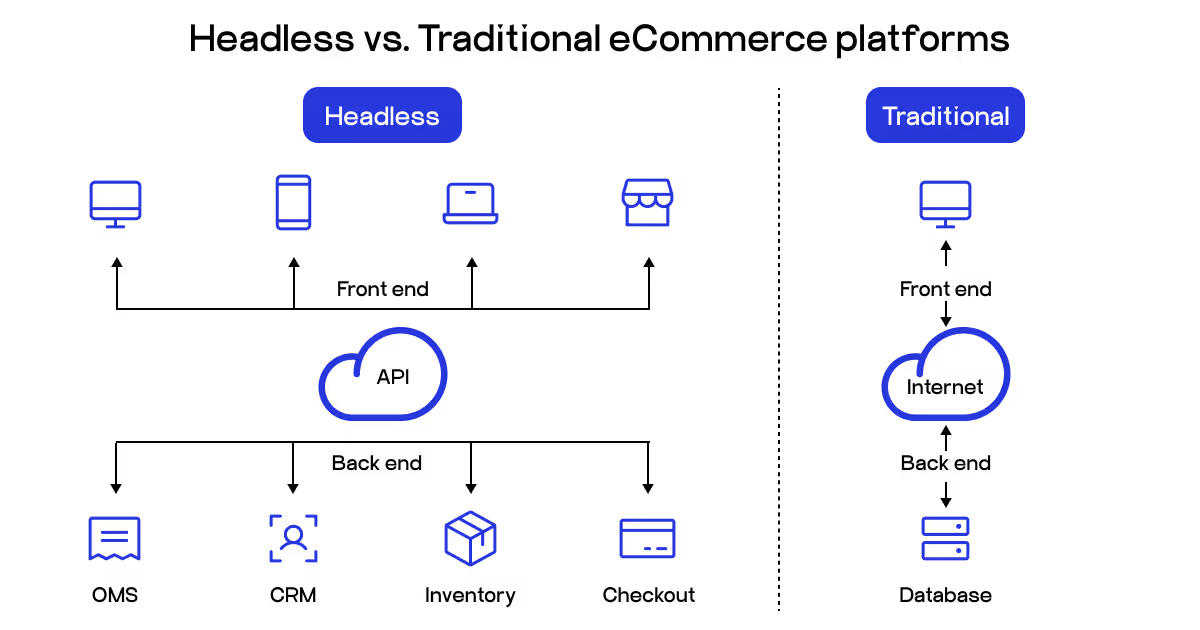
Headless architecture provides a fully decoupled frontend and backend, while the traditional one has them tightly connected.
Headless architecture offers a fully customizable user interface without vendor lock-in, as opposed to the limited component variability of the traditional option.
Headless commerce lets you distribute contentacross as many channels as needed, while the traditional architecture is linked to a specific channel or platform.
Headless architecture has a faster development lifecycle compared to a traditional monolithic system with close interdependencies of components.
In the headless architecture, frontend and backend scale independently, while the traditional commerce option allows for scaling them as a whole, giving limitations.
In this article, we will review these differences in more detail, understand the API-driven approach of headless technology, and break down the workflows and best platforms for you.
What is headless commerce?
Headless commerce is a modern architecture approach in which the frontend customer experience (the "head") is separate from backend commerce functionality.Akinyele et al. suggest that this allows retailers to improve the customer-facing business aspects and experiment with customer experience offerings independently of core commerce operations.
This ends in better flexibility in presenting products and content to consumers across platforms and devices, which is very important, as 76% of your shoppers are frustrated if their experience isn’t adjusted to their preferences, according to McKinsey.
This decoupling of the frontend and backend is achieved through API-driven communications, enabling businesses to deliver content and shopping experiences through any touchpoint while maintaining backend operations (inventory, order processing, product catalog, etc).
API-driven approach
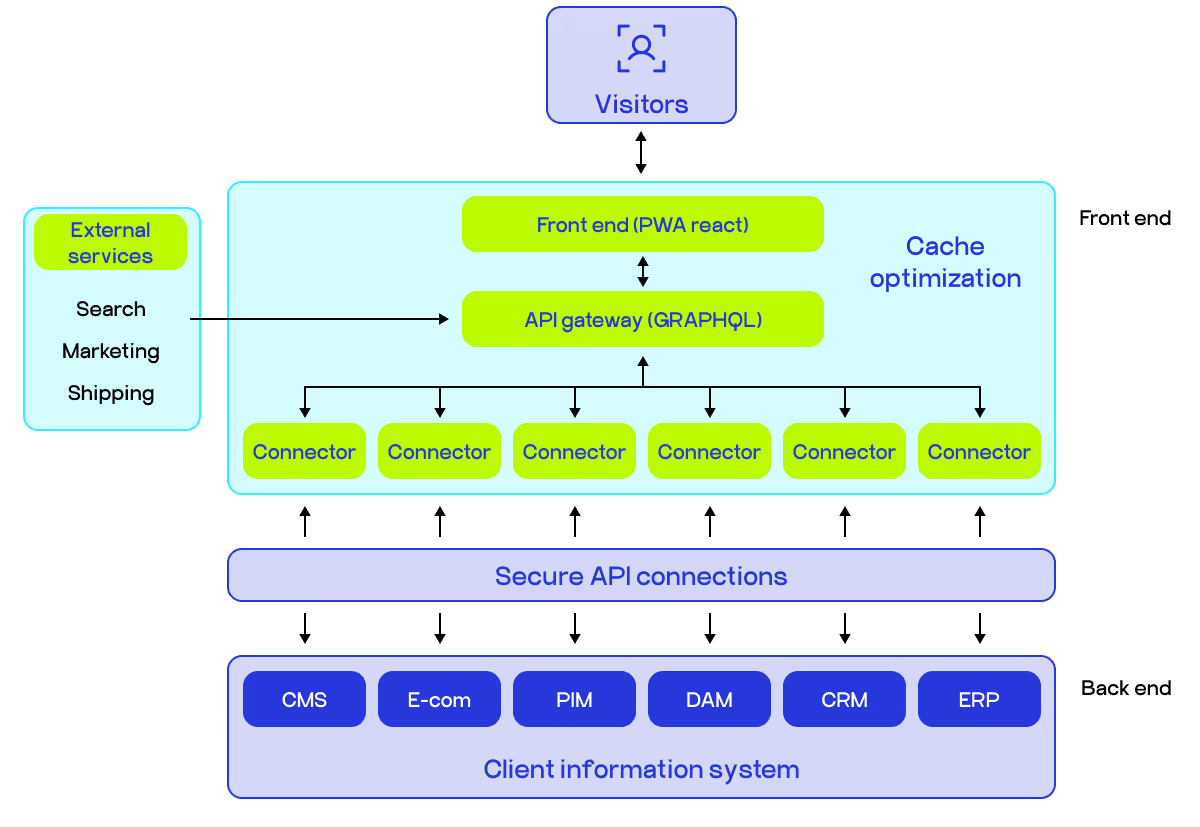
As we already mentioned, headless commerce solutions cannot go without APIs that connect them. APIs play the role of the link that connects all the components of a system in a headless commerce architecture. In general, this process is typically powered by such an approach:
Data retrieval. When a customer visits your online store, the frontend application calls the API (most commonly via GraphQL or REST) through the API gateway to retrieve the required information.
Backend process. Connectors ultimately facilitate the data exchange from the frontend to the headless commerce API gateway to retrieve data from the backend systems. It can be CMS for content, the PIM for product catalogs, the inventory databases for available stock, the CRM for customer data, and the ERP for orders.
Real-time synchronization. A stock inventory API instantly updates quantities and continuously retrieves data from the database to monitor stock levels. Likewise, catalog APIs allow products to be created, edited, or removed instantly across all channels.
Microservices communication. APIs allow separate microservices (such as shipping, payment processing, and product catalogs) to function together without direct dependencies.
Third-party integration. By connecting via secure API connections, external services (for instance, shipping providers, marketing tools, and search engines) expand functionality.
Delivery of the response. The API gateway collects responses and sends optimized data to the front-end. Consequently, it renders the user interface with up-to-date information in milliseconds.
Content and data are transmitted from central libraries through APIs. This allows the decoupled architecture to present the information in flexible ways, whether they are viewed in web applications, IoT devices, or voice assistants like Alexa, as mentioned by Eassa.
Headless vs composable vs monolithic architecture
The architecture of eCommerce systems is nowadays represented by three main approaches. Let’s break down the nuances of each and compare headless architecture vs microservices (composable one) vs the monolithic type. You can also refer to the table for more details.
Aspect
Monolithic
Headless
Composable
Architecture
Single unified system
Decoupled frontend/backend
Modular microservices
Flexibility
Limited customization
Front-end flexibility
Full system modularity
Scalability
Vertical scaling only
Independent layer scaling
Component-level scaling
Development speed
Slow (interdependencies)
Moderate (API coordination)
Fast (parallel development)
Integration complexity
Low
Moderate
High
Time to market
Slow
Medium
Fast
Vendor lock-in
High
Medium
Low
Maintenance
System-wide updates
Layer-specific updates
Component-specific updates
Monolithic architecture is an old type of bundled system, where the front-end, back-end, and business logic are all connected in one codebase. Changes to one component require changes to the entire system. While it is usually easier to establish in the beginning, monolithic systems are not flexible for omnichannel experiences, and are not quick to scale. Updates usually require shutting down the entire system and have limited ways to customize based on the platform’s available features.
Headless architecture. The frontend presentation layer is decoupled from the backend commerce engine, and they are connected with APIs. This separation unlocks content delivery from one backend to multiple touchpoints. You can build frontend experiences while the core commerce functionality is not limited or modified. Again, the backend is still robust, which sometimes limits flexibility and requires customization.
Composable architecture. By dividing the frontend and backend into separate, interchangeable components (microservices), a composable architecture expands on headless principles. Every business function is a separate service that can be chosen. According to Kvasnevska (2024), this approach is similar to building with LEGO. This allows for assembling customized solutions and swapping out individual parts without affecting the system as a whole.
Due to the tightly coupled as opposed to decoupled connection, the difference between monolithic and headless architectures is obvious. To conclude, the primary distinction between composable commerce vs headless eCommerce is that headless commerce is an architectural framework that exposes frontend flexibility. Meanwhile, composable commerce is a wider business framework that uses this microservices principle to inform the rest of the tech stack.
Headless commerce vs. traditional ecommerce: What’s the difference?
To understand the difference between headless commerce vs traditional commerce, we should closely look at the varied aspects of how they operate and influence your business.
Aspect
Traditional eCommerce
Headless Commerce
Architecture
Monolithic, tightly coupled front-end and back-end
Decoupled, API-driven separation of layers
Development speed
Linear, interdependent processes (8-12 weeks per feature)
Parallel development (2-4 weeks per feature)
Flexibility
Limited to platform templates and constraints
Complete front-end customization freedom
Performance
3-4 second load times, coupled resource loading
Sub-1 second loads, optimized layer-by-layer
Scalability
Vertical scaling, 15-20 minutes to respond to surges
Auto-scaling microservices, seconds to scale
Integration
Platform-native plugins, proprietary methods
Unlimited API integrations, best-of-breed services
Within the traditional eCommerce model, typical websites are built on a monolithic architecture. The entire system works as one massive application. This includes UI and content management, checkout processing, inventory management, and customer data in the same stack. As a result, when a retailer wants to change the product display to a new template, a developer must go back and forth between the code. This will be the only way to ensure they do not disrupt payment processing or other components. Moving forward and updating a product display often creates a series of dependent relationships.
Oppositely, the frontend presentation layer and the backend commerce engine are fully separated by a headless architecture. It only uses eCommerce API integration to connect the two. This separation makes it possible to customize user experiences without relying on the underlying systems, as explained by Raman. While the backend manages business logic, inventory, and transactions independently, the frontend can be constructed using contemporary frameworks like React, Vue.js, or Next.js. In headless commerce for B2B settings, businesses use headless to build unique portals with unique pricing and approval processes for wholesale customers. It’s all driven by the same backend commerce engine. Without affecting payment processing or warehouse management systems, developers can completely redesign the customer-facing website because each layer scales and updates on its own.
Development process and speed
The development in traditional monolithic systems proceeds through a linear, dependent process. Tripathi stated that “any change to UI or data requires changes to the entire database, frontend, and code, and development can become a hectic roller coaster”. Let’s consider that developers introduce a new customer reviews feature. For this, they update the database schema, adjust all business logic, update the frontend templates, and ensure each of these parts still works with the checkout and user authentication. Testing also takes on greater complexity and depth — for instance, an update to product search functionality might cause underlying issues in the shopping cart.
With a headless eCommerce architecture, frontend and backend teams work independently in parallel. Without waiting for backend changes, frontend developers experiment with new UI frameworks or design completely original customer experiences. Changes can be made quickly and easily without affecting other components, which speeds up and simplifies development. For instance, businesses can use the same commerce APIs to quickly implement customized ordering interfaces for various client segments. Continuous deployment of new features prevents system-wide outages, and time-to-market can be drastically shortened from months to weeks or even days if a frontend experiment fails.
Adaptability and personalization
In traditional commerce systems, customization options are limited by platform constraints. The platform vendor's predefined templates, themes, and modules are all that retailers get. Although plugins and extensions allow for some customization, the fundamental architecture and coding standards still govern these changes. You need complex workarounds or costly custom development to create unique experiences. Tripathi notes that because a single modification can affect the entire system, traditional systems offer less flexibility. Multi-brand retailers frequently maintain separate installations, which duplicate efforts and raise costs.
Headless commerce companies, in turn, have unlimited freedom in the design and functionality, where the only limitation is the creativity of the developer and not the constraints of the platform. You can build interfaces that are completely custom for a specific use case, customer segment, or region. For example, for a consumer beauty brand, the retailer could build an AR-powered virtual try-on experience on its website and a simplified mobile app, all powered by the same backend APIs. According to Raman, this architecture gives the ability to customize as much as needed. This allows for building progressive web apps, 3D product visualization, or AI-driven chatbots without being limited by the platform.
Performance
Traditional systems have built-in performance limits that necessitate the entire application stack to be loaded with every page request. For instance, if a customer goes to a product page, the request is then processed down multiple connected layers. This typically is a database query, business logic, template rendering, and asset compilation, all in sequence on the same server. During peak traffic events, a traditional platform may begin to slow down while attempting to serve concurrent requests for product pages, checkouts, and inventory updates. Additionally, when a page loads, it also needs to load a JavaScript framework, the associated CSS files, and any media files together.
Meanwhile, having a decoupled architecture allows for optimal performance because each layer can be optimized independently. The frontend acts as a lightweight application that only traverses what data is needed through API calls, which can reduce page load time greatly. Hassan discovered that headless CMSs outperformed traditional CMSs in terms of throughput, resource utilization, and speed for high volumes of requests. This allows for pre-rendering of pages that can be served globally. For example, headless commerce for a B2C fashion retailer can deliver product images from an edge server. Meanwhile, the commerce API handles the backend transactions, ensuring the transaction layer is not a bottleneck.
Scalability and traffic management
Monolithic platforms necessitate either horizontal scaling of the entire application stack (which is costly and ineffective) or vertical scaling (which involves adding more potent servers). Even if only specific parts of the system see high demand, you still need to set aside more server capacity for the entire system when traffic rises. According to Guntakandla, during periods of high traffic, traditional systems take 15 to 20 minutes to scale. It results in decreased performance and lost sales. Businesses frequently over-provision infrastructure year-round to handle sporadic peak periods, wasting 40–60% of computing resources during regular traffic.
The microservices-based headless architecture enables highly granular, automatic scaling. Individual services scale independently based on demand. As Guntakandla states, modern serverless architectures can handle surges in user traffic in seconds, while boasting 99.9% availability at peak loads, and 45% faster response times. For example, when product pages experience high traffic, the content delivery service scales without checkout or inventory management services. For instance, let’s say customers of B2B headless commerce platforms submit major bulk orders that require complex pricing calculations. In this case, only those specific microservices scale, while everything else remains the same.
Integration capabilities and ecosystem
Integration capabilities of traditional eCommerce are managed almost exclusively by the platform. Every third-party integration must adhere to the proprietary integration protocols between the platform and provider, often requiring extensive custom development. Surely, as Koval et al. point out, traditional CMS platforms often have their own templates to work from. However, they are often difficult for non-technical users to override or customize beyond what is built in. For example, integrating a custom ERP system with a traditional platform often relies on middleware layers to coordinate data collection or scheduled batched/sync processes. This type of integration coordination creates data inconsistency and operational delays.
This isn’t the case with an eCommerce headless CMS, as any service can be connected using standard protocols without any limitations. Each component connects to the services for every business function through well-documented APIs. According to Guntakandla, companies that use composable architectures see a 51% increase in successful API interactions and a 42% decrease in time-to-market for new features. Using standardized REST or GraphQL APIs, you can concurrently integrate custom recommendation engines or connect Sto tripe or other providers for payments. Because it is modular, changing or replacing one service won't affect others. For example, switching from Stripe to Adyen just involves updating the payment service integration, leaving the checkout user interface and customer accounts unaltered.
How to make the right choice for your business
There are two ways you can follow with this information: choose the traditional architecture, the headless one, or follow a hybrid approach. Let’s outline the best cases for each choice.
It’s best to select the traditional eCommerce if:
Your company is a startup or small retailer with a limited budget and few technical resources.
Within two to four weeks, you need a straightforward, off-the-shelf solution that doesn't require custom development.
There are fewer than 500 SKUs in your product catalog, and the prices are simple.
You don't have any immediate omnichannel plans and mainly use a single sales channel (your website).
With predictable seasonal patterns, your monthly traffic stays steady.
You need a lot of help with managed hosting and round-the-clock platform assistance.
Complex B2B features like bulk ordering, approval workflows, and custom pricing tiers are not necessary for your business model.
Unlike the traditional approach, it’s beneficial to choose headless technology if:
You need an omnichannel experience across the web, mobile applications, IoT devices, marketplaces, and new platforms.
Your catalog has over 1,000 SKUs or includes complex configurations, bundles, or personalization cognitive choices.
You experience traffic spikes or valleys frequently (3x-10x spikes during promotions or busy seasons).
You need improved page load speeds (less than 2 seconds) to enhance performance and help increase conversion rates.
Your company is B2B and complex, meaning you need custom pricing per customer, quote management, approvals, bulk ordering, or integrations with your backend enterprise systems (ERP, CRM).
You need real-time integrations to multiple 3rd party services (advanced analytics platform, AI, or ML tools, or integrate with a custom recommendation engine).
You have an international business plan with the ability to deploy with multi-region capabilities or localized experiences beyond simple translation.
To combine the flexibility of headless customer experience with the ease of traditional architecture, you can examine hybrid strategies. It works best if your company is mid-sized and growing into an enterprise, but you’re not prepared for complete headless complexity (though you still have some customization needed). This way will also be suitable if you wish to maintain a traditional web storefront while testing headless for some channels (mobile apps).
Key advantages of headless commerce
Headless commerce offers transformative value that directly affects business success and customer satisfaction. Let’s break down the benefits of headless commerce into specific aspects.
The key benefit is the cost-efficiency ratio.Guntakandla indicates that businesses that adopt a headless architecture experience 38% lower operating costs and a 41% increase in deployment efficiency compared to traditional implementations.
Another benefit is integration capabilities. An API-first architecture allows for connectivity between many tools and services. This level of flexibility cuts data silos, bringing customer information into one centralized point where personalized recommendations and promotions can be provided across channels.
Among other headless commerce advantages is the limitless customization. With it, retailers are free to build personalized experiences from scratch without being constrained by the backend, and centralized content delivery through APIs creates faster page load times and higher customer engagement. Research reveals that companies see 32% increases in customer satisfaction and 27% reduction in system downtime.
The speed is another great pro. Guntakandla notes that a headless approach lets you execute new features 45% faster. You can test pricing strategies, launch products, or redesign user experiences in minutes as opposed to weeks, thanks to the architecture's support for quick experimentation.
Headless solutions also provide consistent experiences across web, mobile, IoT devices, and emerging channels, making omnichannel excellence possible.
As you see, the headless commerce benefits are quite obvious. However, it’s important to define if your use case is suitable for such an architecture, and if it will truly bring improvements.
Common use cases
Headless commerce architecture is designed for various business contexts where flexibility and performance are critical.
Carpenter recommends custom user experiences as the leading use case — businesses can create customized shopping experiences in real-time and based on customer data (i.e., style or purchase history), without external services. An apparel brand might set up independent customer profile/user journey tracking, favorite colors and sizes, and then dynamically show relevant products to increase conversion.
Omnichannel functionality is a second essential use case. Carpenter mentions that the customer's overall experience is broken up by multiple touchpoints — sales representatives, trade shows, web, mobile devices, and third-party storefronts — and expects integration across those touchpoints. Consider headless architecture for buy-online-pick-up-in-store (BOPIS) functionality. In this case, a relevant commerce API to integrate digital inventory and physical inventory.
Adoption of headless digital commerce is fueled by performance optimization, especially in mobile, where conversions are lowered by slow load times. Eassa discovered that headless CMS implementations demonstrated efficiency under high loads, achieving response times averaging 88-782 milliseconds with error rates under 2%. To create optimized storefronts that load instantly, development teams can remove unnecessary code and only include third-party integrations and necessary capabilities.
Headless architecture is the #1 choice for managing viral marketing campaigns or busy seasons due to its scalability requirements, particularly during erratic traffic spikes. Hardware limitations are removed by the services-led approach with dynamic scaling, which automatically distributes resources in response to changes in demand.
Lastly, integration capabilities give companies the ability to link legacy apps, payment gateways, inventory management systems, and custom tools without compromising frontend performance. This gives developers the total freedom to create intricate integrations that address challenging business problems.
All these cases call for headless commerce solutions that free you up from the legacy limitations. To see what you can get, let’s learn from the ones who implemented them already.
Examples of companies using headless architecture
Since the decoupled architecture is a modern, flexible, and proven efficient approach, the list of headless commerce companies is quite long. Let’s see the companies that showcase clear, calculated benefits coming from implementing such solutions.
White Stuff, a British clothing retailer, replatformed to BigCommerce on a headless architecture built using Alokai. The result was a fully integrated solution with overall load times that are 85% faster and a mobile speed that is double the previous rates, while achieving a 37% increase in conversion rates and an impressive 26% increase in average transaction revenue.
Burrow adopted the benefits of headless architecture to gain control of constraints built by templates for its marketing team. In just two months, Burrow achieved a 30% increase in conversion rates and 50% in site speed and performance.
By switching to a React Progressive Web App with Backend-for-Frontend architecture, women's clothing retailer Venus was able to improve customer retention and increase conversion rates by 24%. Page load times for 70% of pages were reduced from more than one second to less than 320 milliseconds.
Combat Corner implemented headless commerce by switching to React on WP Engine's Atlas with a BigCommerce backend. This shows a great headless website example: it saw an impressive 431% better performance and load speeds that are 604% faster, and gave the team unprecedented flexibility in managing content and greater customization — without needing to allocate extensive engineering resources, as well.
By extending customer engagement time on site, British multinational retailer Debenhams was able to improve conversion rates by 20% and increase mobile revenue by 40% by implementing React PWA to address mobile customer drop-off issues.
In order to overcome development constraints and high maintenance costs, K2 Sports, an outdoor equipment brand, made the switch to a headless configuration. By using Contentstack for content management, they were able to create websites 75% faster, publish content 90% faster, and increase team productivity by 50%.
To repeat the success of these companies, you can use the headless eCommerce development services by COAX. Our engineers define the use case that best suits your needs and design a unique solution. Our software will offer the speed, adaptability, and performance required to significantly boost your revenue and conversion rates.
Best headless commerce platforms comparison
Now that we’ve done with the basics, let’s outline the main off-the-shelf options you have. The following are the top headless commerce platforms in the market.
Platform
Key features
Starting price
Headless CMS
Best for
BigCommerce
AI tools, multi-storefront, visual editor, native CMS
VTEX IO, live shopping, marketplace, collaborative commerce
Custom pricing
Built-in no-code CMS
Global brands prioritizing speed to market
Elastic Path
Studio no-code, PIM integration, subscription tools
Custom pricing (free trial)
Integration required
Small-mid businesses, subscription models
Salesforce
Einstein AI, unified commerce, deep CRM integration
GMV-based (custom)
Via partners
Large enterprises using Salesforce ecosystem
Spryker
IoT commerce, marketplace, unified commerce
Custom pricing
Built-in
Complex B2B, IoT retail, marketplaces
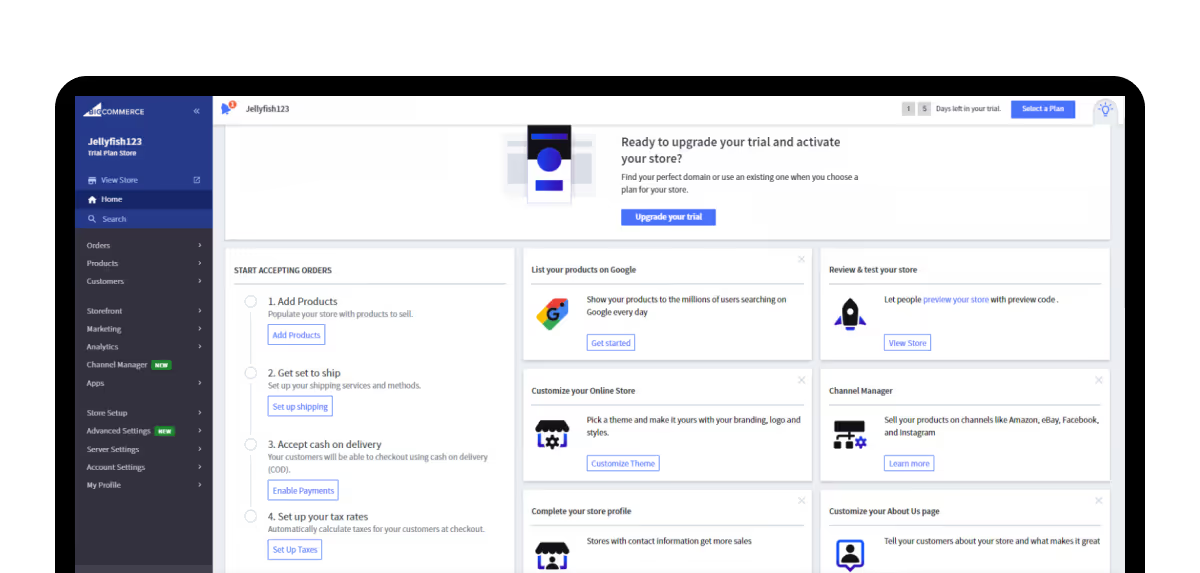
BigCommerce features a composable architecture with solid visual editing capabilities, built-in headless CMS capabilities, and robust innovations in AI for product recommendations and semantic search. It’s considered the best headless commerce solution for medium to large enterprises that need multi-storefront capabilities across regions, brands, or channels with management access from one dashboard.
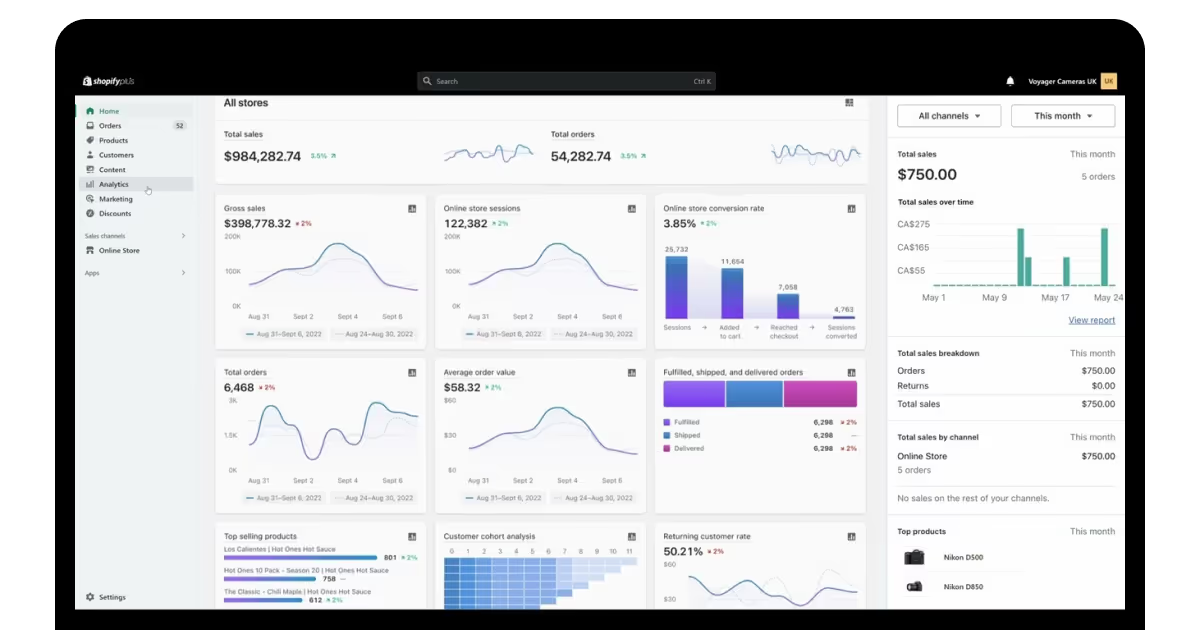
Shopify Plus allows for headless deployment using React, plus automation workflows, unlimited SKUs, and augmented reality/3D product visualization capabilities. It works best for quickly scaling businesses with annual revenues from $1M to $500M and need B2B features with full reliability and uptime in a robust third-party app ecosystem with no heavy technical demands (though initial store setup, migrations, and custom integrations are typically handled by a Shopify Plus development agency).
Commercetools is a pioneer in headless commerce, using a MACH microservices architecture with 300+ APIs, customizable checkout experiences, and a Foundry for quickly launching B2C or B2B stores, as well as DTC marketplaces. It is designed for very large enterprises with development resources and the need for maximum flexibility in choosing their modular components.
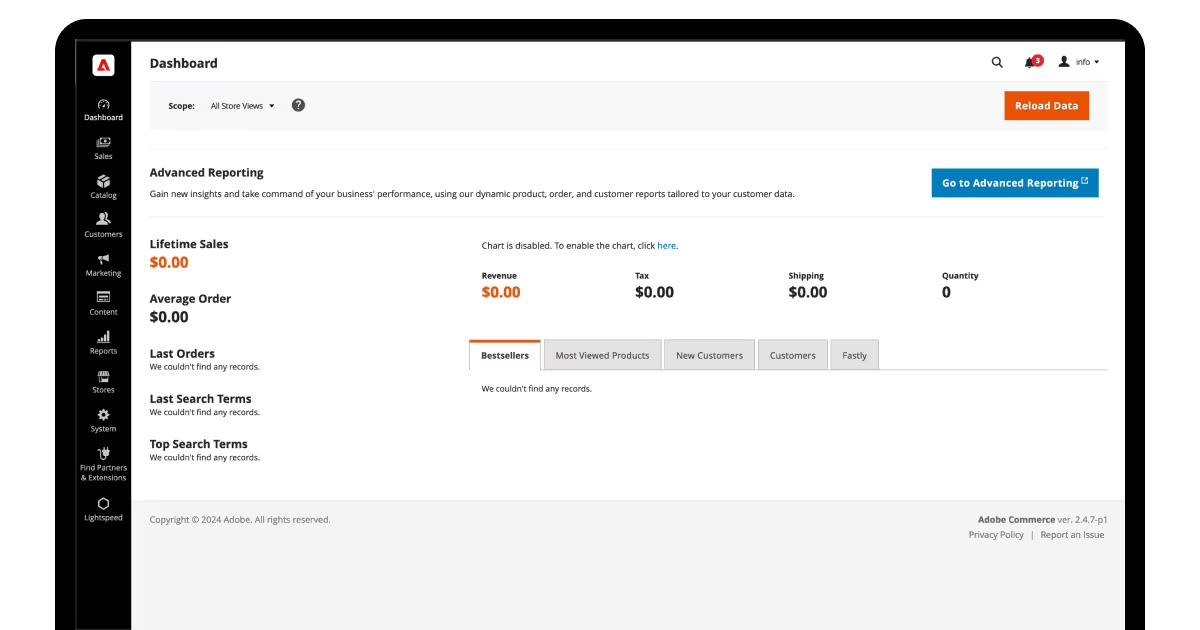
Adobe Commerce (Magento) uses a variety of merchandising tools, the App Builder for custom integrations, and built-in Adobe Sensei GenAI for workflows and personalization. It’s scalable from open-source to enterprise cloud solutions and ideal for big, international businesses that need sophisticated security, more than 100 reporting features, and close integration with the Adobe Experience Cloud ecosystem.
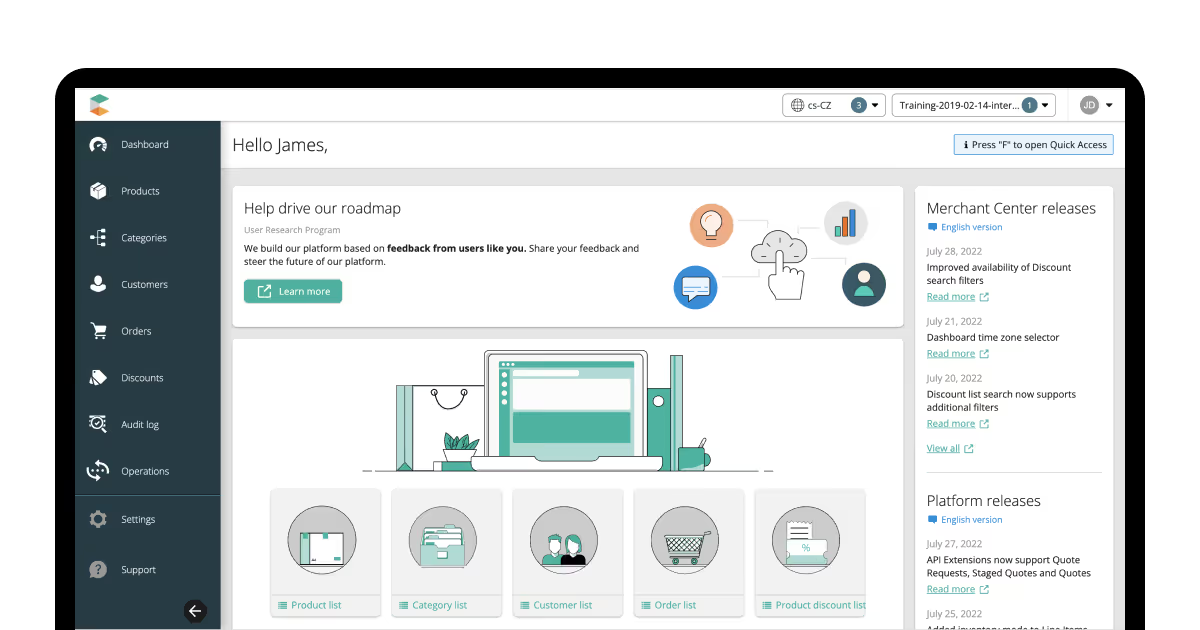
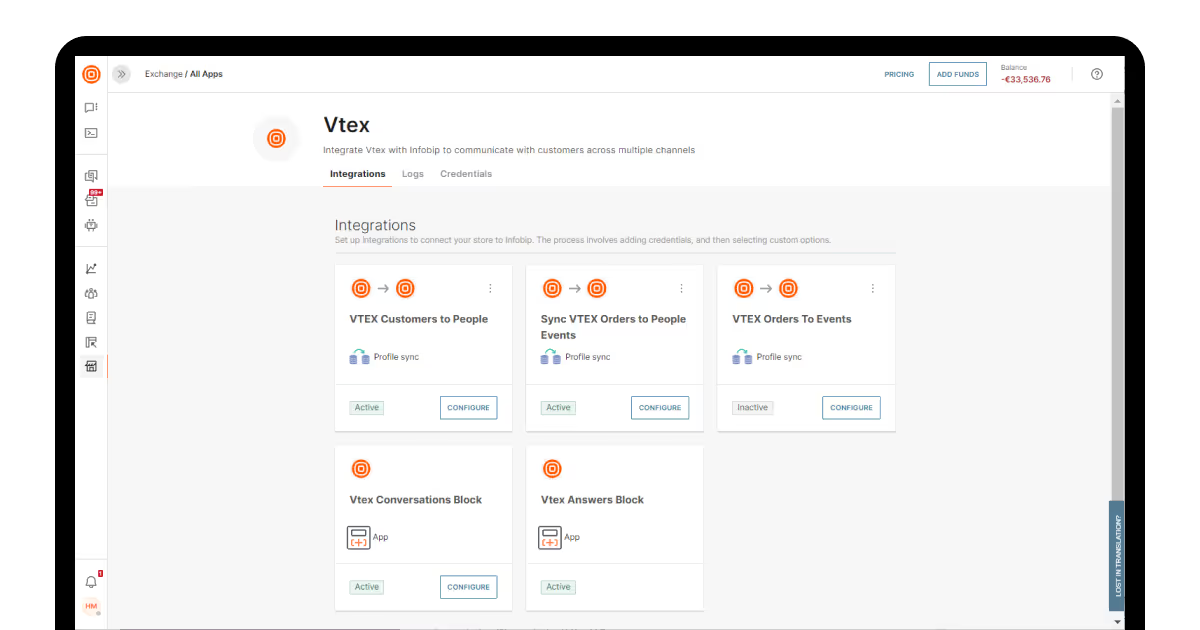
VTEX integrates headless architecture with collaborative commerce features, such as live shopping innovations, marketplace capabilities, and a low-code development platform called VTEX IO that comes with pre-built components. It’s the best headless eCommerce suite for major international brands with an emphasis on quick implementation and cutting-edge tools for customer interaction (like live streaming with built-in shopping capabilities).
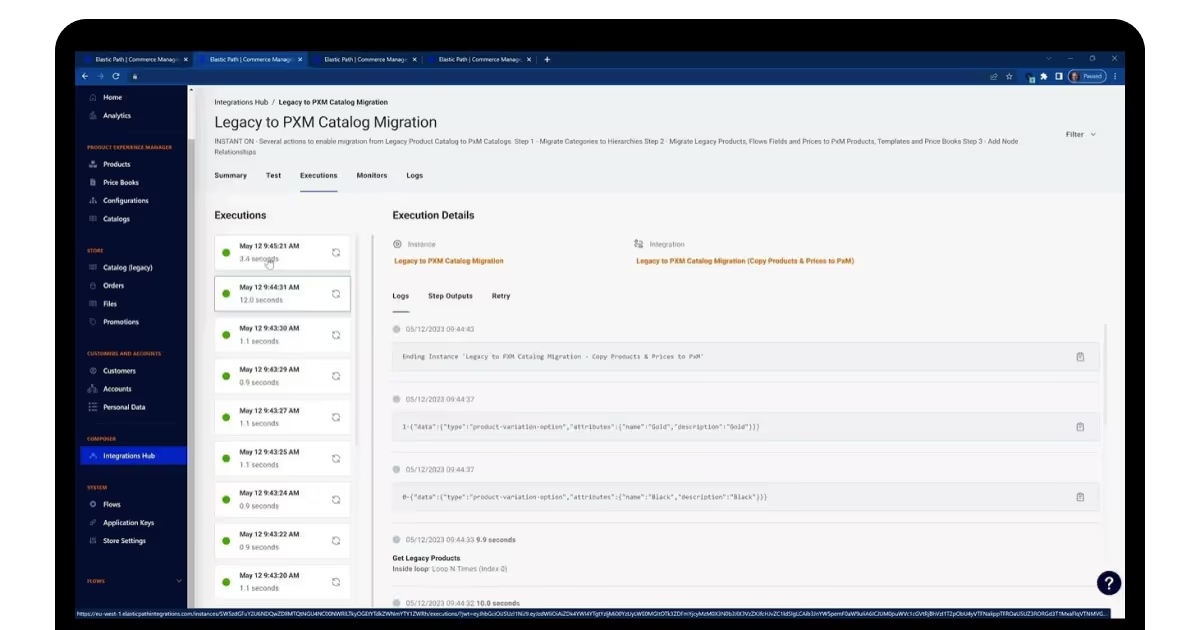
Elastic Path offers composable headless solutions with its Studio no-code storefront builder, built-in Product Experience Manager for real-time catalog management, and unique subscription management features. This is most suited for small-to mid-sized businesses that are faced with traditional technical or price barriers to adopting headless commerce but need robust levels of personalization.
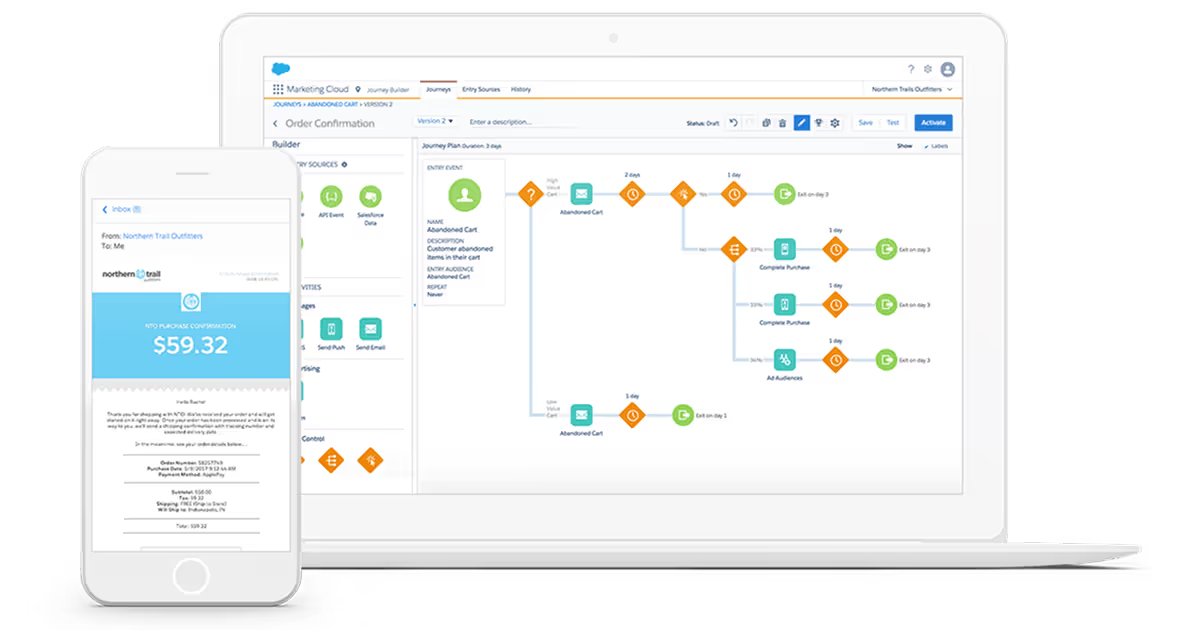
Salesforce Commerce Cloud offers integrated Einstein 1 AI for cross-channel personalization, unified commerce, B2B/D2C, with CRM and service functionality, and composable PWA storefronts. This presents a perfect headless technology for large global companies already embedded in the Salesforce ecosystem, interested in enabling unity in the integration of customer data across commerce, marketing, and service.
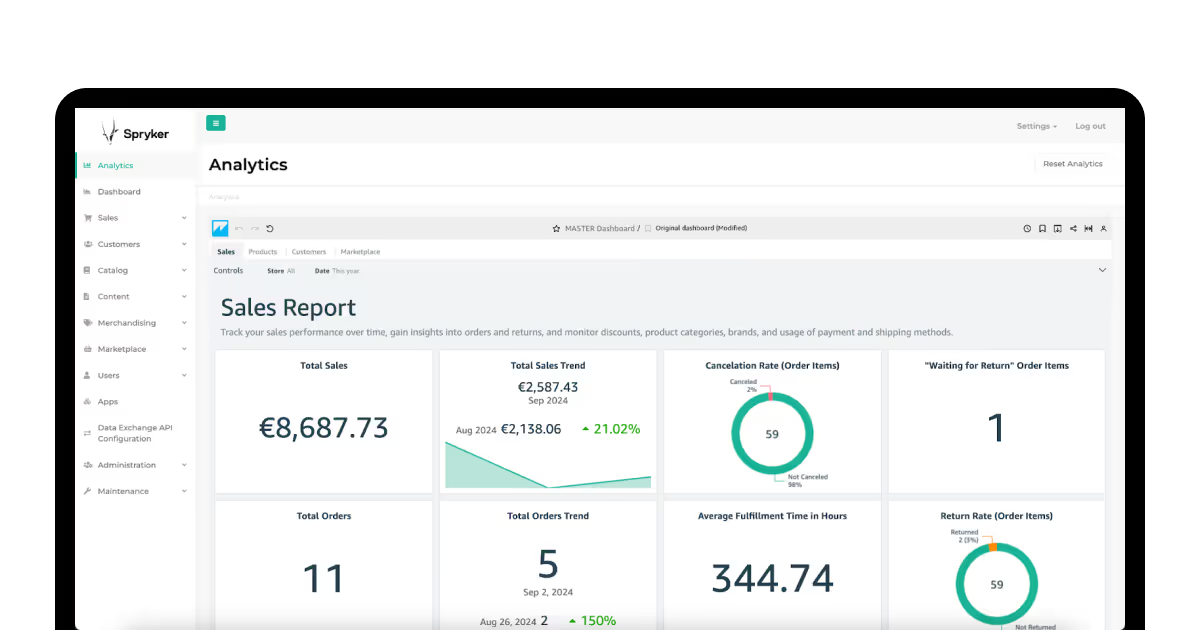
In addition to offering unified commerce with packaged business capabilities across CRM, PIM, and CMS, Spryker specializes in B2B and marketplace solutions with distinctive IoT commerce capabilities for voice assistants and smart devices. It’s perfect for global retailers and complex enterprise B2B models that need highly customized solutions for a variety of touchpoints, including new IoT channels.
If you wish to bypass the functional boundaries of these off-the-shelf solutions, our custom headless commerce development services will deliver personalized functions with features such as sophisticated eCommerce fraud management, a loyalty program that you own, or customized marketplace integrations based on your unique business logic.
How to begin with headless commerce
Whether migrating from a legacy system or building a new site, headless commerce development requires strategic thought and planning. Datla outlines an "orderly process" involving planning, setting up, incremental refactoring, and infrastructure optimization to allow innovations to happen while working to minimize interruption to business and keeping a focus on value.
It’s often wise to follow the incremental migration strategy — not a full rewrite of a system all at once. Rather, it’s a phased approach that extracts higher value pages first. Start with a performant frontend like Alokai on top of the existing platform and keep the backend, then extract more and more of the backend over time. This lowers the barrier to entry. Datla's case study provides the headless eCommerce examples of the online retailer, showing there was incremental extraction for 18 months before successfully decomposing the monolithic Java EE application into over 30 separate microservices using Docker containers and Kubernetes.
Testing for validation should be done at each stage. Make each page headless and compare performance metrics to demonstrate return on investment. Before broadening the scope of the migration, test customer engagement, conversion rates, and response times.
The next step is to ensure the reusability of content. To ensure consistency across experiences and preserve operational stability during transition periods, implement content management systems that output both headless data via APIs and legacy page code.
Evaluate the platform. Select language and framework agnostic platforms that allow adding onto existing platforms, adopting an API-first design for different frontends (Web, Mobile, IoT) with built-in auto-scaling features to manage spikes in traffic, number of page requests, etc.
Have extensibility built in for 3rd party integrations and monitor their performance. A/B test between the headless redesign and the legacy version of the supported solution, showcasing incremental validation while allowing continuous business execution in transitions for A/B tests.
Due to the high integration potential, headless commerce solutions are often paired with specific systems that unlock even more benefits for your business.
Combining with CMS, DXP, and PWA
Headless commerce tools work with headless content management systems (CMSs) to separate transaction and commerce functionality from content management. Giner-Miguelez et al. explain that cascaded CMSs have evolved to serve content through REST APIs for any app instead of just for web browsers. It makes them natural companions to headless commerce. The combination with a headless eCommerce CMS gives capabilities to manage product content, marketing content, and editorial content separately across platforms. This gives content teams autonomous control over storytelling and brand narrative without developer intervention.
Digital Experience Platforms (DXPs) are systems for orchestrating customer journeys at multiple touchpoints. DXPs can be either monolithic full-stack suites from single vendors or composable platforms that blend microservices. Within a composable DXP architecture, headless technology is a fundamental building block of transactional capability. Other microservices can manage the content (CMS), digital assets (DAM), search, personalization, and analytics. For example, an enterprise retailer may use a DXP to combine headless commerce with Adobe Experience Manager for content, Segment for customer data, and Optimizely for personalization. Eeach building block can optimize its specialized function.
Progressive Web Apps are a prime technology for headless commerce companies as they offer the accessibility of the web, paired with app-like experiences. PWAs utilize modern web capabilities to offer fast, offline, installable experiences to customers that rival native mobile apps. PWAs employ APIs to consume data to create fast storefronts optimized for any device. The compliance also addresses important performance metrics. For instance, Google recommends that your page should load in less than two seconds, and PWAs can comply using service workers, sensible caching, and code splitting. For headless commerce, PWAs provide a flexible presentation layer to take full advantage of the decoupling from an eCommerce backend. It allows them to quickly test UX, A/B test a checkout flow, or implement a quick update without getting into the backend.
At COAX, we offer complete API development and integration services that connect all of these things into a unified, high-performing system. We can do everything from headless CMS integration and DXP orchestration to PWA implementation. This offers your organization a total digital experience platform to grow your specific business.
FAQ
What is headless technology?
Headless technology is the separation of the frontend presentation layer from the backend commerce functions. It delivers flexible, dynamic experiences across multiple touchpoints via API communication. Headless architecture doesn’t couple content management, which allows it to be delivered through APIs to any platform, according to Srivastava. This allows each layer to be managed and updated independently to allow more flexibility and response to market requests, as stated by Akinyele et al..
What is a headless commerce platform?
Because headless commerce platforms are based on APIs and microservices, they can be developed modularly. It gives brands the ability to provide consistent shopping experiences on web, mobile, voice assistants, and smart devices. To provide scalable, robust solutions, modern commerce platforms make use of event-driven architectures, microservices patterns, and complex integration techniques, as defined by Sarabu. These platforms facilitate smooth integration with payment gateways, CMS, PIM, and OMS, among other crucial systems.
What are the headless architecture eCommerce main challenges?
Complexity to manage decentralized systems and multiple APIs
Potentially high initial investments and maintenance costs
Data security concerns from having multiple API entry points
Potential integration challenges with legacy systems
Complexity of testing across different environments
Achieving consistency in customer experiences across multiple touchpoints.
How does your headless commerce development company ensure security and reliability of the custom solutions?
There are a number of security layers our engineers apply — OAuth 2.0/JWT Authentication and end-to-end encryption for all APIs. The layered approach provides security through decoupled systems, with each architecture layer having its unique protocols. This results in enhanced data security. ISO/IEC 27001:2022 certification is in place for complete security management and risk monitoring. Furthermore ISO 9001 certification ensures the highest level of quality management processes.
.avif)


















































.avif)
.avif)
.avif)



.avif)


.avif)

.avif)





We are interested in your opinion