Your fleet never sleeps, and your software shouldn’t either. So, not to sleep on business opportunities and new revenue streams, you can try modern car rental and car-sharing software. In 2026, these solutions do much more than take bookings. They unlock doors, chase stolen cars, and bill customers before they leave the parking lot. Here’s our top picks list:
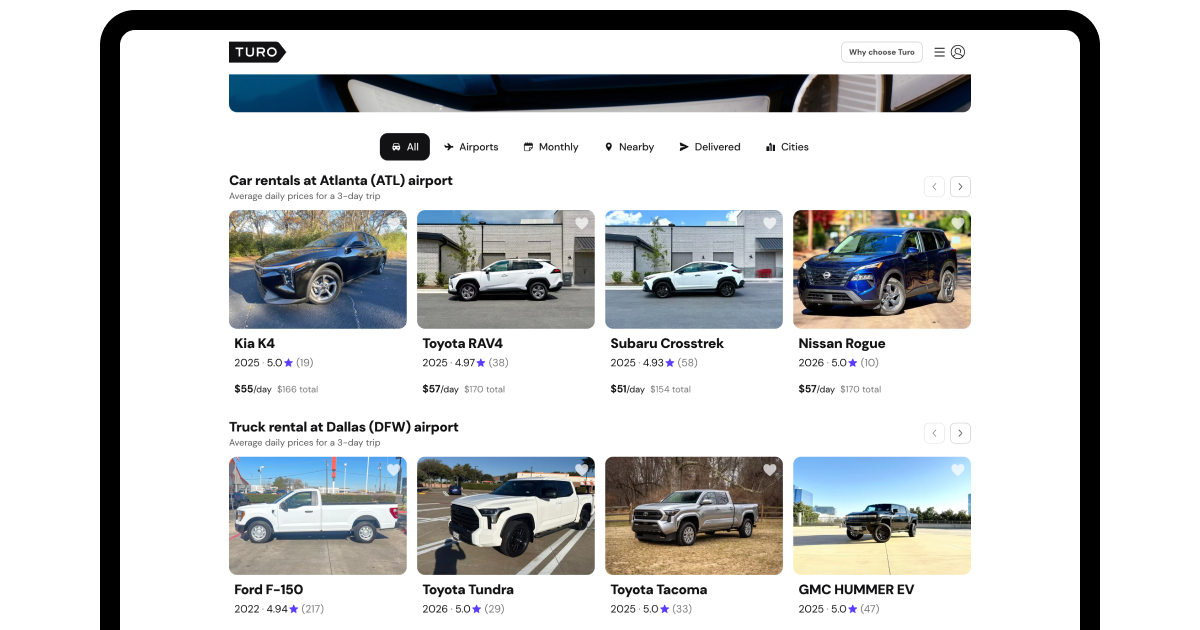
Turo is like Airbnb for cars, but without the awkward small talk with the host.
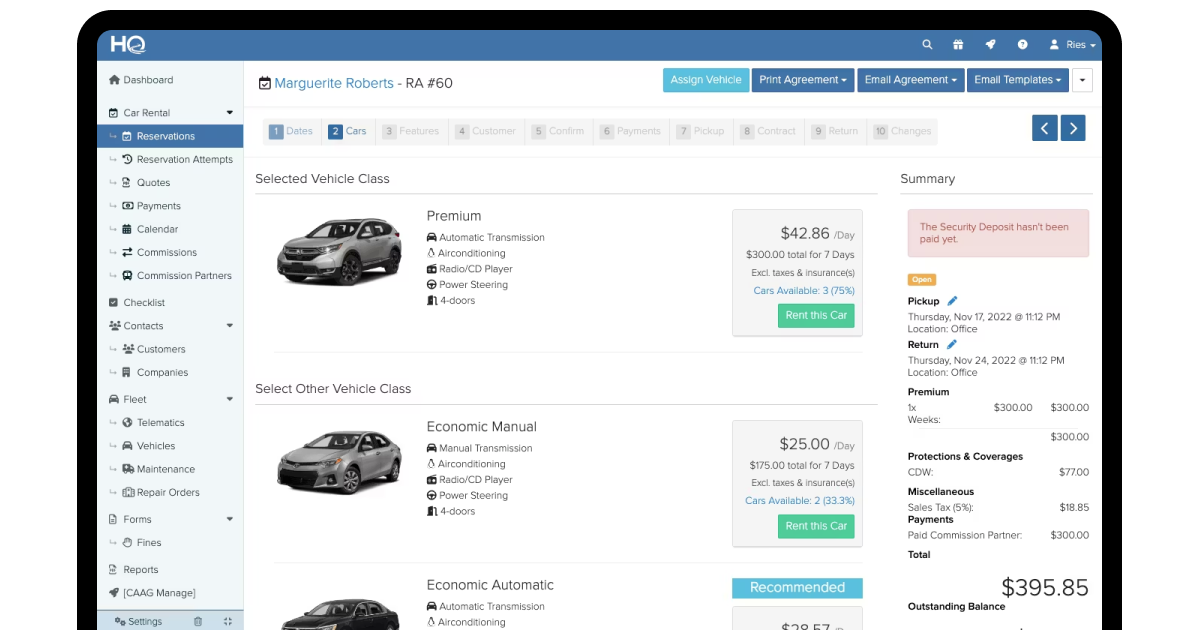
HQ Rental offers full fleet control with no enterprise budget needed.
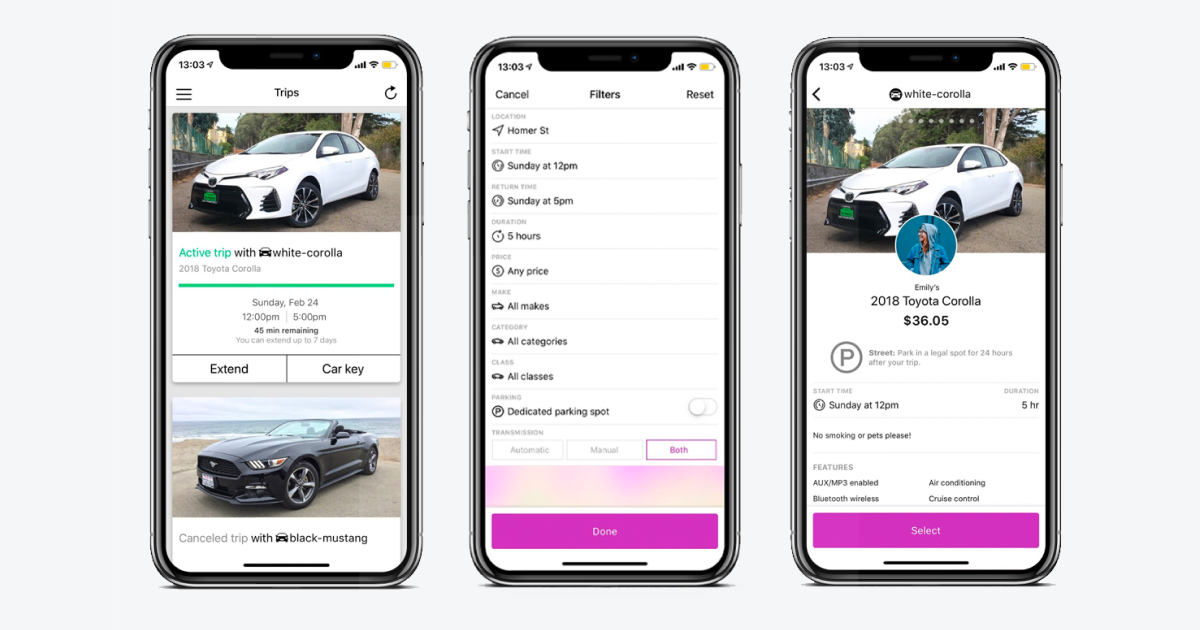
Getaround is a tool with no keys, no desk, and no people in between. Touch-and-drive.
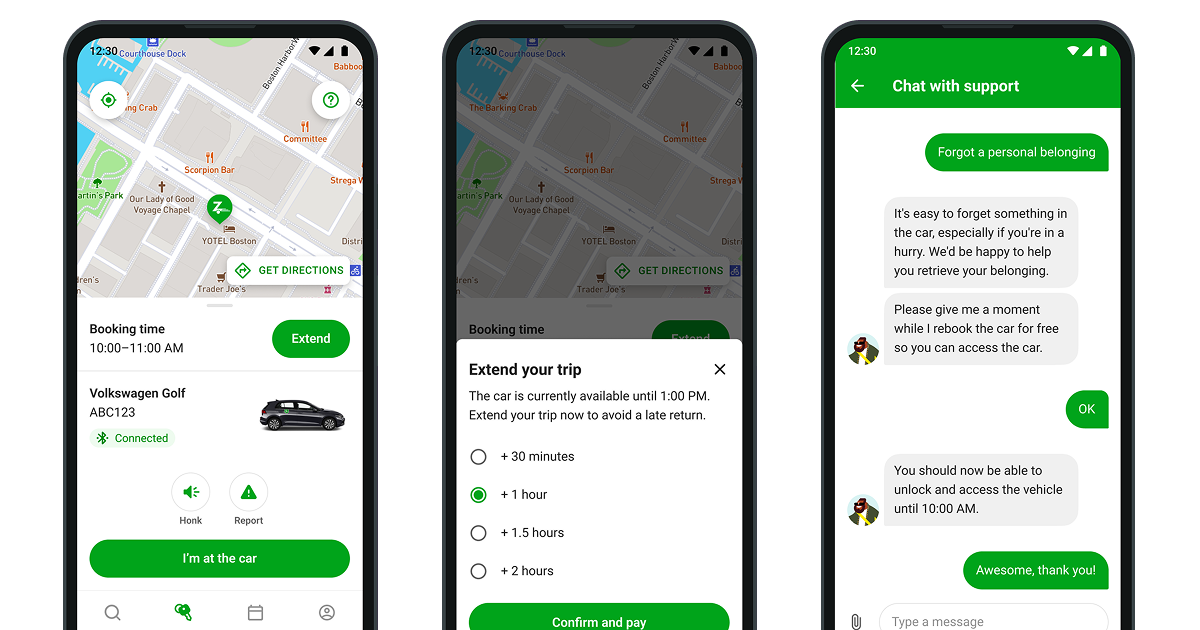
Zipcar is city mobility for corporate teams that actually use it.
Hertz is available in 150 countries, with one fleet you can rely on and no surprises at the airport.
INVERS FleetControl is the engine behind more sharing platforms than you know.
Navotar is a real spreadsheet killer that runs the entire rental operation.
Sixt is the top pick when you need a van in Munich returned in Milan.
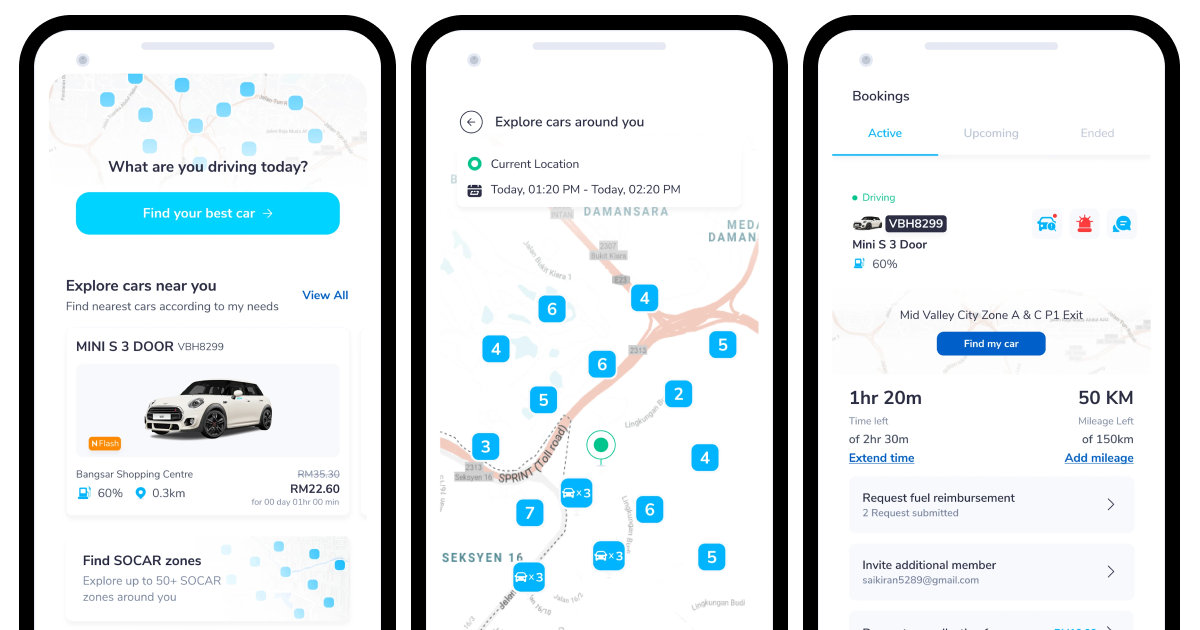
SOCAR is designed for Asian cities where shared mobility is already the norm.
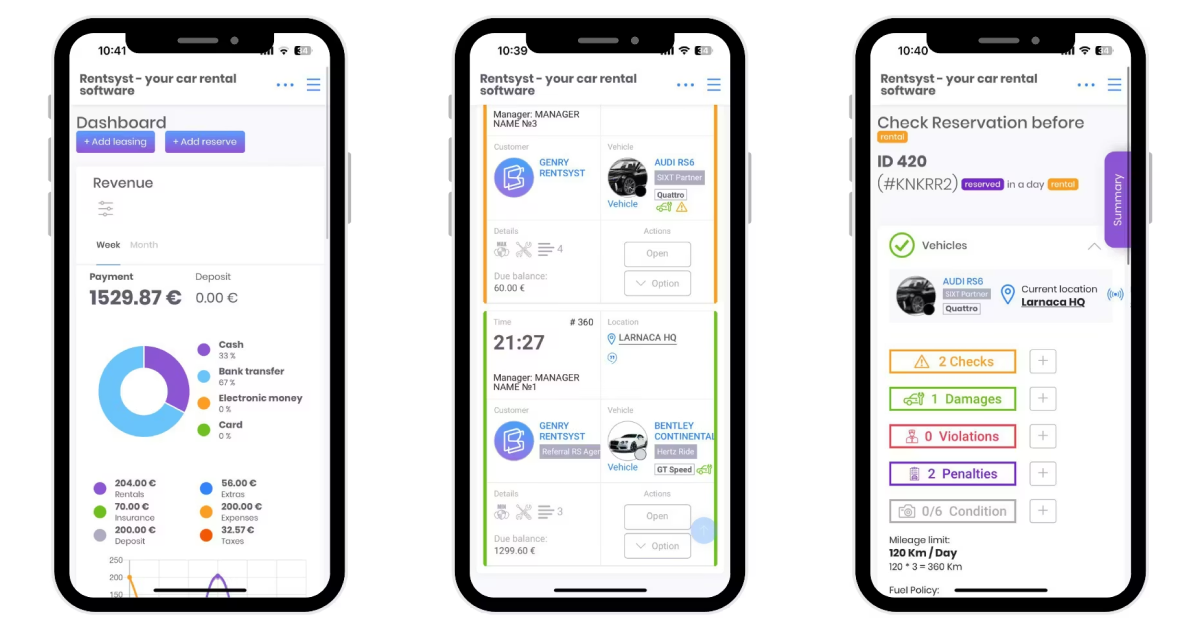
RentSyst is an API-first rental platform for operators who want to customize it all.
Custom development is the best option when your operation Is too specific, too big, or too ambitious for someone else’s roadmap.
In this article, we grasp the differences between car sharing and car rental solutions, define the main workflows, and break down the types of this tooling. Also, we outline the main features to get, key integrations to build, and list the top options in detail. Finally, we’ll understand if you need a tailored tool once and for all.
What is car rental and sharing software?
Car rental software is the system that lets a business list vehicles, take bookings, process payments, manage a fleet, and return a car without a single paper form. Think of it as the operating system behind every rental desk, app booking, and keyless pickup.
Meanwhile, car-sharing software does something narrower but just as essential. It lets multiple people access the same vehicle on demand, by the minute or hour, without staff, without a desk, and without ownership. The vehicle is the product, and the software is the service. As Khehra noted, modern platforms mix tourism, travel, and fleet management. Both categories now run on the same stack: mobile apps, cloud backends, and real-time data.
The market for car sharing and car rental solutions
Rental car software systems are situated in a market growing fast from two directions at once.
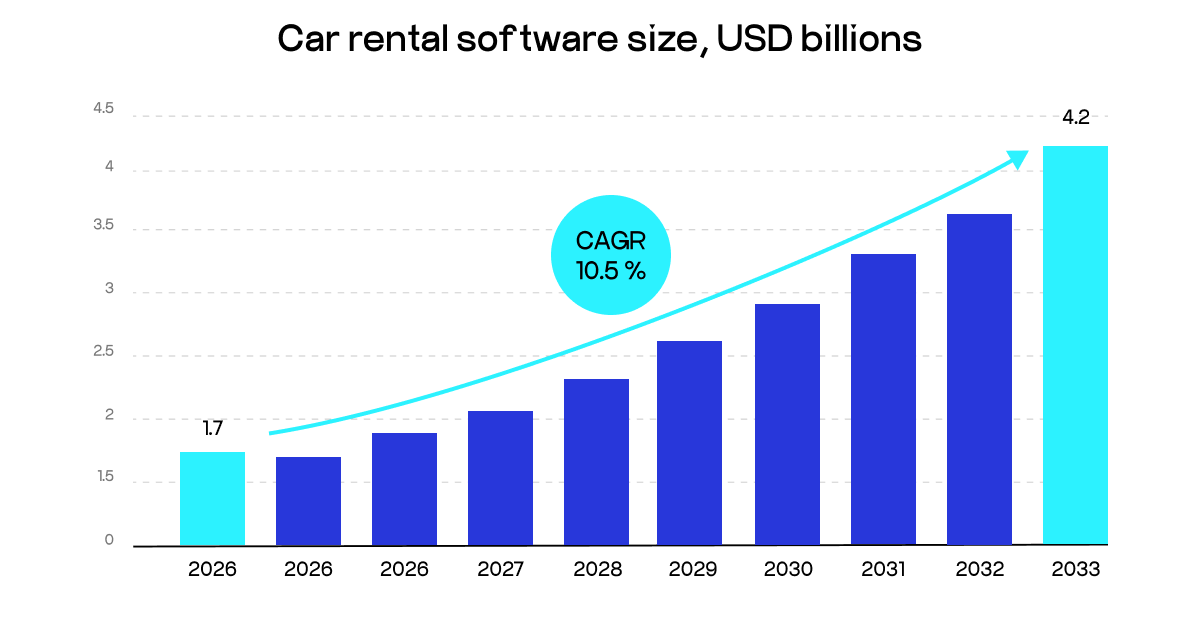
On the car rental solutions side, the global car rentals market reached $112 billion in revenue by 2026, with the growth pushing the market to $135.75 billion by 2030. The software layer powering that market is even younger and faster. The global car rental software market was valued at $1.7 billion in 2024 and is forecast to reach $4.2 billion by 2033, growing at a compound annual rate of 10.5%.
What is the car-sharing market like? It is more fragmented but accelerating. Roughly half a million vehicles operated in station-based and free-floating car-sharing services by the end of 2024, five times the fleet size from a decade earlier. The three dominant regions are Asia, Europe, and North America.
Cloud adoption is the engine behind both. Cloud-based car rental software accounts for over 62% of total market revenue, driven by lower upfront costs, easier updates, and the ability to scale across locations without new infrastructure. The Asia Pacific region is projected to register the highest growth rate at 13.2% from 2025 to 2033, fueled by mobile use and urbanization.
The two markets are converging. Rental agencies are adding hourly options. Car-sharing operators are building full reservation systems. The software is merging faster than the business models are.
Who uses car rental and sharing software?
Car rental management software is not just for Hertz. The user base is broader than most people assume, and it keeps expanding.
Traditional rental companies like Avis and Hertz use rental car booking software to cut counter time, enable self-service pickup, and let customers unlock vehicles with a phone. The front desk is optional. The software is not.
Peer-to-peer platforms like Turo and Getaround connect private car owners with renters. The software handles insurance verification, scheduling, payment, and access in one flow. Owners never meet renters. The platform is the handshake.
Corporate fleet managers use car rental management software to track which employees drive which vehicles, enforce booking policies, and reduce idle fleet time. As Turoń documents, corporate fleets increasingly operate like internal car-sharing networks.
Car-sharing businesses like Volvo on Demand use the same core stack to run hourly access for urban users who want a car available without owning one. The business model depends entirely on software reliability: if the app fails, the door does not open.
Gig workers are a growing user segment. Drivers working for Uber, DoorDash, and similar platforms access vehicles through rental or sharing programs when they do not own a car that qualifies, turning the software into a gateway to income.
Car rental agencies make up the largest end-user group, accounting for over 48% of car rental software revenue in 2024, followed by automotive dealers moving into short-term leasing and ride-sharing operators expanding their service portfolios.
The common thread across all of them: nobody runs this manually anymore.
How car rental and sharing platforms work
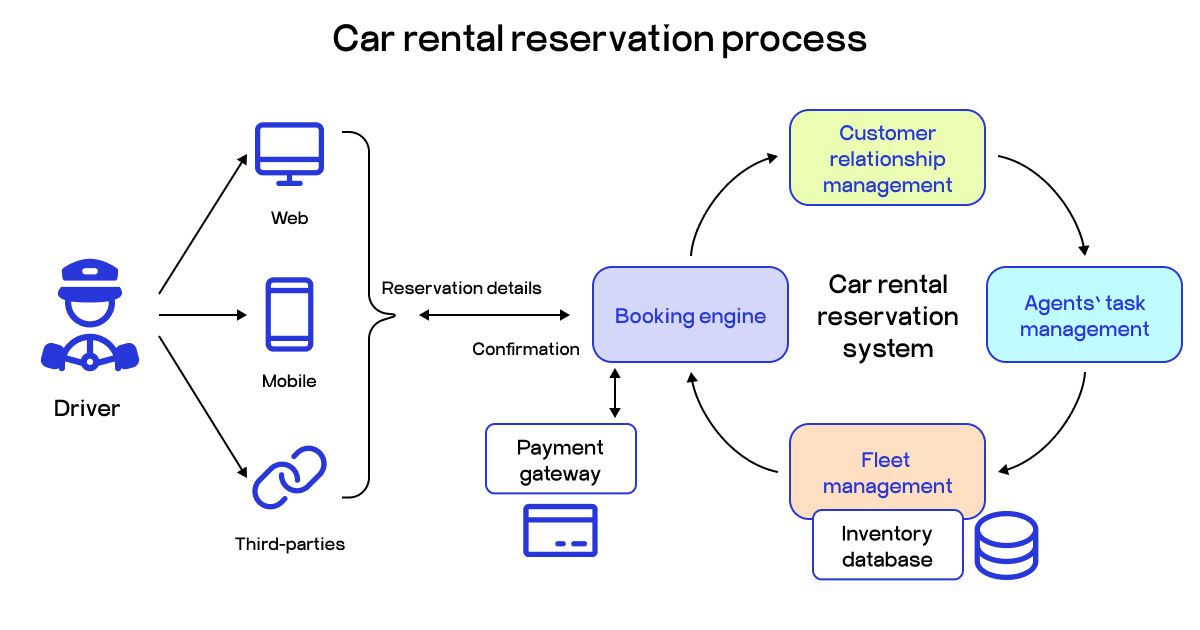
A rental or car-sharing software is a digital assembly line. Every step, from identity check to door lock, runs without a human in the loop. Here is how the full journey works.
Registration and KYC. You download the app, upload your license and a selfie, and automated tools verify both in seconds. Your payment method links to your profile. You are approved before you reach the parking lot.
Search and booking. The app shows available vehicles on a live map, pulling real-time GPS data from each car's telematics unit. You pick a car, select your duration, and the platform marks it reserved. In some systems, a 15-minute hold starts the clock.
Access. No key exchange, no desk. You walk up to the car, tap "Unlock" in the app, and the backend sends a command via Bluetooth or cellular to the in-car hardware. Doors open. The engine immobilizer disengages.
The trip. Telematics sends a continuous stream of location, speed, and distance data to the backend. Geofencing alerts operations if the car leaves an approved zone. You can lock and reopen mid-trip for stops.
Return and billing. You park and end the trip in the software for car rental, and the system runs a checklist: ignition off, doors closed, and car secured. The platform calculates your cost by minute, hour, or distance and charges your card automatically.
Fleet maintenance. If fuel drops below 25% or the battery runs low, the system flags the vehicle automatically and routes it for servicing before the next booking.
The core difference between car sharing vs car rental in this flow: car sharing services run entirely app-based with no staff touchpoints, while traditional rental still often involves counter check-in and physical handover.
Automation of reservations, billing, and fleet tracking
The platform is three layers working together. Remove any one of them, and the whole system breaks.
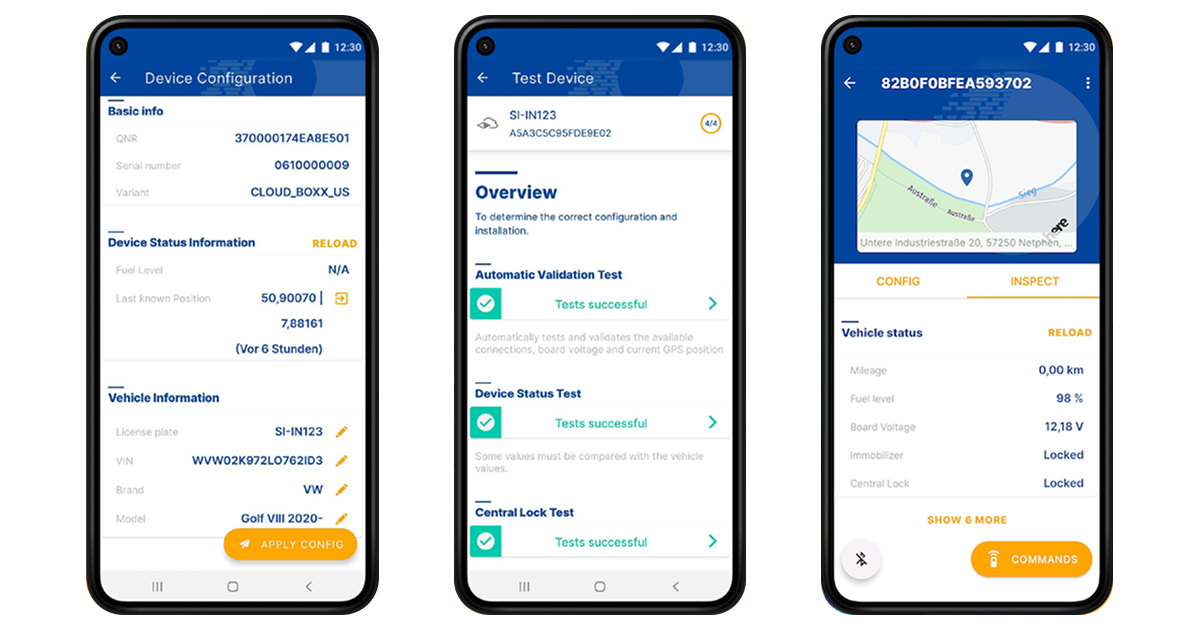
Hardware: the in-car unit. This is a physical device installed in the vehicle. It plugs into the CAN bus or OBD-II port and reads fuel levels, tire pressure, and location. More importantly, it executes remote commands: lock, unlock, immobilize. This is what makes 24/7 self-service rentals physically possible. Without it, you need a staff member with a key.
Software: the management platform. This is the operator's control center. From a single dashboard, fleet managers validate driver profiles, monitor vehicle health in real-time, adjust pricing rules, flag vehicles needing maintenance, and track utilization across the entire fleet. Car sharing business software built on this layer handles thousands of simultaneous reservations without manual input.
The digital key. Replacing physical fobs with encrypted credentials stored on a smartphone is the most operationally significant shift in the past decade. Bluetooth Low Energy and NFC let verified users unlock cars instantly. No handover. No office hours. No lost keys. This technology is what lets a two-person team operate a fleet of 200 vehicles across a city.
Together, these three layers of car rental solutions automate what used to require counter staff, dispatch teams, and paper logs. Billing runs on time or mileage without invoicing. Reservations confirm in milliseconds. Fleet status updates continuously without anyone making a phone call.
The challenges are real. Underground parking blocks cellular signals. Sophisticated identity fraud exploits gaps in KYC systems. Hardware compatibility varies across vehicle models. That is why most operators choose platforms that bundle hardware compatibility, offline Bluetooth access, and fleet management into one system instead of building each layer separately.
Role of mobile apps, web platforms, and admin dashboards
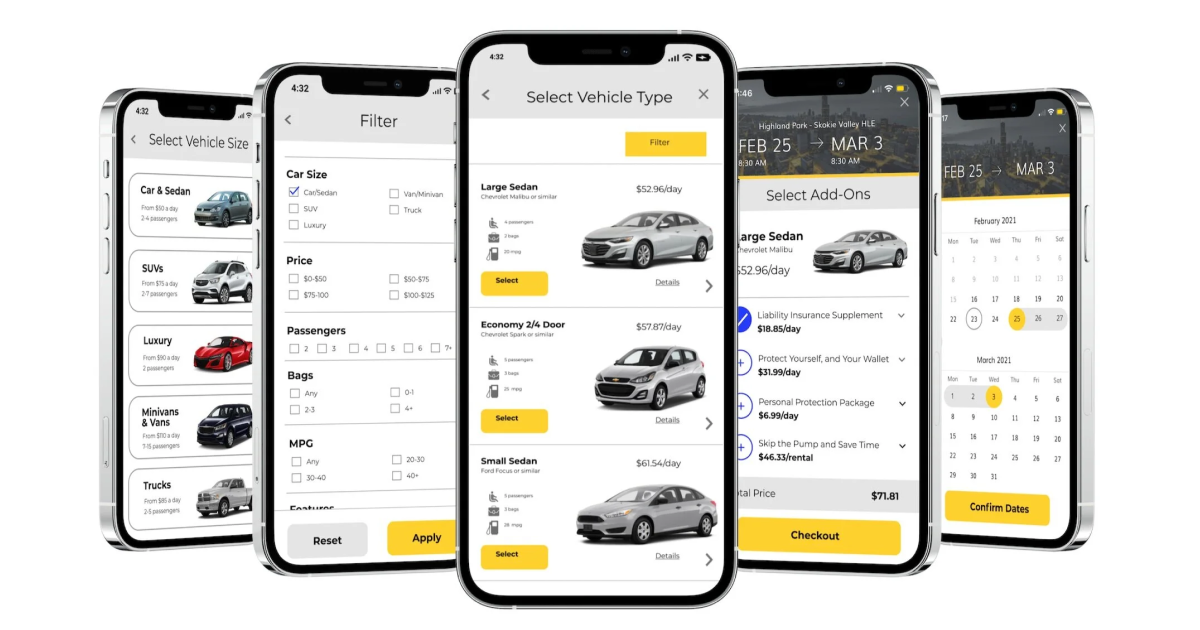
The mobile app is the customer's only key. On platforms like Turo, Zipcar, and Getaround, the car rental or car sharing app handles everything: finding a nearby vehicle on a map, completing KYC verification, booking, unlocking the car via Bluetooth, viewing trip history, and processing payment. For users, the app is the entire product. If it loads slowly or fails to connect to the car, the rental fails. That is the standard. Car rental apps for iOS and Android now include AI chatbots for support, damage photo documentation at pickup and return, and push notifications for booking updates.
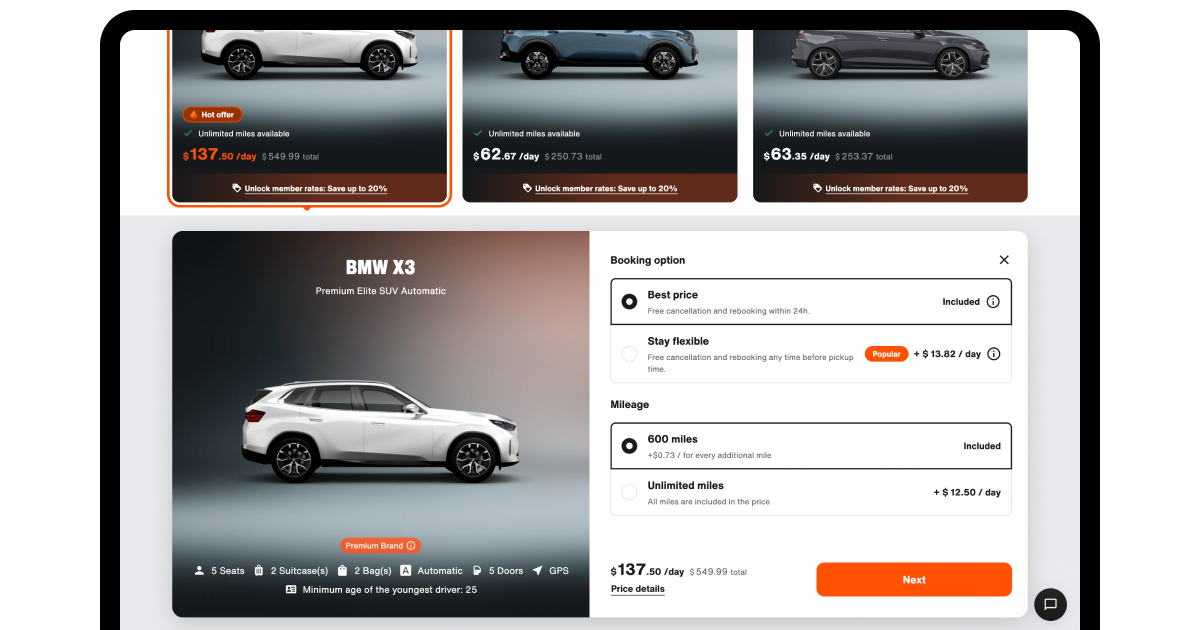
The web platform serves both individual users and corporate accounts. Employees booking vehicles for business travel manage their reservations here. Corporate administrators set policy rules: approved vehicle categories, spending limits, and approved locations. Aggregators like DiscoverCars.com and AutoRentals.com also operate primarily through web platforms, letting users compare rates across multiple providers in one search.
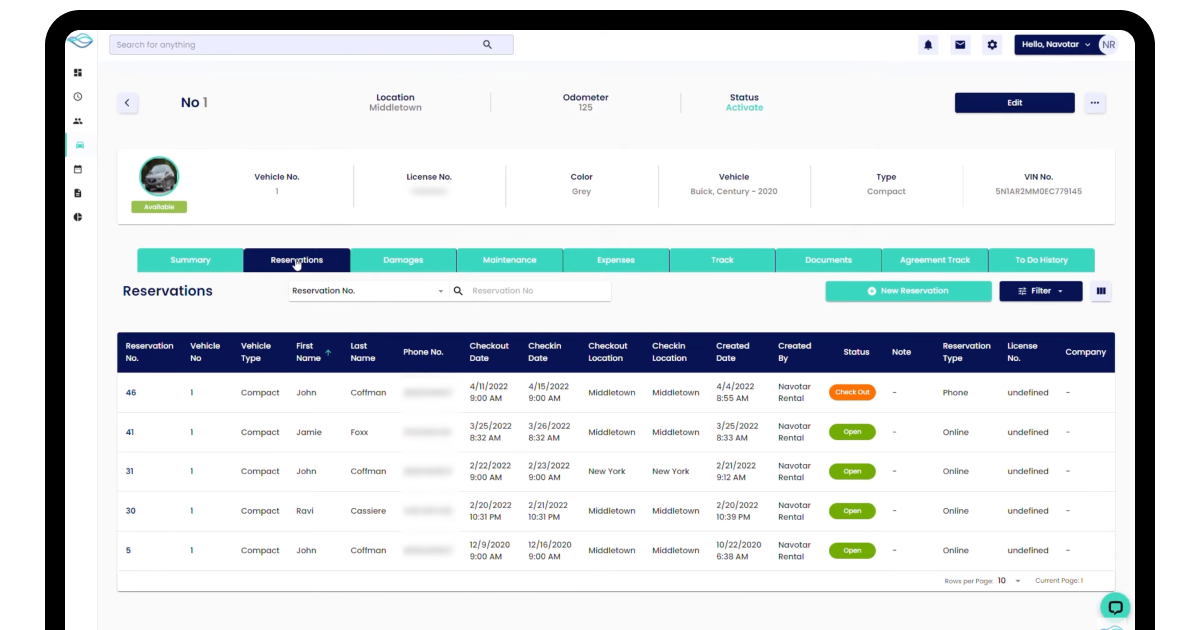
The admin dashboard is where operators run the business. Fleet managers use it to monitor the GPS location of every vehicle in real-time, view fuel and battery levels, schedule maintenance, manage damage reports, and adjust dynamic pricing. User verification happens here too: flagged licenses, disputed charges, and blocked accounts all route through the admin panel. Route optimization tools built into modern dashboards help operators rebalance free-floating fleets, moving vehicles from low-demand zones to high-demand areas before the morning rush.
Developer aelassas documented this architecture clearly in his open-source BookCars project: the admin dashboard handles suppliers, bookings, and fleet separately, while the customer-facing frontend and mobile app share the same API but present completely different interfaces.
The three layers of car rental management software are not interchangeable. The app converts users. The web platform manages accounts. The dashboard runs operations.
Types of car rental and sharing software
Not all platforms do the same job. Some run fleets. Some connect strangers. Some sit inside the car. Here is how the market breaks down.
Full-service car rental management SaaS
Car rental company software in this category handles everything from the first booking to the final invoice, all from one cloud dashboard. These platforms cover fleet tracking, maintenance scheduling, automated contracts, payment processing, and customer profiles without requiring separate tools for each function.
Key players include RentWorks, HQ Rental Software, Easy Rent Pro, Nomora, and Caren. Most offer white-label booking pages, GPS fleet visibility, e-signature workflows, and API connections to business intelligence tools. For operators running dozens of vehicles or hundreds, this is the operational backbone. Without it, the business runs on spreadsheets and phone calls.
Peer-to-peer car sharing marketplaces
Peer-to-peer car rental platforms are the Airbnb model applied to vehicles: private owners list their cars, renters book them through an app, and the platform handles insurance, scheduling, and access.
Turo dominates the US, Canada, UK, and Australia. Getaround focuses on immediate local access using its own keyless hardware. GoMore leads across parts of Europe with both rental and leasing options. Hiyacar serves UK users with digital driver verification, while OuiCar provides regional European coverage. Emerging players are pushing further. AI-powered platforms like RideAlike are improving owner-renter matching.
White-label booking engines and direct rental tools
Car rental solutions in this category let travel agencies, hotels, and independent operators sell rentals directly under their own brand, cutting out OTA commissions entirely. The software provides the booking engine, payment processing, and inventory management while the operator keeps full control of the customer relationship.
Leading platforms include Trawex for full travel portals, PHPTRAVELS for customizable rental systems, and Amadeus Leisure IBE for enterprise-scale travel sellers. Core features across this category include real-time GDS inventory access, mobile-optimized interfaces, B2B and B2C support, and branded payment flows.
Car subscription and fleet-as-a-service platforms
This category replaces ownership with a monthly fee that bundles insurance, maintenance, and taxes into one payment, giving drivers flexibility that neither leasing nor traditional rental can match. The global car subscription market is projected to exceed $16 billion by 2026, with software platforms as the infrastructure layer making it all work.
Coastr handles subscriptions for dealerships and OEMs with automated billing and live fleet tracking. Loopit manages rentals, subscriptions, and fleet operations in one system. Joyride provides the backend for Vehicle-as-a-Service fleets. Originally a luxury play (Porsche, BMW), the model is now scaling to everyday drivers through operators like Hertz My Car, and car rental business operators are adopting it to reduce idle fleet time.
Connected car technology providers
These companies supply the hardware and software that make a vehicle readable, trackable, and remotely controllable. Without their technology, no rental or sharing platform can unlock a car from an app, monitor fuel levels, or immobilize an engine after fraud. Car rental apps depend entirely on this layer being reliable.
On the hardware side, Bosch, Harman (Samsung), Denso, and Visteon supply OEMs with telematics units, digital cockpits, and V2X connectivity systems. On the software side, Qualcomm's Snapdragon Digital Chassis powers 5G telematics, and Nvidia delivers AI computing for autonomous and connected vehicles. Together, these providers separate a modern shared fleet from a traditional one.
Insurance, risk management, verification, and trust technologies
Car-sharing companies and traditional rental operators face the same core problem: they hand an asset worth tens of thousands of dollars to a stranger. This category of software exists to make that safe. It covers automated identity verification, fraud detection, damage documentation, and embedded insurance products.
DAMAGE iD uses AI-powered photo documentation to record vehicle condition at pickup and return, reducing disputes and repair cost disagreements. Platforms like Turo and Getaround embed insurance directly into the booking flow, so coverage is automatic. Identity verification tools run driver's license scans against fraud databases and flag synthetic identities before a key is ever issued. For car rental services, KYC automation is a minimum requirement.
Maintenance, roadside, and operations support
Running a shared fleet is not just software. It is field crews, repair networks, and 24/7 support lines. This category covers the layer that keeps vehicles clean, charged, roadside-ready, and repositioned to where demand is highest. Software for car rental companies in this space connects telematics data to maintenance, so problems are flagged on time.
Fleet management tools like Mapon and INVERS monitor battery and fuel levels, vehicle health, and booking status in real time. Meanwhile, Fixico optimizes repair routing to reduce the time a damaged vehicle sits offline. Roadside assistance is app-native: users request towing, battery jumpstarts, or lockout help directly through the car rental business platform rather than calling a separate hotline, and the system dispatches the nearest available technician automatically.
Key features of car rental and sharing software
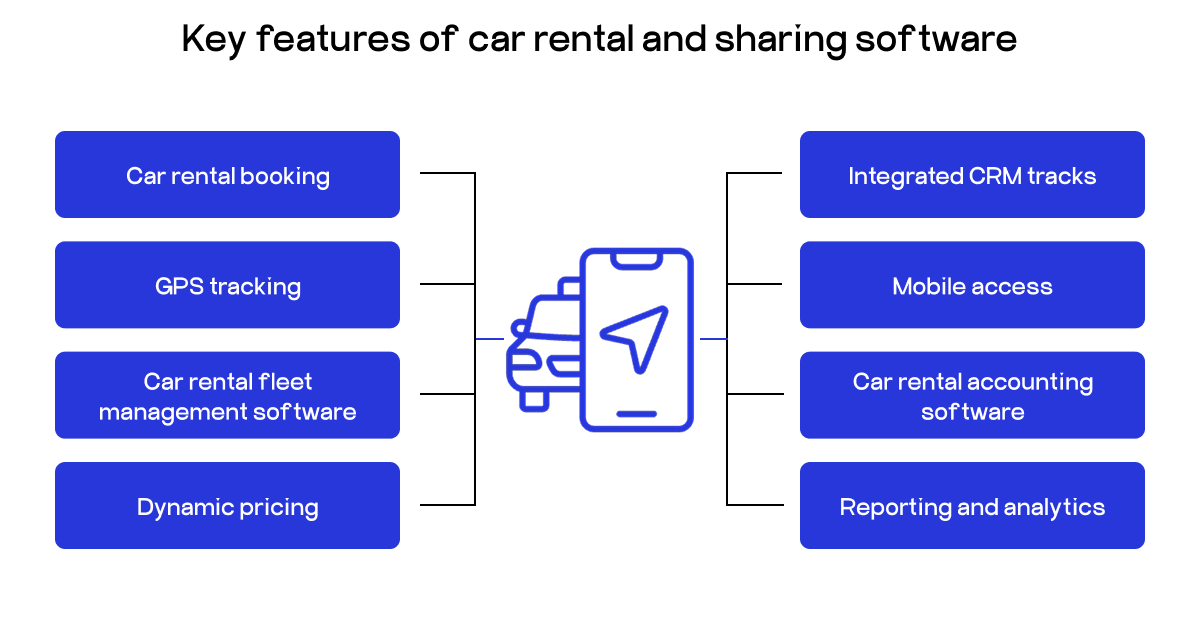
The feature list separates software that runs a business from software that just takes bookings. Here is what actually matters.
Car rental booking starts and ends with the reservation system. A good one lets customers book through a website, mobile app, or in person, with real-time availability and instant confirmation. For car sharing, the same system handles keyless access: the reservation triggers a digital key, and the car unlocks when the user arrives. In corporate car sharing software, employees see only vehicles approved for their role, book by the minute or day, and never need to visit a key cabinet.
GPS tracking is the feature that makes remote operations possible. The GPS tracking feature connects the physical vehicle to the software backend, feeding location, speed, mileage, and geofence status into the dashboard continuously. Rental companies use it to recover unreturned vehicles. Car sharing operators use it to monitor trip routes, detect unauthorized use, and trigger automatic alerts when a car leaves its home zone.
Car rental fleet management software gives operators a live view of every vehicle: where it is, whether it is rented, due for service, or sitting idle. For rental companies, this means fewer calls to locate a car and faster turnaround between bookings. For car sharing operators, it means knowing in real time which vehicles are low on fuel, parked outside the approved zone, or overdue for cleaning. Without this, fleet decisions are guesswork.
Dynamic pricing lets operators adjust rates based on demand, time of day, location, and vehicle availability. During peak seasons or high-demand periods, prices rise automatically. During slow periods, the system can apply discounts without manual intervention. This feature is more common in car-sharing platforms than in traditional rental, where rates tend to be set per day or week, but it is spreading across both categories as operators compete for the same customers.
Car rental management software with integrated CRM tracks every customer interaction, booking history, and preference in one place. Operators can send automated follow-ups, build loyalty programs, flag high-risk users, and personalize offers based on past behavior. For corporate fleets, user management goes further: administrators add employees, assign vehicle access by department or role, revoke permissions when someone leaves, and set policy rules like maximum booking duration or approved locations.
Mobile access is important. Customers expect to book, unlock, and pay entirely from a phone. Staff need to manage bookings, check fleet status, and respond to issues without being at a desk. In car sharing, the mobile app is the entire product. In traditional rental, it is becoming the primary channel for everything except picking up the car itself, and keyless solutions are eliminating that last step too.
Car rental accounting software handles invoicing, deposits, refunds, and payment reconciliation without manual entry. Customers pay by card, digital wallet, or corporate account, and the system generates receipts, tracks outstanding balances, and logs every transaction automatically. For corporate car sharing, it calculates per-trip charges based on time or distance, splits costs by department, and exports data directly to expense management systems.
Reporting and analytics close the loop. Usage rates, revenue per vehicle, average booking duration, maintenance costs, and fleet utilization all feed into dashboards that help operators make decisions based on data rather than instinct. Corporate car-sharing administrators use the same reports to show leadership how much the shared fleet saves compared to employee expense claims, and to optimize vehicle counts as headcount changes.
None of these features would be possible without the vital connections between this software and other systems. Let’s break down the main ones.
Car rental and car sharing software integrations to establish
A car rental platform makes little sense without integrations. The real impact comes from connecting your core system to the tools that handle payments, location, accounting, and bookings automatically.
Car rental solutions software depends on its payment integration a terribly lot. Stripe is the industry standard, handling authorization holds at pickup, automatic charge capture at return, deposit management, and multi-currency transactions for international customers. PayPal adds trust for markets where card entry still creates friction. A properly connected payment layer cuts manual workflows: booking confirmed, payment captured, receipt sent, vehicle status updated, all without staff. Rental companies with connected payment systems save 15 or more hours per week on administrative tasks.
GPS tracking turn car rental management platforms into fleet intelligence systems. Wialon dominates the European market and supports over 2,500 device types covering real-time position, odometer readings, fuel levels, and driver behavior data. Geotab leads in North America with plug-and-play OBD-II installation and an open API marketplace. What you get with tracking is automatic mileage billing, geofence violation alerts, and recoverable stolen vehicles.
Driver management software connects to identity verification and KYC tools that validate licenses, run fraud checks, and create approved driver profiles. These integrations make 24/7 self-service rental operationally safe. AI-powered document verification tools process a license scan and selfie in seconds. Banewer and team found that integrating automated customer verification and CRM tools reduced response times by 40% and lifted customer satisfaction scores by 25%.
Car rental reservation software that connects to online travel agencies and booking channels multiplies revenue reach a great deal. How? Booking.com, Kayak, Rentalcars.com, and Google Rental Ads pull from the same live availability feed. When a booking arrives from any channel, it blocks the vehicle across all others within seconds. Without this sync, double bookings are inevitable. With it, you can use OTAs to drive initial volume while your own booking portal captures repeat customers commission-free.
Accounting integration is where car rental business software pays for itself fastest. QuickBooks Online and Xero support native connections that post completed rental revenue, match payments to invoices, log refunds as credit memos, and auto-categorize maintenance expenses. The setup requires mapping your chart of accounts and defining invoice templates before connecting, but once it runs, month-end reporting becomes a single click rather than a spreadsheet assembly exercise.
Car rental apps need clean API infrastructure underneath to deliver any of this reliably. The technical foundation matters. For most operators running under 200 vehicles, webhooks for critical events combined with polling for less time-sensitive data strikes the right balance between reliability and system complexity.
Custom API work should be reserved for workflows that are genuinely unique to your operation. This is where COAX can help. Our 16 years of experience in custom software development for travel and transportation taught us the practical skills of connecting any business system, new or legacy, to your existing infrastructure. We do it fast, efficiently, and preserving your data structures. Whatever integration you need, you can count on us for quality.
Top 10 sharing platforms and car rental solutions
The market is full of tools that let you rent or share a car for your personal use or business. However, we completed a list of the most useful options, easy to integrate into your operations, connect to your other systems, and use as a solution for your staff or clients. We mentioned some of them when describing the software types, but this list is only for the top picks.
Platform
Type
Pricing model
Best for
Turo
P2P marketplace
Host-set, 15-35% commission
Travel businesses that need a flexible local supply
HQ Rental
Fleet management SaaS
From ~$49/month
Independent operators and growing fleets
Getaround
P2P with hardware
Hourly and daily rates
Urban operators and tech-forward P2P fleets
Zipcar
Membership car sharing
$9/month + hourly rates
Corporate mobility and university programs
Hertz
Traditional rental
From ~$214/week
Airport pickups, corporate travel, rideshare
INVERS FleetControl
Connected car platform
Per-vehicle subscription
Operators building shared mobility services
RENTALL
Rental management SaaS
Tiered, fleet-based
Mid-size to large operators needing multi-vehicle-type and multi-country flexibility
Sixt
Traditional rental
Daily, negotiated corporate
Logistics needing one-way or long-term rentals
SOCAR
Station-based car sharing
Dynamic local pricing
Asian urban mobility markets
RentSyst
API-first rental SaaS
Subscription, fleet-based
Tech-forward businesses with custom workflows
Turo is the world's largest peer-to-peer marketplaceand one of the best car rental companies for operators who want fleet variety without owning every vehicle. Hosts set prices, Turo handles insurance and payments, and the platform takes a 15 to 35% commission. For travel businesses, it offers a way to supplement owned inventory with local host supply during peak demand.
HQ Rental Software is among the best car rental management software options for operators building their own fleet operation. It covers booking, contracts, fleet tracking, and payments from one cloud dashboard, starting at around $49 per month. Small and medium rental businesses use it to run fully automated operations without enterprise IT costs.
Getaround built its operation around instant keyless access. Its proprietary Connect hardware lets renters unlock cars through the app without any physical handover, making it one of the top car-sharing apps for urban markets. Its Power Host program supports professional multi-vehicle management for business operators.
Zipcar runs on a membership model: members pay a monthly fee, then book by the hour or day with fuel, insurance, and maintenance included. Corporate accounts allow centralized billing and usage reporting across departments, making it practical for employee mobility programs.
Hertz operates in over 150 countries with airport-focused infrastructure that no peer-to-peer platform matches. As one of the best rental car company picks for high-volume operations, it offers unlimited mileage, 24/7 roadside assistance, and predictable fleet quality. Weekly rates start around $214 for rideshare-eligible vehicles.
INVERS FleetControl is the infrastructure layer that many of the best car-sharing apps run on invisibly. It manages telematics, digital key issuance, and fleet health monitoring for shared mobility operators. For businesses launching a car-sharing service, INVERS provides the connected car layer without custom hardware development.
RENTALL is a cloud-based vehicle rental management platform serving 1,000+ operators across 70+ countries. It handles reservations, fleet tracking, contracts, and invoicing across a wide range of vehicle types, from cars and boats to construction machinery and electric vehicles, with an online booking plugin and add-on modules for customization. It positions itself as a flexible, growth-oriented SaaS for rental businesses of all sizes looking for an adaptable alternative to legacy systems.
SIXT operates in over 100 countries with more than 2,000 locations and one of the most flexible one-way and long-term rental structures available. For logistics businesses moving vehicles across regions, its infrastructure is practically unmatched. Car rental software pricing on corporate accounts scales with usage, negotiated directly.
SOCAR is the dominant platform in Asia, deeply integrated into local transportation infrastructure across South Korea and Malaysia. Its pricing adapts to local markets, and its UX is built for urban Asian commuters. For businesses targeting Southeast Asian mobility markets, it is the clearest operational model.
RentSyst is the best car rental software platform for its comprehensiveness. It’s built for rental businesses that need API-driven flexibility. Strong API access makes it straightforward to embed rental booking inside existing websites or apps. It is particularly strong in Eastern European markets and is expanding internationally.
There are many options, and they are very different in size, integration complexity, vendor dependence, and commission structures. They’re different to the point where your choice of the most suitable option may seem like looking for a needle in a haystack. We’ll help you make the right choice in the next part.
How to choose the right option for your business?
The decision comes down to four aspects. Get these right, and the shortlist writes itself. The shortest version with the most essential aspects: how long are your typical rentals, where do customers pick up, and how much do you want to own versus manage?
The longer option is this breakdown.
Decision factor
Car sharing (Turo, Zipcar, Getaround)
Traditional rental (Hertz, Sixt)
Trip duration
Hours to one day
Multiple days or weeks
Pickup model
App-based, nearest vehicle
Airport counter or office
Cost basis
Hourly or daily
Daily with mileage cap
Vehicle variety
Wide, host-owned
Standardized fleet
Insurance
Platform-provided per trip
Included or add-on
Best use case
City errands, on-demand access
Planned travel, business trips
Scalability
Limited by host supply
Limited by host supply
Trip duration and pricing model. Short, in-city trips under 24 hours favor car-sharing platforms with hourly rates. Anything longer, especially multi-day or multi-city travel, is cheaper and easier to manage on a traditional daily rental structure. If your operation mixes both, look for car sharing business software that supports hybrid pricing, where customers can book by the minute, hour, or day from the same inventory.
Pickup and access model. Airport-based operations need traditional agency infrastructure with physical counters and guaranteed vehicle availability. City or suburb-based operations where customers find vehicles on a map need app-driven access, ideally with keyless entry. Do not pay for airport counter infrastructure if your customers never use airports, and do not build a city sharing operation on software designed for counter-based check-in.
Fleet ownership vs. marketplace listing. If you own or manage your own vehicles, you need car rental management software with fleet tracking, maintenance scheduling, contract generation, and payment automation. If you are listing vehicles on an existing marketplace like Turo or Getaround, the platform provides the demand, insurance, and access layer. Most growing businesses eventually need both.
Scalability and integration. Check whether the platform connects to your payment processor, accounting tool, and GPS provider before committing. Software that does not integrate forces manual work that compounds as you grow. Prioritize platforms with open APIs, documented webhook support, and active developer resources.
For business owners, four things matter most: automated booking, mobile-first access, insurance clarity, and reporting tools that let you manage costs as you scale.
Build vs buy: When are custom car rental solutions better for you?
Buying an existing platform is faster and cheaper upfront. Building gives you exactly what your operation needs. Neither answer is always right.
Off-the-shelf car rental software like HQ Rental Software or Navotar gets you live in days, with proven features and predictable monthly costs. The tradeoff is that you adapt your workflows to the software, not the other way around. Even the best car rental company tools cap out at some point: missing integrations, rigid pricing logic, no support for your specific vehicle category, or white-label limitations that make the product feel generic to your customers.
Custom fleet management software development solves those gaps, but costs more upfront and takes three to nine months to build properly. The total investment ranges from $50,000 for a basic MVP to over $600,000 for a full platform with mobile apps, telematics, and AI-driven pricing. That budget is realistic for businesses with a clear operational model and growth trajectory. For early-stage operators, it is usually the wrong starting point.
Decision factor
Buy (SaaS)
Build (Custom)
Time to launch
Days to weeks
3 to 9 months
Upfront cost
Low ($49 to $500/month)
High ($50K to $600K+)
Customization
Limited by the vendor
Full control
Integrations
Pre-built, standard
Custom, any system
Maintenance
Vendor-managed
Your responsibility
Best for
Early-stage, standard workflows
Scale, unique requirements
Risk
Vendor dependency
Development overruns
The practical path most growing businesses take is to start with a SaaS platform for car rental services to validate demand and operations, then build custom layers around it as specific limitations start costing you revenue or customers.
We build car rental apps and mobility platforms from the ground up: custom booking flows, telematics integrations, dynamic pricing engines, AI-powered analytics, and the API architecture that connects all of it. Our transportation software development services cover the full cycle, from market research and product scoping through design, development, QA, launch, and ongoing iteration. We do not hand off a product and disappear.
What sets our approach apart is that we treat each project as an operational problem first and a technical one second. Your car rental management platform should fit how your business runs, not force you into someone else's workflow. We work closely with operators, ask the questions vendors skip, and build systems that scale with your fleet rather than against it.
FAQ
What is car sharing, and how does it work for businesses in the travel and transportation industries?
Car sharing gives businesses access to vehicles on demand without ownership costs. As Abdi states, free-floating car sharing lets users locate and reserve vehicles via smartphone for short periods, with insurance and maintenance bundled into the rate. For travel and transportation businesses, it reduces fleet overhead while keeping vehicles available when customers need them.
What is the key difference between car sharing vs. car rental?
Car rental charges by the day and require counter check-in, fixed locations, and advance planning. Car sharing charges by the minute or hour, runs entirely through an app, and requires no staff interaction. Rental suits multi-day trips. Sharing suits spontaneous, short urban trips. The software architecture behind each is built differently to match those use patterns.
What is a car-sharing program, and what models can it have?
A car-sharing program gives members pre-approved, self-service access to vehicles by the hour or minute. Rotaris and team identified the core models:
Station-based (fixed pickup and return points)
Free-floating (pick up and drop anywhere within a zone)
Peer-to-peer (private owners listing vehicles)
Corporate (employee mobility pools).
Each model requires different software logic and pricing structures.
What are the challenges of implementing car rental booking software?
The most common challenges are:
Integrating GPS, payments, and accounting without data silos
Building reliable keyless access that works offline
Preventing identity fraud through automated KYC
Maintaining real-time availability across multiple booking channels
Keeping the system secure and GDPR compliant
Scaling infrastructure as fleet and user volume grow.
How does COAX develop secure and efficient car rental solutions?
We build car rental solutions to scale from day one, run agile delivery with full transparency, and adapt across time zones to fit your pace. Our teams also hold ISO 9001 and ISO 27001 certifications and sign an NDA on every project. Our full-cycle team covers strategy, development, QA, and DevOps under one roof, rated 4.9/5 on Clutch.
































.avif)




%2520for%2520Hotels_%2520Features%2520and%2520Benefits%25202.avif)

.avif)


.avif)
.avif)


.avif)





.avif)
.avif)





.avif)


.avif)

We are interested in your opinion